
8-Day Kenya Safari & Seychelles Escape — Ancient Earth, Living Wild
Two of the Planet's Oldest Landscapes, One Itinerary
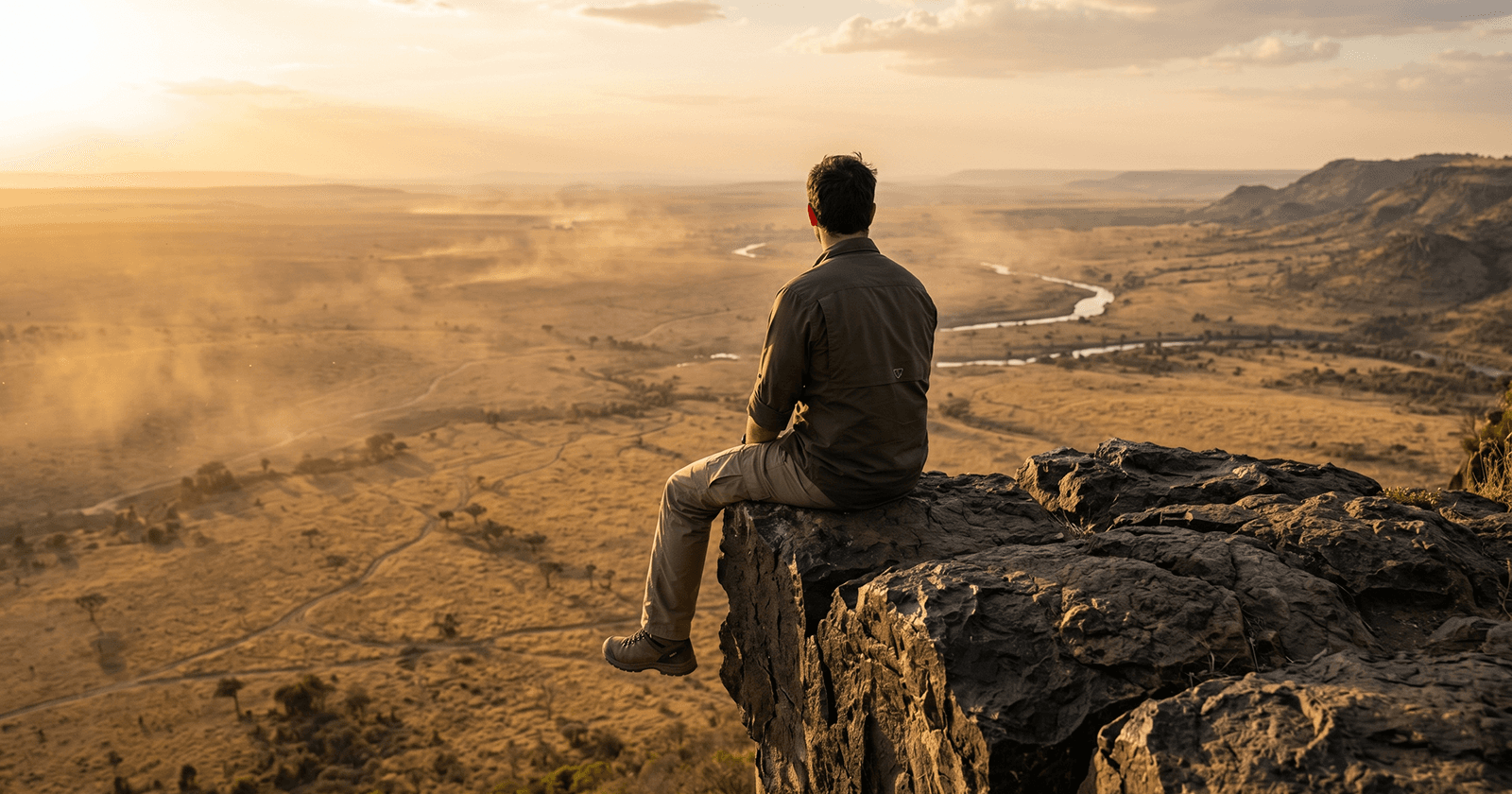
Wild by Nature. Africa by Choice.
There is a version of the Kenya-to-Seychelles trip that every booking platform sells: a few nights in a comfortable Mara camp, a flight east, a beach. What that version does not tell you is that this specific itinerary places you at the confluence of two of the most geologically significant landscapes on earth — the 20-million-year-old fracture scar of the East African Rift Valley and the 750-million-year-old continental remnants of Gondwana, now surfacing from the Indian Ocean as pink granite islands off the coast of East Africa. This is not marketing language. It is the field intelligence that explains why this particular combination produces encounters, atmospheres, and ecosystems that neither destination delivers alone.
The geological contrast is the article. Everything else — the butlers, the private concession, the helicopter transfer — is infrastructure that gets you there.
What is the best Kenya and Seychelles safari package for luxury travellers?
The 8-Day Ultra-Luxurious Safari and Island Escape, Kenya to Seychelles, combining andBeyond Bateleur Camp on the Oloololo Escarpment with Le Domaine de L'Orangeraie on La Digue, is the strongest luxury pairing available for travellers who want technically differentiated wildlife access in the Masai Mara alongside genuine island solitude in the Seychelles. The private concession at the base of the escarpment delivers dry-season leopard and elephant access that the main reserve cannot replicate. La Digue's Precambrian granite micro-climate produces endemic species encounters unavailable on the larger, more developed Seychellois islands.
Explore the 8-Day Kenya Safari & Seychelles Escape on Safari.com
The Oloololo Escarpment: Where the Great Rift Meets the Mara's Hidden Refuge
Most visitors to the Masai Mara arrive expecting the open plains. What the Oloololo Escarpment offers is fundamentally different — a transition zone where the geological drama of the East African Rift Valley creates a micro-ecosystem that the flat savanna cannot sustain.
The escarpment marks the western wall of the Mara — the physical edge of the Rift Valley system that has been fracturing and dropping eastward for approximately 20 million years. The high-altitude Trans-Mara plateau to the west drives groundwater runoff down the escarpment face year-round, irrigating a belt of gallery forest and lush riverine vegetation that retains moisture long after the surrounding savanna has burned to bone-dry ochre. During the dry season, when water sources across the main reserve contract to predictable points and the open plains become a gauntlet of vehicle traffic, the escarpment base holds green. That is the intelligence that matters for this itinerary.
Leopards use the forested escarpment terrain as a year-round territory — the granite outcrops, fallen mopane, and dense fig stands provide the vertical cover and prey concentration they require. Elephant bulls, drawn by the perennial water and browse, move through the escarpment woodland in a pattern quite distinct from the breeding herds that cross the plains. This is a resident population following a seasonal logic that the escarpment's hydrology, not the migration calendar, governs.
The Masai Mara Tracking Safari at Entim Mara Camp's published documentation on Maasai guide expertise provides useful context here — the tracking tradition that makes the Mara's predator observation so technically rigorous applies equally on the escarpment, where the escarpment's mixed terrain demands a different set of field craft skills than open plains work.
andBeyond Bateleur Camp Review — Inside the Escarpment Concession
Bateleur Camp operates on a private concession at the base of the Oloololo Escarpment, adjacent to but legally distinct from the Masai Mara National Reserve. The concession distinction is not a trivial detail — it is the governing document for everything the camp can deliver that the main reserve cannot.
Off-road driving is permitted on the private concession. Night drives are available. Walking with a guide is possible. In a main-reserve context, all three of these activities are prohibited. Visitors who book a central Mara camp and do not understand this distinction arrive at the most wildlife-dense ecosystem in East Africa and discover that they are confined to tracks, daylight, and a vehicle-based view.
The tented suites are built in the classic East African safari tradition — canvas walls, polished hardwood floors, copper bath fittings, and crystal decanters that carry the aesthetic of a 1930s expedition camp into a contemporary luxury context. Each suite has a private butler. The guiding standard is Silver and Gold level, which in the andBeyond framework means professional guides with a minimum of five years of field experience and specialist knowledge of the local ecosystem — not entry-level lodge guides rotated between properties.
The inclusivity structure covers all meals, all drinks, laundry, and two game drives daily. The absence of a running tab for basics is a practical advantage in a bush environment where the mental overhead of managing expenses is a friction the experience does not need.
Reserve your tented suite at Bateleur Camp on the Kenya to Seychelles package
The Dry Season Refuge: Leopard and Elephant Behaviour on the Private Concession
The field intelligence value of the escarpment position becomes most acute during the dry season months — July through October — when the Mara's water sources concentrate wildlife and the main reserve roads are at their most congested. The escarpment concession operates on a different dynamic.
The gallery forest at the escarpment base provides cover that leopards exploit for ambush hunting — the combination of fig trees, rocky outcrops, and the fallen timber of old mopane creates a hunting terrain quite different from the open-plains leopard behaviour most visitors to the central Mara observe. Leopards on the escarpment move vertically, cache kills in trees with branches overhanging the rocky ground rather than the open savanna, and use the canopy cover to remain concealed between hunts in a way that open-plains leopards, with their famously relaxed exposure to vehicles, do not.
Elephant bulls that have separated from breeding herds use the escarpment woodland as a retreat during the peak dry season. The perennial groundwater produces a browse quality — softer vegetation, higher water content — that breeding herds in the open plains cannot access when grasses have desiccated. Observing these bulls in the forest terrain, without the competition and social noise of a herd dynamic, produces a quality of encounter that the main reserve's elephant viewing, however spectacular in volume, rarely matches.
Night drives on the concession extend the field intelligence window into the hours when the Mara's nocturnal predator community is fully active. Aardvark, serval, and caracal are regularly encountered — species that the daytime game drive, however long, will not reliably produce.
Hot Air Ballooning, Night Drives, and Maasai Cultural Access at the Mara
The Mara experience available around this itinerary extends beyond the concession. Dawn hot air balloon launches over the Mara River system provide a different spatial intelligence — hippo pods visible from above, the river's meander pattern and the distribution of wildlife along its banks comprehensible in a way that a ground-level vehicle perspective cannot replicate. The balloon operations use the thermal conditions of the Rift Valley gradient, with launches timed to the stable air of the pre-sunrise window when wind interference is minimal.
Maasai community visits in the local Manyattas offer deep-access cultural intelligence specific to this corner of the Mara. The focus in this area is on traditional medicine and tracking knowledge — the Maasai of the Oloololo region maintain tracking traditions that predate the reserve designation and that inform the field craft methodology used by guides across the private concession. The cultural visit in this context is not a performance — it is a direct continuation of the same field intelligence framework that operates in the bush.
La Digue, Seychelles: Ancient Granite and the Indian Ocean's Last Wild Island
The flight east from Nairobi to Seychelles International Airport (SEZ) followed by the helicopter transfer to La Digue covers a geological transition of approximately 730 million years.
La Digue's defining physical characteristic — the massive pink-hued granite boulders that frame Anse Source d'Argent and appear throughout the island's interior — is not a product of volcanic activity or sedimentary deposition. These are Precambrian continental fragments, remnants of the ancient supercontinent Gondwana that broke apart and scattered across what is now the Indian Ocean basin. The Seychelles granitic islands are among the only oceanic islands on earth that are not volcanic in origin. They are pieces of an older world, surfacing.
The boulders themselves are thermal batteries in the ecological sense. Through the day they absorb intense equatorial solar radiation; at night they release that heat slowly and steadily. The resulting nocturnal micro-climate at the rock faces — warmer than the ambient air temperature, with the humidity of the surrounding vegetation — creates a specific thermal refuge that the endemic Seychelles Fruit Bat and the island's rare reptile species exploit for thermoregulation after sunset. This is a detail that the standard beach itinerary, focused on daytime snorkelling and cycling, will not surface.
The island's near-car-free status is an operational fact with a significant atmospheric consequence. La Digue is navigated by bicycle. The absence of engine noise from the island's interior changes the sensory register completely — the rhythmic wash of the Indian Ocean, the humid scent of fermenting coconuts from the L'Union Estate, and the calls of the endemic Seychelles Paradise Flycatcher are not competed with by traffic. The island is quiet in a way that developed resort islands in the Seychelles archipelago are not.
Le Domaine de L'Orangeraie — Luxury Villas Inside a Precambrian Landscape
Le Domaine de L'Orangeraie is positioned within La Digue's interior, set back from the main beach tourism infrastructure and surrounded by the granite formations that define the island's character. The Villa de Charme and Presidential Villa options both incorporate stone-carved baths and outdoor showers that use the island's natural granite context as an architectural material rather than setting accommodation against it.
The half-board structure — breakfast included — reflects the island's dining ecosystem, where the small-scale restaurant culture of La Digue's village provides an authentic alternative to resort-contained eating. This is not a budget compromise; it is a structural invitation to move through the island rather than remain on a property.
The Anse Source d'Argent cycling route, the transparent-bottom kayaking at the reef, and the L'Union Estate's giant tortoise population and colonial-era vanilla and coconut plantations are all accessible within the bicycle-range geography of the island. The estate's historical layer — working plantation infrastructure surviving from the nineteenth century — provides a material connection to the island's human history that the beach-resort model of the larger Seychellois islands does not replicate.
What This Itinerary Gets Right: The Logistics Intelligence
The transfer architecture of this package is where the operational premium is most visibly earned. Private helicopter from Mahé to La Digue eliminates the ferry and domestic turboprop alternatives, both of which carry the time costs and scheduling dependencies that a seven-day window cannot absorb without loss.
Access to Kenya proceeds via Nairobi Wilson Airport (WIL) to Kichwa Tembo Airstrip in the Mara — the standard fly-in route for escarpment-based camps. Flight time from Nairobi is approximately 45 minutes in a light aircraft. The seamless concierge handoff between the Kenya and Seychelles legs — managed through the package booking structure rather than self-coordinated — removes the logistical friction point that most independently assembled beach-and-bush itineraries encounter at the international connection.
The combination package format also governs the guiding standard consistency across both destinations. An independently assembled equivalent — booking the andBeyond camp and La Digue villa separately — does not guarantee the same concierge continuity between legs, and the pricing differential between package and independent booking at this property tier rarely favours the independent route.
For this pairing of destinations, the Great Migration River Crossing Tanzania intelligence from the published Northern Tanzania Migration Safari briefing provides useful seasonal context: the Mara's migration season (July through October) aligns with the dry season conditions that make the Oloololo Escarpment's leopard and elephant behaviour most technically compelling. The Seychelles' year-round maritime climate makes it a viable add-on across this entire window without a seasonal constraint on the island leg.
| Feature | This Ultra-Lux Package | Standard Beach & Bush Alternative |
|---|---|---|
| Transfer Method | Private Helicopter (Mahé to La Digue) | Public Ferry or Domestic Turboprop |
| Safari Privacy | Private Concession / Escarpment Base | Public Reserve / High Vehicle Density |
| Beach Exclusivity | Small Island (La Digue / Private Villa) | Large Resort (Mahé or Praslin) |
| Guiding Standard | Silver/Gold Level Professional Guides | Entry-Level Lodge Guides |
| Logistics | Seamless Concierge Handoff | Self-Managed Flight Connections |
| Destination | Geology / Terrain | Water Source | Primary Wildlife Driver | Signature Experience |
|---|---|---|---|---|
| Masai Mara (Oloololo Escarpment) | East African Rift Valley — volcanic and sedimentary, ~20 million years | Mara River System / Trans-Mara groundwater runoff | Year-round escarpment refuge: resident leopard and elephant bull populations | Breakfast on the Oloololo Escarpment at golden hour |
| La Digue, Seychelles | Precambrian Gondwana continental fragment — granite, ~750 million years | Indian Ocean rainfall / no permanent rivers | Endemic avian and reptile species; Seychelles Fruit Bat; reef marine ecosystem | Cycling to Anse Source d'Argent through a Precambrian landscape |
Is the Kenya to Seychelles Combination Worth It?
The honest answer is yes — with a specific qualification. This combination works because the two destinations are not in competition with each other. They are not two safaris, or two beach resorts, or two experiences drawing on the same field intelligence pool. They are structurally different environments, at opposite ends of a geological timeline, requiring different modes of attention and offering different categories of reward.
The Mara leg at the escarpment delivers active field engagement — tracking, predator observation, night drives, cultural intelligence, the aerially delivered spatial understanding of the balloon flight. The La Digue leg delivers the opposite: the island's geological age, its quiet, its endemic character, and its resistance to the mass tourism infrastructure that dominates the larger Seychellois islands. Together, the eight days build a field narrative that neither destination alone can sustain across its full length.
The package format is the right vehicle for this combination. The logistics between two international destinations with a private helicopter transfer are not trivial to manage independently, and at this property tier, the guiding and concierge continuity that the package structure provides is worth the premium over independent assembly.
People Also Ask
How do you get from Masai Mara to Seychelles? The standard routing from the Masai Mara to Seychelles uses a light aircraft transfer from Kichwa Tembo or the nearest Mara airstrip to Nairobi Wilson Airport, followed by a commercial flight from Nairobi Jomo Kenyatta International (NBO) to Seychelles International (SEZ) on Mahé. From Mahé, La Digue is reached by private helicopter transfer — approximately 15 to 20 minutes — or by ferry and domestic flight, which requires considerably more time. The package format manages all connections, including the helicopter transfer to La Digue, as part of the booking.
Is Bateleur Camp inside the Masai Mara reserve? Bateleur Camp is located on a private concession adjacent to but outside the boundaries of the Masai Mara National Reserve. This distinction is operationally significant: the private concession permits off-road driving, night game drives, and walking safaris — activities that are prohibited inside the main reserve. The camp's position at the base of the Oloololo Escarpment places it within one of the Mara's most ecologically productive zones, independent of the main reserve's seasonal migration and vehicle-density dynamics.
What is the best month for a Kenya and Seychelles combo trip? July through October represents the strongest window for this combination. In Kenya, this is the dry season — the period when the Oloololo Escarpment's year-round moisture retention most differentiates the concession from the main reserve, and when the Great Migration brings wildebeest into the Mara system from the Serengeti. La Digue's maritime climate is broadly stable year-round, with the Southeast Trade Winds from May through October producing drier, windier conditions — ideal for the beach and outdoor cycling components of the island leg without the heavy rainfall of the Northwest Monsoon season (December through February).
Can you do a night drive in the Masai Mara? Night game drives are not permitted inside the Masai Mara National Reserve. They are available exclusively on private conservancies and private concessions adjacent to the reserve. The andBeyond Bateleur Camp concession on the Oloololo Escarpment is one of the operators with this access. Night drives on the concession regularly produce aardvark, serval, and caracal — species that daytime game drives in the main reserve will not reliably encounter regardless of duration.
What are the granite boulders in Seychelles called? The granite boulders of the Seychelles are Precambrian continental rock fragments — remnants of the ancient supercontinent Gondwana, estimated at approximately 750 million years old. They are not volcanic in origin, which distinguishes the granitic islands of the Seychelles (La Digue, Mahé, Praslin) from the vast majority of oceanic islands globally. The specific geological formation is classified as Precambrian basement granite, and the boulders' distinctive pink-grey hue comes from the high feldspar content of the granite. Their thermal mass — the capacity to absorb solar radiation by day and release heat slowly at night — creates the nocturnal micro-climate conditions that support the island's endemic reptile and bat populations.
Book the 8-Day Kenya Safari & Seychelles Escape
Krantz Outdoors is a specialist pan-African safari research publication. Our editorial team aggregates field intelligence from professional trackers, wildlife photographers, and conservation scientists to deliver technically verified safari briefings.
This article is compiled from operator specifications, verified field reports, and specialist destination research. Krantz Outdoors conducts independent editorial review of all promotional content.
Affiliate disclosure: This article contains affiliate links. If you book through our Safari.com link, Krantz Outdoors may earn a small commission at no additional cost to you. We only recommend experiences we genuinely believe in.
Wild by Nature. Africa by Choice.
Read our Privacy Policy and Terms & Conditions