
10-Day Namibia Must-See — Self-Drive Safari Field Intelligence
Sossusvlei, Damaraland, and the Skeleton Coast — The Geological Brief That Changes How You Drive
Wild by Nature. Africa by Choice.
The most important fact about tracking elephants in Namibia is that you will never find them at a waterhole.
Not because the waterholes are empty. Not because the elephants are elusive. But because in the Northern Namib — specifically across the Huab and Hoanib river systems north of Damaraland — elephants have evolved over thousands of years to read a landscape that holds water invisibly. The ancient granite and basalt escarpment fractured along fault lines as the African tectonic plate drifted across a cold ocean current, and those fractures became channels. Over millennia, the channels became riverbeds. The riverbeds became dry. And the water went underground.
What remained on the surface was the track of the elephant.
This is the specialist intelligence that separates a Namibia self-drive safari from any other wildlife experience on the continent. Here, the guide brief is not about identifying species at a pan. It is about reading the geology of a landscape to understand why an 800kg animal can survive on moisture trapped in anaerobic sand layers two metres below a riverbed that has not seen surface water since the previous La Niña cycle.
The Safari.com 10-Day Namibia Must-See package is built on exactly this landscape. It is one of the few commercial self-drive itineraries on the continent that puts the traveller's own hands on the wheel of a 4x4 through three of Namibia's most technically differentiated ecosystems — and the field intelligence required to read each one correctly is what this briefing delivers.
What is the best self-drive safari in Namibia?
The 10-Day Namibia Must-See package via Safari.com is the strongest self-drive option for first-time and returning visitors because it covers the three geologically distinct ecosystems that define the Namibian wildlife experience: the AfriCat conservation corridor at Okonjima, the Etendeka basalt desert of Damaraland, and the ancient sand sea of Sossusvlei. The self-drive format gives the traveller operational control over timing and pace — particularly critical for early morning light at Sossusvlei and predawn dune access — while hybrid accommodation across private conservancies and national park lodges maintains the quality floor throughout.
Explore the 10-Day Namibia Must-See on Safari.com
The oldest desert on earth. Three geologically distinct ecosystems. One self-drive itinerary that connects AfriCat predator conservation at Okonjima, desert elephant forensic tracking in Damaraland, Skeleton Coast fog belt herpetology, and pre-dawn dune ascent at Sossusvlei. Safari.com holds the itinerary. The geology tells the rest.
THE GEOLOGICAL ARCHITECTURE OF NAMIBIA'S WILDLIFE
To understand why Namibia produces the wildlife encounters it does, you need to understand the landscape's bones.
The Great Escarpment — the dramatic inland cliff that runs the full north-south length of Namibia — is the ancient edge of the African continental shelf. When Gondwana fractured and the continents separated, the land that is now southern Africa was left stranded above a deepening ocean basin. The escarpment is not a mountain range. It is a fault line. And along that fault, millions of years of erosion, volcanic intrusion, and tectonic grinding have created a landscape of extraordinary geological complexity: basalt sheets, granite inselbergs, and calcrete flats each holding water in different ways and at different depths.
The Namib Desert itself is estimated at 43 to 80 million years old — the oldest desert on earth. Its dunes are not static. The star dunes of Sossusvlei, some reaching 300 metres in height, migrate, merge, and collapse along fault corridors. The Tsauchab River, which drains eastward from the escarpment and terminates at the Sossusvlei clay pan, is ephemeral — it reaches the sea perhaps once in a decade. The rest of the time, the water moves underground along alluvial aquifer layers, feeding a narrow riparian corridor of ana trees and !nara melons that supports a specialist fauna found nowhere else on earth.
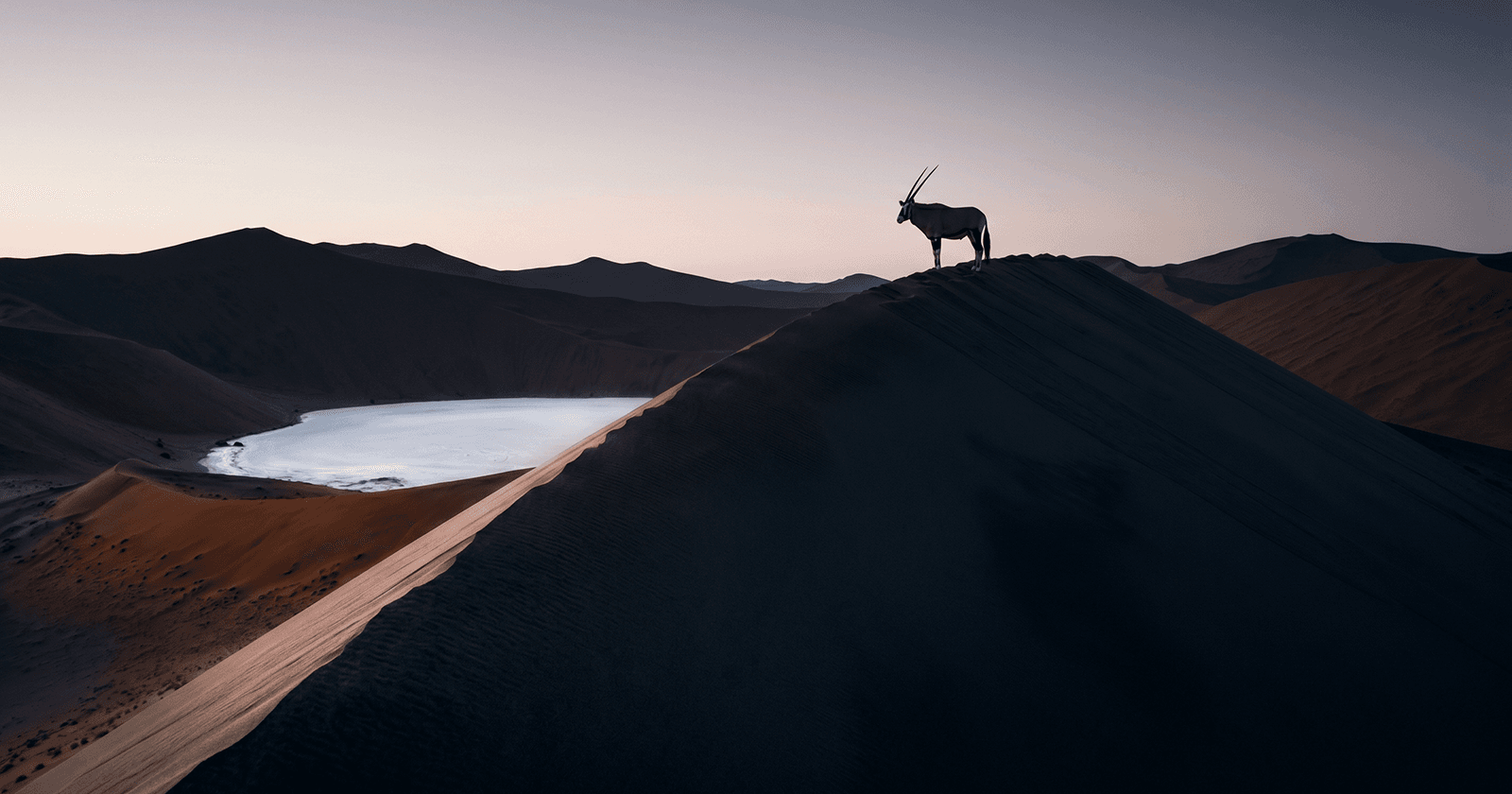
The oryx — Namibia's national animal — has evolved a counter-current heat exchange system in its skull that pre-cools blood before it enters the brain, allowing core body temperature to rise to 45°C without neurological damage. The Namib chameleon has evolved depigmentation to avoid thermoregulation loss on hot sand. The fogstand beetle of the Skeleton Coast harvests moisture from Atlantic fog using hydrophilic bumps on its elytra — a biomimicry model now studied for passive water collection technology. Every species you will encounter on this itinerary is a solution to a specific geological and atmospheric problem. The wildlife brief is a geology brief.
Understanding this changes everything about how you drive.
Desert Elephant Tracking in Damaraland — The Huab River Field Intelligence
The desert-adapted elephant populations of Damaraland are among the most studied large mammals on earth, not because of their size but because of their metabolic adaptations. They are anatomically identical to the bush elephant (Loxodonta africana) but their behaviour has been shaped by a landscape with no permanent surface water.
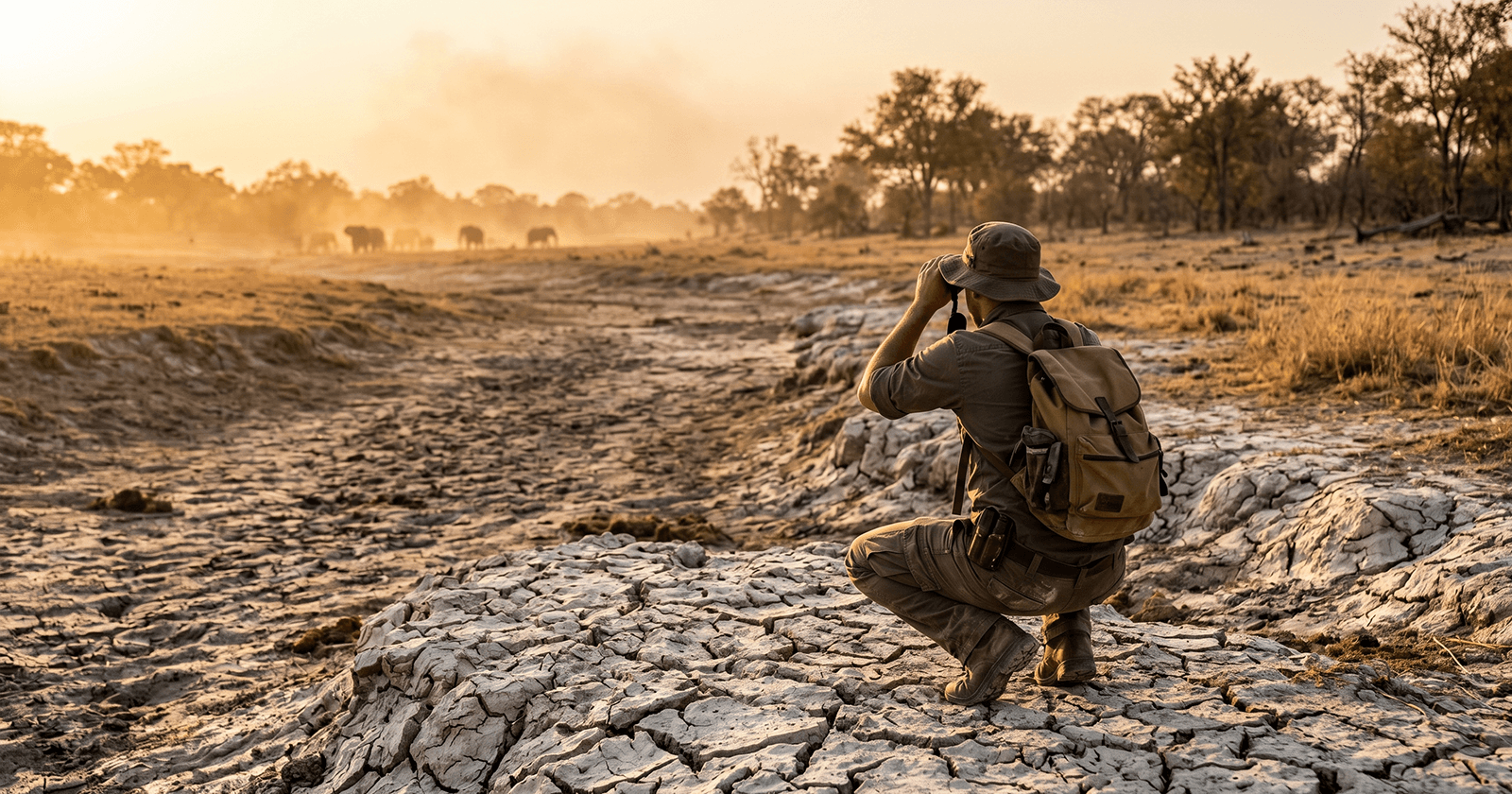
Their groups are smaller than those of the Hwange pumped pans safari or Chobe — three to five individuals rather than twenty to thirty. This is caloric mathematics: a smaller group needs less water, creates less ground disturbance, and can forage across a larger radius from a single subsurface water source without triggering competition. They are tracked not to a waterhole but to a geological feature: the intersection of a dry riverbed and a subsurface fracture zone, where seasonal groundwater percolates upward close enough to the surface for the elephant's trunk — functionally a subsurface detection instrument — to locate it.
The contrast with Zimbabwe's water-dependent elephant behaviour is total. At the Elephant Camp Victoria Falls, elephant movement is anchored to the Zambezi River system — a permanent surface water source that concentrates herds at predictable points. In Damaraland, there is no anchor point. The tracking exercise begins with the geology.
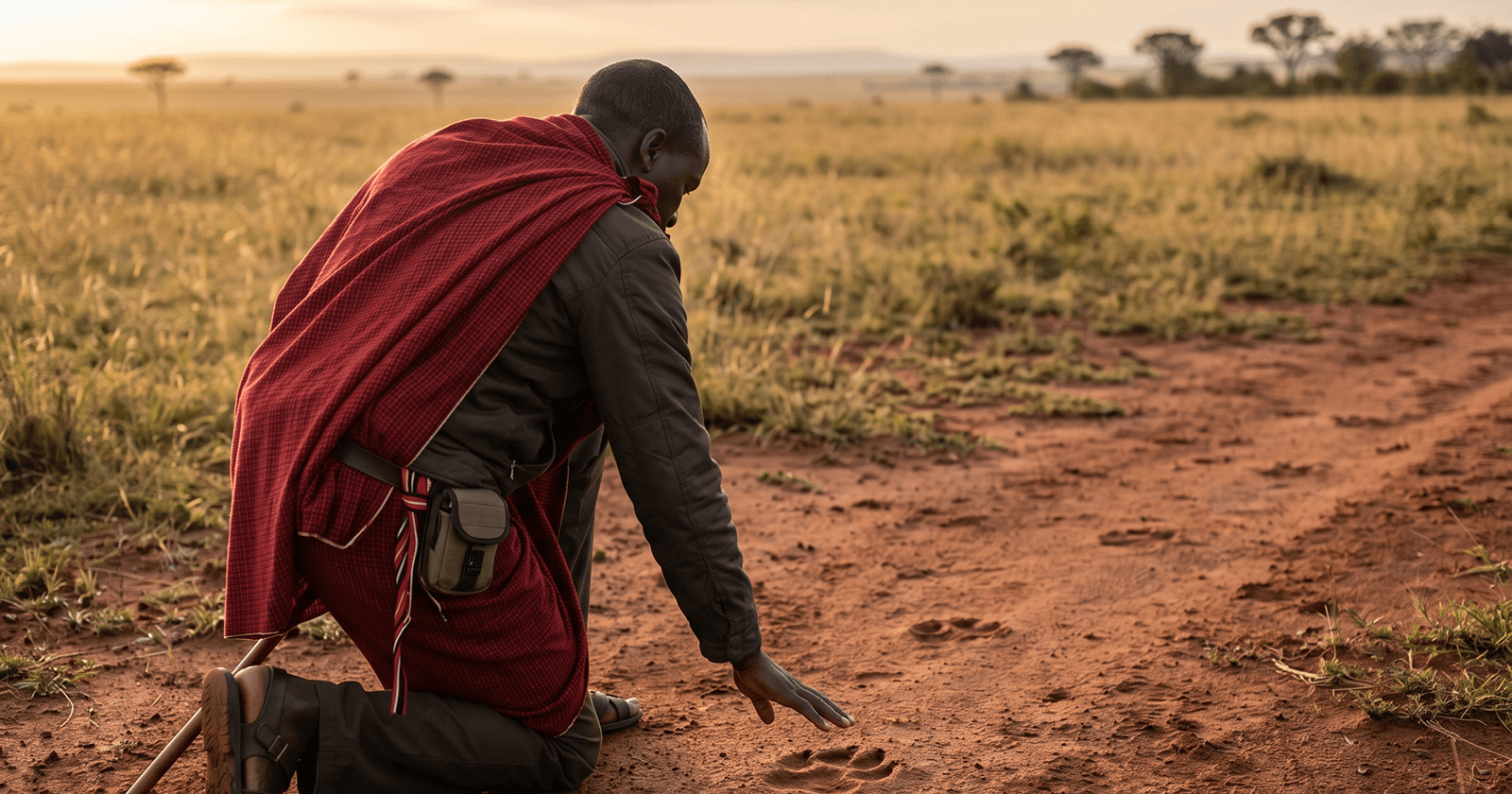
The forensic tracking intelligence required to find them is field-specific. Fresh tracks on soft alluvial sand show clean, sharp edge definition. As desert wind processes the surface — aeolian erosion — the track edges round off within two hours at typical Damaraland wind speeds. A track with a sharp leading edge and a wind-rounded trailing edge places the elephant within a two-hour radius. A fully rounded track means the animal is already twenty kilometres away along the riverbed, following the aquifer gradient toward the next fracture intersection.
This is what game tracking looks like when there is no water to anchor the wildlife.
How Do Desert Elephants Find Water in Namibia?
Desert elephants in Namibia locate water through a combination of geological memory and acute olfactory detection. The Huab and Hoanib river systems run dry on the surface for most of the year, but subsurface aquifers persist along ancient fracture zones in the underlying basalt and granite. Elephants navigate these dry riverbeds using a learned spatial map of fracture intersection points passed down through matriarchal knowledge over generations. At these points, the water table rises close enough to the surface for the elephant's trunk to detect moisture through the sand at depths of up to two metres. The tracking signature of this behaviour is a series of excavation scrapes in the dry riverbed — shallow depressions where the elephant has used its foot and trunk to expose the moist substrate below.
The Etendeka Basalt Formation and Mowani Mountain Camp
The Mowani Mountain Camp sits on the edge of the Etendeka Plateau — a basalt sheet extruded by volcanic activity 132 million years ago when the South Atlantic began to open. The basalt has since been exposed by erosion, split by the same tectonic forces that fractured the escarpment, and colonised by a specialist flora: euphorbias, aloes, and mopane trees that extract moisture from the shallow soil trapped between granite boulders.
The camp's accommodation is integrated directly into the granite inselberg — luxury thatch tents positioned to use the rock's thermal mass as a temperature buffer. By day, the dark basalt absorbs heat. By night, it radiates it slowly outward, holding the ambient temperature two to three degrees higher than the open plains below. In practice, this means the escarpment frost line rarely descends to Mowani's elevation — a differential that allows frost-sensitive euphorbia species to survive and the specialist fauna that depends on them to remain year-round.
For the self-drive traveller approaching from the south, the transition from the calcrete flats of the Palmwag Concession to the Etendeka basalt is visible in the road surface itself. The calcrete — a pale, calcium-rich hardpan — is overlain by volcanic rubble within thirty kilometres. The colour of the landscape changes from bone white to deep rust-orange. The vegetation changes from sparse salvadora scrub to dense mopane and combretum. You are crossing a geological boundary that separates two entirely different wildlife communities.
Sossusvlei — The Tsauchab Clay Pan and the Ancient Sand Sea
The Sossusvlei clay pan is a terminal basin — the Tsauchab River flows toward it and stops, evaporating or percolating into the substrate before it reaches the sea. The pan's white floor is a bleached calcium carbonate crust, formed over thousands of years by the evaporation of seasonal floodwater. The encircling dunes — ochre, rust, and deep crimson — are iron-oxide coated quartz grains sorted by the southeast trade wind into their distinctive star and linear patterns.
The dead trees at Deadvlei are approximately 900 years old. They died when the Tsauchab last shifted course, cutting off the pan's water supply. The desiccated wood has neither rotted nor been consumed by termites — the desert is too dry for either process to operate at normal rates. They stand as geological monuments preserved in the same alkaline calcium carbonate that formed the pan floor.
The light at Sossusvlei is technically the most demanding and rewarding photographic environment on the continent. At noon, the sand reflects UV and visible light in a near-vertical plane, flattening all surface detail and burning out the dune crests. At first light — the forty minutes after dawn — the low-angle sidelight catches every ripple in the aeolian sand surface, creating a three-dimensional depth in the dune face that no photograph fully represents. Pre-dawn access to Dune 45 requires a 4:30am departure from the camp gate. This is not a guidebook recommendation. It is a technical requirement.
THE ITINERARY — FOUR ECOSYSTEMS, ONE GEOLOGICAL NARRATIVE
The 10-Day Namibia Must-See package covers four distinct destinations, each anchored by a different geological formation and a different wildlife intelligence brief.
| Destination | Geology / Terrain | Water Source | Primary Wildlife Driver | Signature Experience | Best Activity | Transfer Method |
|---|---|---|---|---|---|---|
| Okonjima Plains | Central Plateau thornveld | Man-made waterholes | AfriCat leopard recovery | Telemetry-based tracking | Predator conservation walk | Self-drive, B1 highway |
| Damaraland / Mowani | Etendeka basalt / granite | Subsurface Huab River aquifer | Desert-adapted elephant behaviour | Forensic spoor tracking in dry riverbed | Desert elephant tracking drive | Self-drive, gravel C-roads |
| Swakopmund | Skeleton Coast fog belt | Atlantic fog belt | Fog belt herpetology and marine corridor | Living Desert tour | Sandwich Harbour 4x4 dune run | Self-drive, B2 coastal road |
| Sossusvlei | Linear and star dune field | Tsauchab ephemeral river | Oryx and Namib specialist fauna | Pre-dawn Deadvlei photography | Dune 45 sunrise ascent | Self-drive, NamibRand gravel |
Okonjima — The AfriCat Intelligence
The AfriCat Foundation at Okonjima operates a monitored free-roaming system: leopards removed from farmland conflict situations are re-established in the 200-hectare reserve under intensive telemetry monitoring. The objective is not captivity — it is controlled reintegration.
The tracking methodology is forensic. VHF collars transmit a directional signal that the tracker uses to establish a bearing from a fixed point. The bearing is triangulated against a second receiver position to establish a probability radius. The probability radius is then ground-truthed against spoor, scat, and substrate disturbance. The leopard's actual position is the intersection of the telemetry data and the physical evidence on the ground.
For the traveller arriving from Johannesburg's OR Tambo into Windhoek's Hosea Kutako International Airport, Okonjima serves a specific acclimatisation function. It introduces the tracking methodology — the forensic, evidence-based approach to finding predators — that the rest of the itinerary will demand in a more technically challenging form. The AfriCat experience is a field training brief for Damaraland.
Swakopmund — The Living Desert and the Skeleton Coast Fog Belt
Swakopmund occupies an anomalous atmospheric position. The cold Benguela Current — an upwelling of Antarctic water along the Namibian coast — creates a permanent fog belt that penetrates forty to sixty kilometres inland each morning. This fog is the primary moisture source for the central Namib's specialist fauna. The fogstand beetle harvests atmospheric moisture using hydrophilic bumps on its elytra. The sidewinder adder navigates dune faces using lateral undulation that minimises heat transfer from the sand surface. The Namib web-footed gecko harvests fog droplets from its own eyes using its tongue. Every species in this ecosystem is a solution to the same atmospheric problem — moisture from air, not ground.
The Living Desert Tours operated out of Swakopmund are not optional additions to this itinerary. They are the primary herpetology briefing for the region. The guide specialists are trained in sand dune excavation technique — shallow, hand-excavated trenches through wind-formed dune faces that reveal subsurface fauna without displacement. The Sandwich Harbour 4x4 tour is the companion experience: a technically demanding drive along the interface between the Atlantic surf and the dune field south of Walvis Bay, requiring tyres deflated to 1.2 bar and a guide with intimate knowledge of tidal timing.
Reserve your self-drive route on the 10-Day Namibia Must-See
Nearby Experiences Worth Building Around
At Sossusvlei, hot air ballooning with Namib Sky provides the only aerial perspective on the dune geometry — the star dune architecture is invisible from the ground and only legible at altitude. Pre-dawn balloon launches depart Sesriem and position over the dune field at first light. Sesriem Canyon, a 30-metre incision through the calcrete hardpan cut by the Tsauchab River, is a half-day geological walk with fossil-bearing river deposits visible in section.
In Damaraland, Twyfelfontein is a UNESCO World Heritage Site containing approximately 2,000 San rock engravings — petroglyphs cut into the ferricrete surface of a granite massif over a 6,000-year period. The imagery is not decorative. It is a mapping system: animals engraved at specific locations represent hunting intelligence, water source locations, and seasonal movement routes. It is one of the largest concentrations of rock art in Africa and its interpretive depth is inversely proportional to how much time most touring itineraries allocate to it.
At Swakopmund, scenic flights over the Conception Bay shipwrecks document the Skeleton Coast's historic function as a navigational death trap — the combination of Benguela fog, shallow offshore reefs, and southeast trade wind made landfall consistently fatal for sailing vessels from the 15th to the 19th century. The wrecks range from rusting hulls to bone-dry wooden frames preserved in the same desiccating atmosphere that preserves the Deadvlei trees.
PACKAGE COMPARISON — SELF-DRIVE VS STANDARD FLY-IN
The self-drive format is not a budget compromise. It is a specialist access mechanism that a fly-in itinerary structurally cannot replicate.
| Feature | Safari.com 10-Day Must-See | Standard Luxury Fly-In |
|---|---|---|
| Transport | Self-drive 4x4 rental included | Private charter flights |
| Autonomy | High — detour routes, own clock | Low — fixed charter schedule |
| Wildlife Focus | Desert-adapted predator and elephant conservation | High-density Big Five focus |
| Accommodation | Hybrid 3–4 star private camp and lodge | 5-star ultra-luxury throughout |
| Access Type | Public parks and private conservancies combined | Exclusive private concessions only |
| Itinerary Control | Traveller-managed — predawn dune access on own clock | Operator-managed |
| Ecosystem Coverage | Four distinct geological zones | Typically one to two destinations |
Pre-dawn departure for Sossusvlei's dune crest requires leaving the camp gate at 4:30am — a timing no fly-in charter schedule accommodates. The forty minutes of optimal first light on Dune 45 exists once per day. Missing it is not a photographic inconvenience. It is the primary reason the traveller came.
PEOPLE ALSO ASK
Is a 4x4 necessary for a Namibia self-drive safari?
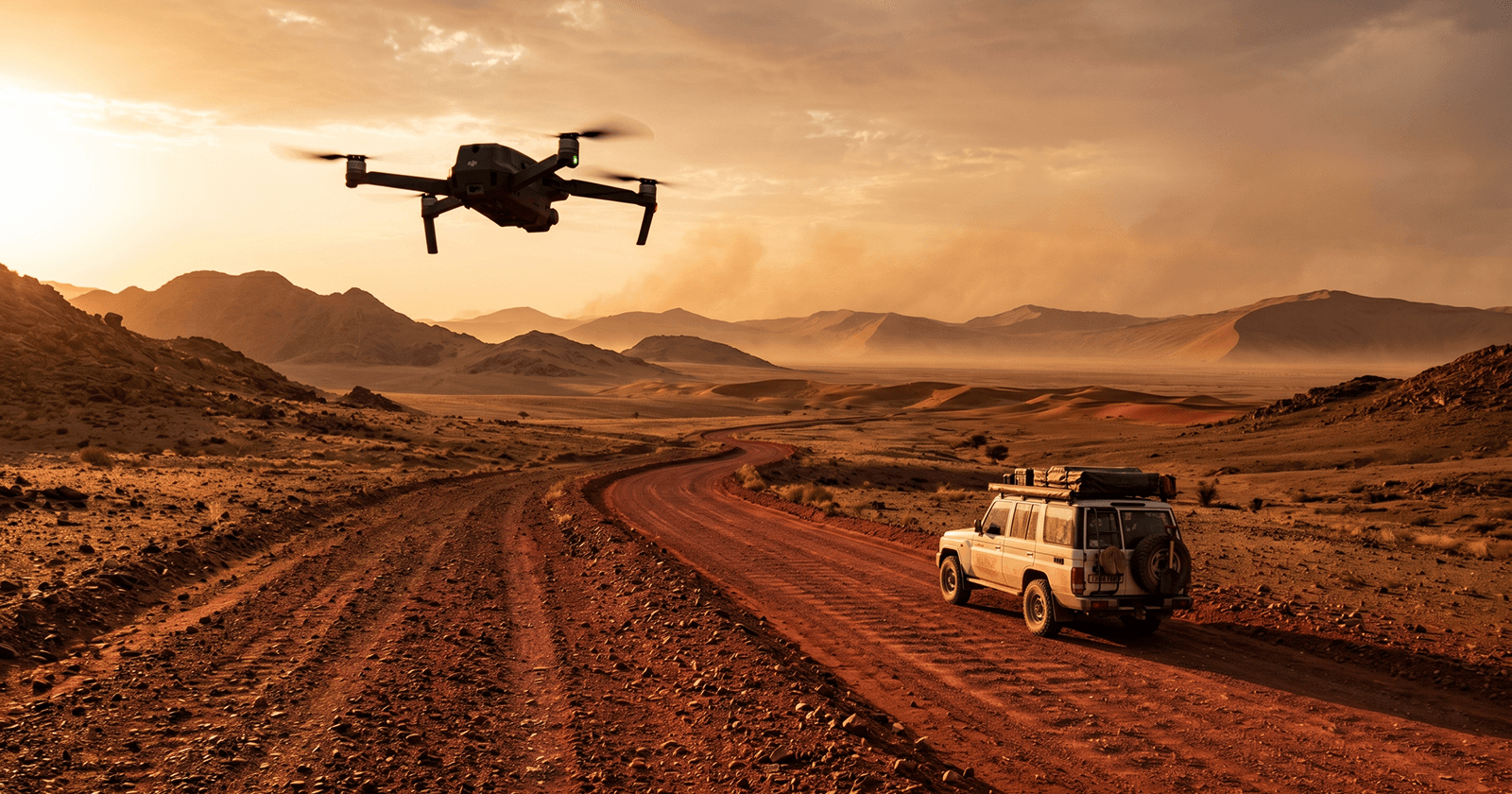
Yes, for any itinerary covering Damaraland, the Skeleton Coast, or Sossusvlei. The C-roads north of Khorixas require high ground clearance and all-terrain tyres. The Sossusvlei access road from the Sesriem gate covers 60km of deep sand track where standard vehicle clearance is insufficient. The Sandwich Harbour route south of Walvis Bay is impassable without 4x4 low-range and tyres deflated to 1.2 bar. A 2x4 saloon vehicle is appropriate only for the B1 and B2 tarmac highways between destination hubs. Any deviation from tarmac requires a 4x4.
Where can I see desert-adapted lions in Namibia?
Desert-adapted lions range across the Kunene Region — the northwestern corner of Namibia encompassing Damaraland, Kaokoland, and the Skeleton Coast National Park. The Palmwag Concession and the Hoarusib River valley are the most consistently productive search areas. Unlike Etosha's lion population which concentrates around fixed waterholes, Kunene lions follow prey along seasonal river systems and require tracking by rangers familiar with specific aeolian erosion rates on local substrates. Sighting probability on a general itinerary is under 30 percent but increases significantly with a specialist tracker guide and a minimum two-day focus period on the Hoanib riverbed.
How does the AfriCat Foundation track leopards at Okonjima?
The AfriCat methodology combines VHF telemetry with ground-truth tracking. Each leopard carries a VHF radio collar transmitting a directional signal. Field trackers use a handheld receiver to establish a bearing from a fixed observation point, then triangulate against a second receiver position to generate a probability radius. The radius is refined using physical evidence — pug marks on the substrate, scat positioning, and disturbance in the grass or bush — to identify the leopard's resting or hunting position. The system allows monitoring without pursuit and minimises the behavioural disturbance that conventional game drive tracking creates.
What is the best route from Damaraland to Swakopmund?
The recommended self-drive route follows the C35 south from Khorixas toward Uis, then connects to the D2303 through the Brandberg massif — the highest mountain in Namibia at 2,573 metres — before joining the B2 coastal highway at Henties Bay. Total transfer time is approximately four to five hours depending on stops at the Brandberg White Lady rock art site. Fuel planning is critical: fill at Khorixas. The next reliable fuel point is Henties Bay, 220km further.
How do desert elephants find water in Namibia?
Desert elephants in Namibia locate water through geological memory and acute olfactory detection. The Huab and Hoanib river systems run dry on the surface for most of the year but subsurface aquifers persist along ancient fracture zones in the underlying basalt and granite. Elephants navigate these dry riverbeds using a learned spatial map of fracture intersection points passed down through matriarchal knowledge over generations. At these intersections, the water table rises close enough to the surface for the elephant's trunk to detect moisture through sand at depths of up to two metres. The tracking signature is a series of excavation scrapes in the dry riverbed — shallow depressions where the elephant has used its foot and trunk to expose the moist substrate below.
LOGISTICS — WHAT YOU NEED TO KNOW BEFORE YOU DRIVE
Access and Transfer Times
The itinerary begins at Windhoek's Hosea Kutako International Airport. Okonjima is 70km north on the B1 — approximately 90 minutes. Damaraland at Mowani Mountain Camp is 4.5 hours northwest on the C35 and C36 gravel roads. Swakopmund is a 3-hour drive west from Damaraland via the coastal road. Sossusvlei is 4.5 hours south of Swakopmund via the B2 and C19. Total self-drive distance for the full itinerary is approximately 1,400km.
Vehicle Requirements
4x4 with high clearance. All-terrain or mud-terrain tyres. A minimum 50-litre auxiliary fuel capacity for the Damaraland leg is strongly recommended — service stations between Khorixas and Kamanjab are unreliable. Two spare tyres. A tyre repair kit rated for load. The C-roads north of Palmwag are corrugated basalt gravel and will destroy a standard tyre sidewall within one puncture.
Accommodation Notes
Mowani Mountain Camp accommodates guests in luxury thatch tents integrated into the granite inselberg, designed to use the rock's thermal mass for natural climate control. The Sossusvlei Lodge superior units include private patios with unobstructed dune views positioned for eastern aspect dawn light. Standard package inclusions are breakfast and dinner throughout, with game drives included at Okonjima and Erindi.
Health and Practicalities
Namibia is a low-to-no malaria destination outside the Caprivi Strip. The Damaraland, Swakopmund, and Sossusvlei regions require no malaria prophylaxis. UV index regularly exceeds 11 at Sossusvlei in summer. Carry a minimum of 3 litres of water per person per day on self-drive legs — respiratory dehydration in the Namib occurs faster than thirst signals indicate. No visa is required for South African, EU, UK, or US passport holders for stays under 90 days.
THE KRANTZ OUTDOORS FIELD VERDICT
The Safari.com 10-Day Namibia Must-See package performs at a different level from any comparable self-drive option because it places the traveller inside the geological narrative rather than beside it. The Huab River's invisible hydrology, the Etendeka basalt's thermal architecture, the Tsauchab's terminal geology — these are not backdrop features. They are the reason the wildlife exists where it does, in the form it has taken, with the behaviours it has developed.
The forensic tracking methodology required to find desert elephants in a dry riverbed produces a quality of engagement that a vehicle queuing at a Chobe pan cannot replicate. Deadvlei at first light is a geological time capsule that Botswana's floodplains and Tanzania's migration plains do not offer. And the self-drive format is not a budget mechanism. It is the only way to be at the right place at the right time in a landscape where the right time is 4:30am and the right place is 60km along a sand track.
The geological intelligence is the booking argument.
Book the 10-Day Namibia Must-See
Ten days. Four ecosystems. A self-drive route through the oldest desert on earth — from AfriCat predator conservation at Okonjima to desert elephant forensic tracking in Damaraland, Skeleton Coast fog belt herpetology at Swakopmund, and pre-dawn dune ascent at Sossusvlei. Safari.com holds the itinerary. The geology tells the rest.
Krantz Outdoors is a specialist pan-African safari research publication. Our editorial team aggregates field intelligence from professional trackers, wildlife photographers, and conservation scientists to deliver technically verified safari briefings.
This article is compiled from operator specifications, verified field reports, and specialist photography research. Krantz Outdoors conducts independent editorial review of all promotional content.
Affiliate disclosure: This article contains affiliate links. If you book through our Safari.com, Krantz Outdoors may earn a small commission at no additional cost to you. We only recommend experiences we genuinely believe in.
Wild by Nature. Africa by Choice.
Read our Privacy Policy and Terms & Conditions