
Sony FE 200-600mm vs Sigma 150-600mm Contemporary — Best Wildlife Photography Telephoto for African Safari
The Internal Zoom Advantage: Why Mechanical Design Decides Your Keeper Rate Before the Leopard Moves
Wild by Nature. Africa by Choice.
The leopard drops from the marula tree without warning. You have approximately four seconds before it disappears into the jesse bush — and in those four seconds, you will discover whether your telephoto lens is a field instrument or a liability.
That is not a hypothetical. It is the specific moment this comparison is built around.
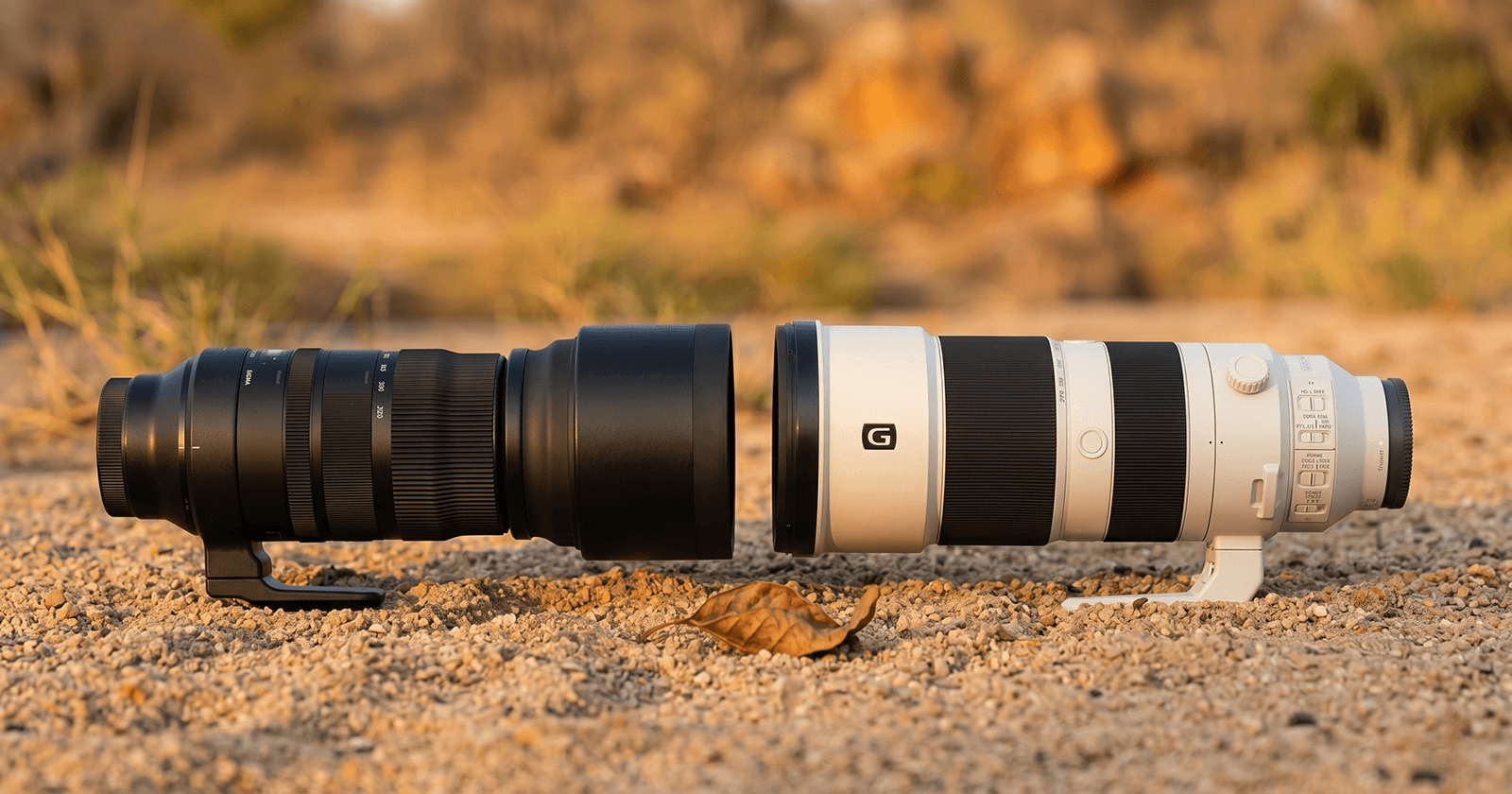
On paper, the Sony FE 200-600mm f/5.6-6.3 G OSS and the Sigma 150-600mm f/5-6.3 DG DN OS Contemporary for Sony E-mount occupy the same category. Both are native Sony E-mount lenses designed for full-frame bodies including the A7 IV, A7R V, and A9 III — and on APS-C bodies like the A6700, both produce an effective 300-900mm equivalent range with the 1.5x crop factor applied equally to both lenses. Both deliver 600mm of reach. Both carry optical stabilisation. Both cost under $2,000. And yet for the dedicated safari photographer shooting from a vehicle beanbag in the Sabi Sands, the Okavango Delta, or the greater Limpopo corridor, they are not interchangeable instruments — and the difference between them is not a spec sheet argument. It is a mechanical one.
This comparison also needs to be honest about what it is not. There are three other native Sony E-mount telephoto options in this price bracket — the Sony 100-400mm GM with 1.4x teleconverter, the Tamron 150-500mm, and the Sigma 100-400mm Contemporary. This article does not evaluate those alternatives. It answers a single question: between these two specific instruments, which earns its place in your kit bag when the environment is working against you — and Africa's environments always are.
Which is better for safari: Sony 200-600mm or Sigma 150-600mm Contemporary?
For dedicated African safari wildlife photography from a vehicle, the Sony FE 200-600mm f/5.6-6.3 G OSS is the stronger field instrument. Its internal zoom mechanism prevents dust ingress in dry-season environments, its native Sony autofocus delivers superior tracking on unpredictable predator movement, and it accepts Sony's 1.4x and 2.0x teleconverters — extending reach to 840mm and 1,200mm respectively — a capability the Sigma cannot match. The Sigma 150-600mm Contemporary is a compelling alternative for photographers prioritising weight, a wider 150mm minimum focal length, and a lower price point, particularly for walking safari, gorilla trekking, and multi-terrain deployments where a vehicle beanbag is not available.
Explore the Sony FE 200-600mm G OSS on Amazon
Here is how these two lenses compare across the criteria that matter in the African field context.
Both lenses use a 95mm filter thread — identical — meaning any existing filter system works on either lens without an adapter.
| Feature | Sony FE 200-600mm G OSS | Sigma 150-600mm DN OS Contemporary |
|---|---|---|
| Zoom Mechanism | Internal — fixed barrel length | External — barrel extends to 600mm |
| Dust Ingress Risk | Minimal — no bellows effect | High in dry conditions — acts as dust pump |
| Weight | 2,115g | 1,830g |
| Minimum Focal Length | 200mm | 150mm |
| Minimum Focus Distance | 2.4m | 2.8m |
| Optical Stabilisation | 3-mode Sony OSS | 4-stop OS |
| Autofocus Integration | Native Sony DDSSM — full IBIS sync | Third-party — no IBIS compatibility |
| Sharpness Wide Open at 600mm | Full resolution at f/6.3 | Requires f/8 for equivalent sharpness |
| Zoom Throw | 60° | ~130° |
| Beanbag Balance on Zoom | Constant — no centre of gravity shift | Shifts forward as barrel extends |
| Teleconverter Compatibility | Sony 1.4x → 840mm f/9 / Sony 2.0x → 1,200mm f/13 | Not compatible with Sony TCs |
| Filter Thread | 95mm | 95mm |
| 9-Blade Aperture | No — 11-blade circular | Yes |
| Price Range (2026) | $1,898–$1,999 | $1,399–$1,499 |
| Weather Resistance | Full dust and moisture sealing | Dust and splash resistant mount only |
| Best For | Full-time safari vehicle photographer | Multi-terrain, multi-format travel photographer |
Why Mechanical Design Matters More Than Image Quality Scores in African Conditions
Every lens comparison article will eventually get to image quality, autofocus speed, and stabilisation performance. This one begins somewhere more fundamental — because before any of those metrics matter, your lens needs to survive the environment it is operating in.
Africa's dry season transforms the Sabi Sands, the Hwange plateau, and the Okavango's surrounding mopane woodland into abrasive dust environments that no manufacturer fully accounts for in their weather-sealing documentation. The red Kalahari earth and the fine grey-white silt of the Limpopo flood plains are not ordinary dust. They are mineral particles fine enough to pass through tolerances that would stop rainwater, and they accumulate across a four-hour morning game drive with a consistency that would surprise most photographers arriving from temperate shooting environments.
The external zoom design used by the Sigma 150-600mm Contemporary creates a mechanical problem in this context that deserves a name: the bellows effect. Every time you zoom from 150mm to 600mm, the extending barrel draws air into the lens body. Every time you pull back from 600mm to 150mm, it expels that air outward. In a dust-heavy environment, this process actively pumps abrasive particles into the optical pathway with every zoom cycle — and on an active game drive, you cycle the zoom range dozens of times across a single sighting as subjects move between open ground and thick cover.
Not all African dust behaves the same way. Kalahari red earth contains iron-rich silica particles that suspend readily in the air and infiltrate lens tolerances quickly — daily front element inspection is non-negotiable in Hwange or northern Botswana dry season conditions. The white silt of the Limpopo flood plain is finer still and stays airborne longer, making it harder to see accumulating on glass surfaces until it has already affected image quality. Sabi Sands grey dust is less abrasive by particle size but generated in higher volume by vehicle movement on compacted game paths — the volume compensates for the reduced abrasiveness. These are three different operating environments that require slightly different cleaning discipline, but all of them are made categorically worse by a lens design that pumps air through its barrel during normal operation.
The Sony FE 200-600mm G OSS eliminates this failure mode entirely. The internal zoom mechanism maintains a fixed barrel length from 200mm to 600mm — the optical elements move internally while the external housing remains sealed. The lens you put on the vehicle mount at 200mm is the same physical object at 600mm. No pumping. No ingress pathway. No dust accumulation driven by your own zooming action.
This is not a marginal advantage in African conditions. It is the single most important mechanical differentiator between these two instruments for safari use.
The Sigma partially addresses the sealing concern with its Thermally Stable Composite construction and dust-and-splash-resistant mount — but the mount seal cannot compensate for an inherently open barrel design. The barrel extends. Air moves. Dust follows.
Optical Performance: The Sharpness Gap at Dawn
The mechanical argument for the Sony is compelling on its own. The optical argument makes it definitive.
The Sony FE 200-600mm delivers full resolution wide open at f/6.3 across the 600mm focal length. The Sigma 150-600mm Contemporary requires stopping down to f/8 to achieve equivalent sharpness at 600mm — a measured one-stop optical disadvantage that most laboratory reviews note in passing and most safari photographers discover at the worst possible moment.
Here is the field relevance of that one stop. A lion at a kill tree at 6:00am under overcast conditions — the first morning light after a cool, cloudy night — presents available light at approximately ISO 1600, 1/800s, f/6.3. At those settings on a Sony body, the Sony 200-600mm produces a keeper. The Sigma at f/6.3 produces a frame that is marginally soft at the 600mm focal length. Stopping down to f/8 demands either a slower shutter — producing motion blur on a subject that is eating, tearing, and repositioning — or a higher ISO, introducing noise into the shadow detail of dark-coated predators against dark foliage. Neither compromise is freely available at the moment when the light is at its most challenging and the subject at its most active.
This is the optical argument the comparison table's f/6.3 vs f/8 sharpness row represents in concrete field terms. It is not a laboratory finding. It is a keeper-rate variable that operates every morning during the African dry season shooting window.
Autofocus Architecture: Native vs Third-Party on Predator Movement
The second decisive differentiator between these lenses sits in the autofocus architecture — and here the Sony's advantage is structural, not merely incremental.
The Sony FE 200-600mm G OSS uses Sony's Direct Drive SSM (DDSSM) and is designed as a native Sony E-mount instrument. It communicates directly with Sony's in-body phase-detection autofocus system without a translation layer or algorithm conversion. On a Sony A7 IV, A7R V, or A9 III body, this means full Real-Time Tracking and Animal Eye AF access — the camera's subject recognition engine and the lens's drive motor operate as a unified system with no latency introduced by third-party firmware.
The Sigma 150-600mm DN OS Contemporary is a well-engineered native E-mount lens — this is not the older SA-mount lens requiring an adapter — but it operates through Sigma's own algorithm layer, which introduces measurable latency in subject acquisition when the tracking system needs to re-engage after a momentary subject loss. In high-grass predator environments where a leopard moving at pace crosses behind a vegetation screen for half a second before emerging, that re-acquisition latency is the difference between a keeper and a blurred frame at the moment of emergence.
Field reports from photographers using both lenses on the A9 III confirm the pattern: the Sony tracks erratic predator movement cleanly through vegetation breaks; the Sigma tends to hunt — a brief but visible focus oscillation — before re-acquiring the subject. For large, slow-moving subjects — elephant at a waterhole, buffalo in open ground — this difference is largely academic. For leopard at pace, painted wolf in pursuit, or any subject that changes direction unpredictably, it is a keeper-rate variable that operates independently of the dust argument.
No third-party manufacturer has access to Sony's internal autofocus firmware architecture. The gap between native and third-party AF performance on Sony bodies is real, measurable, and field-relevant — and it narrows on slow subjects and widens on fast ones, which means it reaches its maximum impact precisely when the subject is most worth photographing.
Beanbag Balance: The Practical Mechanics of Vehicle-Based Photography
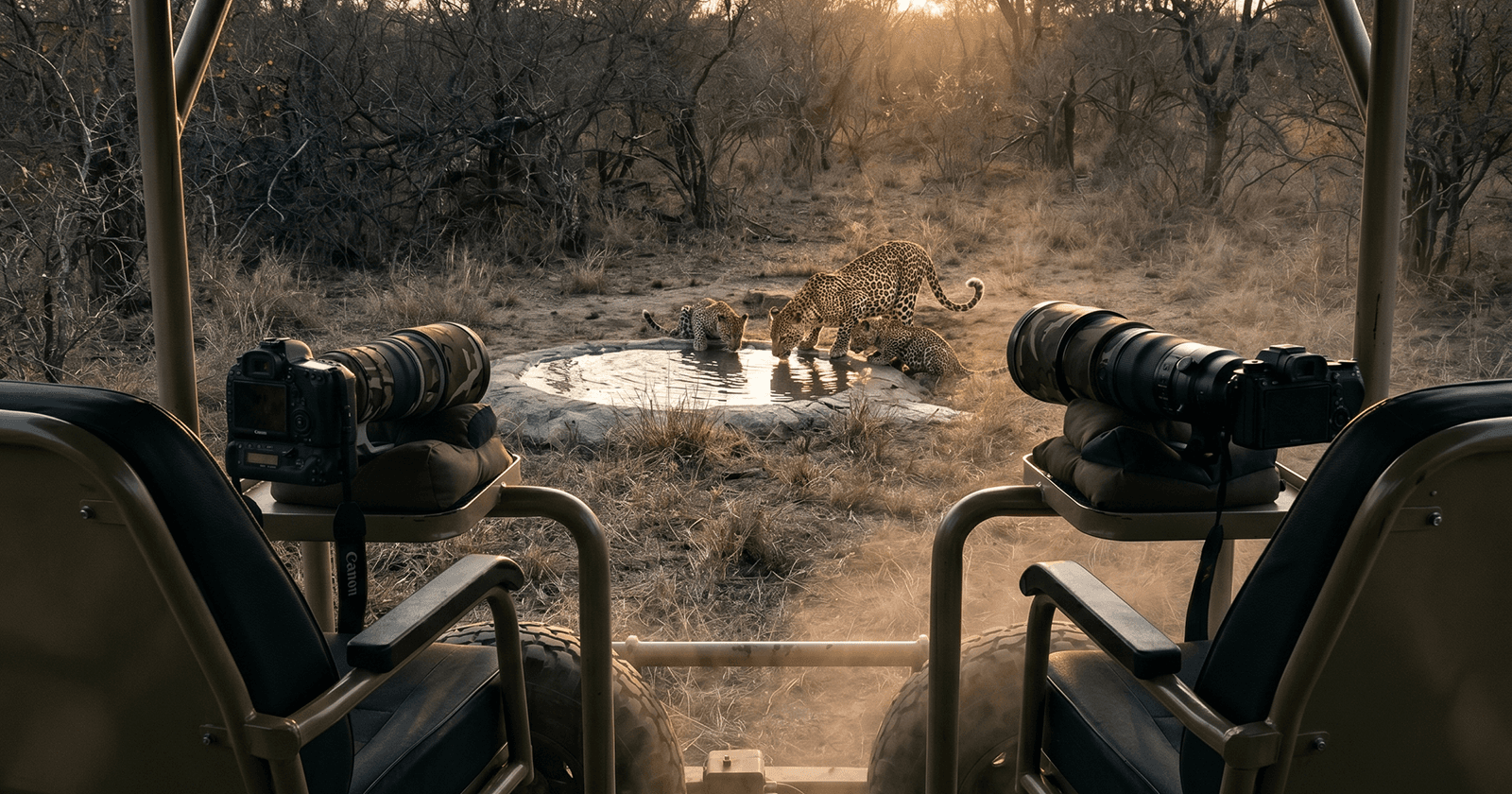
Most vehicle-based safari photography uses a beanbag mounted on the window frame or a gimbal head on a window bracket. Both systems depend on consistent weight distribution across the lens body to track moving subjects smoothly and absorb vibration from the vehicle.
The Sony 200-600mm G OSS maintains a constant centre of gravity from 200mm to 600mm. The internal zoom mechanism means the lens mass is fixed and predictable regardless of focal length. A beanbag calibrated for 400mm will perform identically at 600mm without repositioning.
The Sigma 150-600mm Contemporary shifts its centre of gravity forward as the barrel extends. At 150mm, the mass is concentrated toward the camera body. At 600mm, the extended barrel moves significant optical element weight forward of the mount point. For photographers using a gimbal, this shift requires recalibrating the balance point when moving through the zoom range — a fine adjustment in a controlled environment, and a meaningful complication when a painted wolf pack crosses the track at pace.
The Sony's 60-degree zoom throw compounds this advantage. The Sigma requires approximately 130 degrees of rotation for the same range. On a beanbag during active subject tracking, a 60-degree throw is a wrist movement. A 130-degree throw is a deliberate rotation that temporarily disrupts camera alignment and demands conscious reacquisition. Across a five-day safari with dozens of active predator sightings, that difference accumulates into a meaningful keeper-rate variable — not because any single moment is decisive, but because the Sony removes friction from every moment simultaneously.
Teleconverter Reach: The Advantage the Sigma Cannot Close
This is the differentiator that does not appear in most comparisons — and for the African safari photographer operating in open savanna ecosystems, it is the one that most directly determines whether the kit bag is complete or compromised.
The Sony FE 200-600mm G OSS accepts both the Sony SEL14TC 1.4x teleconverter and the SEL20TC 2.0x teleconverter, with full phase-detection autofocus retained on the A9 III and A7R V. With the 1.4x attached, the zoom range becomes 280–840mm at f/8–9. With the 2.0x, it becomes 400–1,200mm at f/11–13. Image quality with the 1.4x is strong in adequate light; the 2.0x is best treated as a specialist instrument for stationary subjects in bright conditions rather than a general-purpose reach extender.
The Sigma 150-600mm DN OS Contemporary accepts no Sony teleconverters. This is not a lens limitation that firmware or future updates will resolve — it is a consequence of the third-party autofocus architecture. The Sigma's optical range stops at 600mm, permanently.
The field relevance of this gap is specific. The northern Serengeti plains in July and August produce lion pride sightings at distances between 200 and 500 metres on open grassland where vehicles cannot approach closer. At 500 metres, 600mm on a full-frame sensor produces a compositionally correct but editorially loose frame — subject fills approximately 40 percent of the frame with significant negative space. At 840mm with the 1.4x TC, the same subject fills approximately 60 percent of the frame, producing an image with genuine editorial value. That compositional shift — 600mm to 840mm — is the difference between a reference shot and a publishable frame in open savanna conditions. The Sigma photographer cannot make that shift. The Sony photographer carries it as an option in their kit bag.
One honest constraint: the practical ceiling for extreme telephoto reach in African field conditions is set by the atmosphere, not the lens. Heat shimmer — refractive distortion caused by temperature differential between sun-heated ground and cooler air above it — becomes visible at telephoto focal lengths above 300mm from approximately 9:00am onward across most African savanna ecosystems, and it becomes debilitating above 500mm by 10:00am in open plains environments. No lens resolves atmospheric shimmer. The 1.4x TC is most effective during the same shooting windows that produce the best results without it — the two hours after first light and the two hours before sunset, when ground-level temperature differentials are minimal and the atmosphere is optically stable. Within those windows, 840mm of reach produces clean, sharp frames. Outside those windows, 600mm and 840mm alike will show shimmer at extreme distances.
Experienced safari photographers build their entire shooting day around this constraint, not around their lens choice. The TC extends your capability within the good-light window. It does not extend the window itself.
Order the Sony FE 200-600mm G OSS on Amazon
The Case for the Sigma: Where the Lighter Lens Wins
The argument for the Sigma 150-600mm Contemporary is not built on dismissing the Sony's advantages — it is built on acknowledging that not every safari photographer needs to optimise for the same variables, and that the Sigma is a genuinely capable instrument in the contexts where it is most appropriate.
The weight difference between these lenses is 285 grams — roughly the mass of a second camera battery and memory card set. That margin matters more in specific deployment contexts than the specification suggests. Walking safari in South Luangwa, gorilla trekking in Bwindi, chimpanzee trekking in Kibale, coastal wetland photography in iSimangaliso — these are environments where a vehicle beanbag does not exist, handheld stability and reach-to-weight ratio are the primary performance criteria, and the 285-gram saving represents genuine field advantage over the course of a four-hour forest trek or a six-hour walking safari. For those deployments, a lightweight carbon fibre monopod is the ideal support system — providing stabilisation on open ground and forest terrain where vehicle support is unavailable. The Manfrotto 290 Carbon Fiber Monopod on Amazon is a compact and field-proven option that pairs naturally with the Sigma's lighter profile for these specific contexts.
The 150mm minimum focal length is a genuine field advantage at close range. Large mammal encounters at close range — elephant at water in the Chobe, buffalo at the Sand River in the Sabi Sands, mountain gorilla at four metres in Bwindi — frequently occur at distances where 200mm produces a frame-filling composition that eliminates environmental context entirely. At 150mm, the Sigma captures the same subject with meaningful bush or forest framing, producing images with stronger editorial and documentary value. This is not a theoretical advantage. A gorilla trekking photographer in Bwindi who arrives with a 200mm minimum focal length will spend the majority of their hour in the presence of the gorilla group shooting at the lens's minimum focus distance, producing tightly cropped frames that remove the forest canopy and the social dynamics of the group from the composition. The Sigma's 150mm adds that context back.
The $500 price differential is not trivial in the context of a first serious safari kit. That margin funds a Sony 1.4x teleconverter for the next lens purchase, a quality circular polariser for waterhole reflections, or a meaningful contribution toward a second trip. The Sigma is not a compromise choice — it is the correct choice for a specific photographer profile.
Where the Sigma wins outright on optical character is the 9-blade rounded diaphragm. The background rendering at 600mm f/6.3 in smooth-background scenarios — birds against an open sky, subjects against water — is marginally more pleasing than the Sony's 11-blade design. This is a legitimate optical characteristic that matters most in controlled photographic safari environments and planned composition setups rather than reactive predator tracking.
For the photographer who shoots across multiple formats — safari vehicle, walking safari, gorilla forest, coastal or wetland context — and who manages dust exposure through disciplined lens change protocols rather than relying on mechanical design, the Sigma's versatility argument is credible and complete.
The Sabi Sands Standard: Where This Decision Gets Sharpest
For a full-context read on the specific photographic conditions this decision maps to, the Leopard Hills Photographic Safari Review covers the Sabi Sands operating environment in field intelligence detail — including open-vehicle access, traversal rights, the predator sighting frequency, and the dust conditions of June through October that define the sharpest version of this comparison.
For an understanding of what the MalaMala Camp Review delivers in terms of vehicle access and morning light positioning on the Sand River, that review maps the specific environmental variables — including the grey-dust game path conditions — that both lenses will be working against.
What both destinations confirm is that the Sabi Sands in dry season conditions produces the finest predator photography opportunities on the continent, and those conditions produce the most demanding dust environment either of these lenses will encounter in the field. The decision between these two instruments reaches its sharpest resolution in exactly that context — and in that context, the Sony's mechanical architecture is not an advantage. It is the prerequisite.
The Internal Zoom Reality Check: 90 Seconds, Thirty Zoom Cycles
This is where theoretical mechanical advantage becomes a field-verified outcome.
Consider the specific scenario that defines the difference between these lenses: a leopard sighting that begins at a known kill tree, transitions to a ground stalk through medium cover, and culminates in a flush-and-chase sequence lasting approximately 90 seconds. This sequence — common enough in the Sabi Sands to be described by field guides as a standard predator encounter architecture — involves approximately thirty zoom cycles, six vehicle repositions, and sustained subject tracking at focal lengths between 300mm and 600mm.
In that 90-second sequence, the Sigma 150-600mm Contemporary pumps air through its barrel approximately sixty times. In Sabi Sands dry season conditions, each pump cycle draws fine silica particles into the optical pathway. The accumulation across a single encounter is measurable under a lens inspection light. Across a five-day photographic safari, it is a sensor cleaning and front element servicing requirement.
The Sony's sealed fixed barrel draws nothing. The keeper rate differential between these two lenses in this specific scenario is not produced by autofocus speed or optical quality alone — it is produced by the fact that the Sony is not actively working against itself while the Sigma is.
That is the honest field intelligence argument for the $500 premium.
Cleaning and Field Maintenance: What the Manufacturers Don't Tell You
Both lenses will require dust management on any extended African safari. The discipline is the same regardless of which system you carry: change lenses only in the vehicle cab with windows closed, store in a sealed hard case between drives, and clean both sensor and front element at camp after each full day of shooting — not at the end of the trip when contamination has had five days to settle onto optical surfaces.
Destination-specific dust conditions require destination-specific cleaning frequency. In Hwange and northern Botswana, where Kalahari red earth is the dominant particulate, daily front element inspection after each drive is non-negotiable — the iron-rich silica infiltrates lens mount tolerances faster than most photographers expect from visual inspection alone. In the Limpopo corridor and Sabi Sands, the grey-white silt is finer and stays airborne longer; the accumulation on front elements is slower but the particles are harder to remove once embedded in the coating surface. In both environments, a lens blower and a clean microfibre cloth used immediately after each drive — not after each trip — is the minimum maintenance standard.
For the Sony 200-600mm specifically, a waterproof camouflage lens cover adds a critical layer of protection during active field use. In a Hwange dust storm — which can arrive in sixty seconds from clear conditions and deposit a visible layer of red earth on every exposed surface — a cover over the Sony barrel prevents the front element from becoming the first surface the particulate contacts. The ROLANPRO Waterproof Camouflage Lens Cover on Amazon is purpose-built for the Sony 200-600mm barrel profile and adds under 200 grams to the kit bag.
Where the Sony's advantage extends into field maintenance is in the front element exposure at maximum focal length. The Sigma's extended barrel at 600mm brings the front element physically forward and closer to the external environment — relevant when shooting at ground level from a vehicle door or in crosswind conditions that carry particulate laterally. The Sony's fixed barrel keeps the front element at a consistent recessed position regardless of focal length setting.
A telephoto-capable camera backpack completes the protection system. Transporting either of these lenses between camps in an unprotected soft bag is the most common source of field damage, not the game drive itself. The Lowepro ProTactic BP 450 AW III on Amazon accommodates an extended telephoto with a mounted body and carries as hand luggage on most regional bush aircraft configurations.
People Also Ask
Which is better for safari: Sony 200-600mm or Sigma 150-600mm?
The Sony FE 200-600mm G OSS is the stronger choice for dedicated African safari photography from a vehicle. Its internal zoom mechanism prevents dust ingress in dry-season environments, its native Sony autofocus integration delivers superior tracking on unpredictable predator movement, it is sharper wide open at f/6.3 at 600mm, and it accepts Sony 1.4x and 2.0x teleconverters extending reach to 840mm and 1,200mm respectively. The Sigma 150-600mm Contemporary is the correct choice for walking safari, gorilla trekking, and multi-terrain deployments where weight, the 150mm minimum focal length, and a $500 cost saving are the governing criteria.
Does the Sigma 150-600mm Contemporary have weather sealing?
The Sigma 150-600mm f/5-6.3 DG DN OS Contemporary has a dust and splash resistant mount but is not fully sealed. Its external zoom mechanism creates an inherent air pathway that draws dust into the lens body during normal zooming operation — the bellows effect. In heavily dusty African safari environments — particularly in dry-season Kalahari, Limpopo, and Sabi Sands conditions — this design requires disciplined lens management and daily front element inspection.
Why is internal zoom important for wildlife photography?
Internal zoom maintains a fixed barrel length regardless of focal length setting, eliminating the bellows effect that draws dust and particles into an externally-zooming lens during normal operation. For African safari photography, where dry-season silica dust is pervasive and zooming frequency during active predator tracking is high, internal zoom is a structural mechanical advantage. It also maintains a consistent centre of gravity across the zoom range, improving tracking stability on vehicle beanbags and gimbal heads, and keeps the front element at a fixed recessed position regardless of focal length.
Is 600mm enough focal length for an African safari?
600mm is sufficient for the majority of African safari wildlife photography from a vehicle in private reserve environments where vehicle approach distances are controlled. For open savanna ecosystems — the northern Serengeti, the Masai Mara, the Liuwa Plain — where subject distances regularly exceed 300 metres, the Sony FE 200-600mm's compatibility with Sony teleconverters extends reach to 840mm with the 1.4x, which changes the compositional quality of frames at those distances meaningfully. The Sigma stops at 600mm. For close-range encounters in private reserves, both lenses are more than sufficient, and the Sigma's 150mm minimum focal length is actively advantageous.
How do I protect my camera lens from safari dust?
Change lenses only inside the vehicle cab with windows closed. Store lenses in sealed hard cases between drives. Use a dedicated lens cover during active field use and clean front elements at camp after each full day of shooting — not at the end of the trip. Adjust cleaning frequency to the specific dust environment: Kalahari red earth requires daily post-drive inspection; Limpopo white silt requires attention to coating surfaces where fine particles embed slowly. On the Sony FE 200-600mm, the internal zoom mechanism provides a structural advantage by eliminating the bellows effect that draws dust into externally-zooming lenses. A telephoto-capable camera backpack with sealed compartments is the most effective single upgrade for lens protection during camp-to-camp transfers.
Can you use a teleconverter with the Sigma 150-600mm Contemporary?
The Sigma 150-600mm f/5-6.3 DG DN OS Contemporary is not compatible with Sony teleconverters. The Sony FE 200-600mm G OSS accepts both the Sony SEL14TC 1.4x and SEL20TC 2.0x teleconverters with full phase-detection autofocus retained on the A9 III and A7R V. With the 1.4x, the Sony produces 280–840mm at f/8–9. With the 2.0x, it produces 400–1,200mm at f/11–13. For open savanna ecosystems where subject distances regularly exceed 300 metres, this teleconverter reach is a meaningful compositional advantage the Sigma cannot replicate.
The Verdict: Which Lens Goes in the Kit Bag?
Two buyer profiles. One honest answer for each.
The Safari Specialist — Sony FE 200-600mm G OSS
If your safari photography is the primary objective of your trip, if you shoot predominantly from a vehicle in the Sabi Sands, Okavango, Hwange, or Limpopo corridor, and if your keeper rate on predator sequences defines whether the trip was a photographic success — the Sony is the correct instrument. The internal zoom, the native autofocus integration, the optical sharpness wide open at f/6.3, and the teleconverter reach to 840mm are not marginal advantages in this context. They are the mechanical and optical foundation on which your keeper rate is built.
The $500 premium is a lens service cost. Any photographer who has paid for professional lens cleaning after a dust-compromised safari deployment has paid more than that for a problem the Sony's design prevents structurally.
Buy the Sony FE 200-600mm G OSS on Amazon
The Versatile Traveller — Sigma 150-600mm DN OS Contemporary
If you shoot across multiple formats — safari vehicle, walking safari, gorilla trekking, coastal or wetland — and weight and carry-on compliance matter, the Sigma delivers 600mm of reach at 285 grams less than the Sony. If the 150mm wide end is genuinely useful to your compositional approach on large mammals and primates at close range, and if you are building a first serious safari kit where the $500 saving funds a meaningful upgrade elsewhere in the system, the Sigma is the correct instrument — lighter, wider, and priced to leave room in the kit budget for the accessories that complete a first serious safari build.
Buy the Sigma 150-600mm DN OS Contemporary on Amazon
Krantz Outdoors is a specialist pan-African safari research publication. Our editorial team aggregates field intelligence from professional trackers, wildlife photographers, and conservation scientists to deliver technically verified safari briefings.
This article contains affiliate links to Amazon. If you purchase through our links, Krantz Outdoors may earn a small commission at no additional cost to you. We only recommend products we genuinely believe in.
Wild by Nature. Africa by Choice.