
Sabi Sand and Kruger Ultra Lux Safari — Inside the Rhino Sanctuary the Booking Platforms Don't Talk About
Where Big-Five Access Meets Frontline Conservation Intelligence — The Idube-Lukimbi Itinerary That Changes What a Luxury Safari Means
Wild by Nature. Africa by Choice.
There is a moment, at roughly 05h30 on a cold southern Kruger morning, when the Lukimbi suspension bridge becomes the most significant piece of infrastructure in your safari experience. Beneath it, in the pale sand of the Lwakahle riverbed, a breeding herd of elephants is digging. Not drinking — digging. Forefoot forward, tusks angled down, reading the subsurface alluvial aquifer with a geological precision that no game ranger briefing fully prepares you for. The lodge staff call it routine. The field science behind it is anything but.
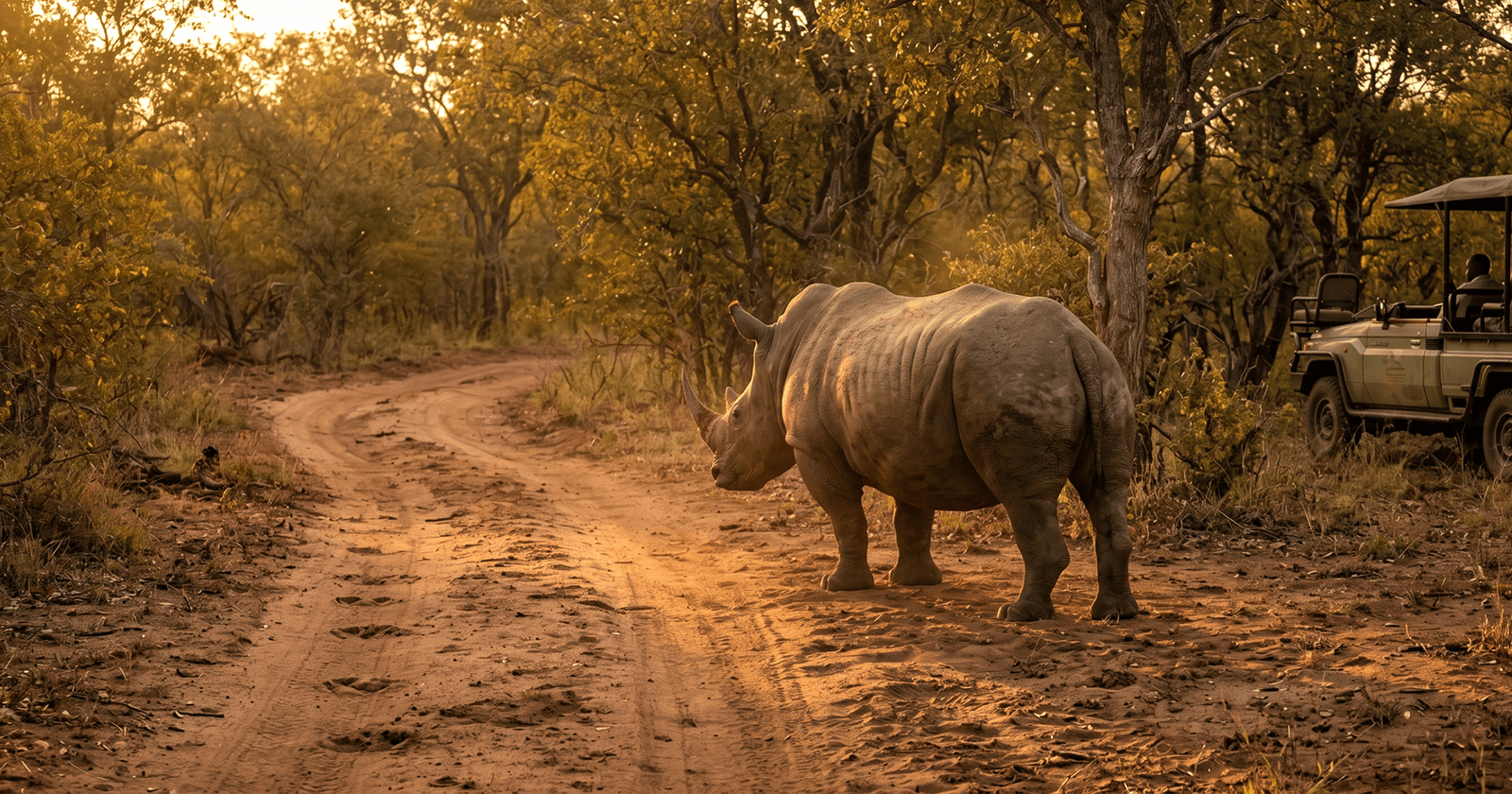
That scene is the clearest expression of what separates the 7-Day Ultra Lux Big-Five Sabi Sand and Kruger Park Safari from every comparable itinerary in the southern Africa market. The package delivers full off-road leopard tracking rights through Idube's granitic crests in the Sabi Sand — and those sightings are exceptional. But the harder argument for this specific itinerary is what happens when you cross the fence line into Lukimbi's 15,000-hectare private concession in the southern Kruger and understand that you are not simply on a game drive. You are inside one of the park's highest-security white rhino protection zones — a landscape managed under anti-poaching protocols that the standard Kruger tourism infrastructure never touches. The rhino conservation architecture is not a marketing overlay. It is the defining operational reality of the Lukimbi concession, and it changes the quality of every sighting you have inside it.
What makes the Lukimbi private concession different from standard Kruger National Park access?
Lukimbi Safari Lodge operates on an exclusive 15,000-hectare private concession in the southern Kruger National Park, positioned at the hydrological confluence of the Lwakahle and Mutlumuvi rivers. Unlike public Kruger access — which restricts guests to proclaimed roads and exposes them to vehicle congestion at sightings — the Lukimbi concession provides full off-road traversing rights, zero self-drive traffic, and year-round wildlife concentration driven by the Lwakahle's underground alluvial aquifers. The concession functions as an intensive protection zone for white rhino, managed under dedicated anti-poaching protocols that are operationally separate from general Kruger tourism areas.
This is the itinerary that earns the word "ultra-lux."
Three nights at Idube, positioned on Sabi Sand's granitic crests with full off-road leopard tracking rights. Three nights at Lukimbi, inside a private 15,000-hectare Kruger concession that doubles as a white rhino sanctuary. No self-drive congestion. No surface-pan dependency. No generic bush view.
Explore the 7-Day Ultra Lux Sabi Sand and Kruger Safari on Safari.com
The Two-Property Logic — Why the Pairing Matters
Most dual-property itineraries in the greater Kruger ecosystem are built on geographical convenience — two lodges within reasonable transfer distance, marketed as a "contrast." The Idube-Lukimbi combination is built on something more defensible: complementary hydrological systems that produce radically different wildlife concentration mechanics in the same landscape.
Idube Safari Lodge sits on the granitic crests of the central Sabi Sand, a geological formation that determines everything about the sighting experience. The ancient granite boulders — koppies — radiate stored heat into the dry season night, and the resinous scent of crushed Red Bushwillow defines the arrival atmosphere in a way that signals you are in old bush, not a manicured reserve. The Sabi Sand traversing agreement means Idube's field guides operate under full off-road rights across one of the highest leopard-density landscapes on the African continent. This is not a coincidence of biodiversity — it is the product of decades of protection inside a fenced private reserve that was built specifically to concentrate and safeguard the Big Five.
Lukimbi shifts the frame entirely. The arrival atmosphere — cool riverine silt, the African Fish Eagle calling across the Lwakahle at first light — signals a different hydrological world. Where the Sabi Sand's surface pans create seasonal wildlife congregation that disperses in dry months, the Lwakahle's underground alluvial aquifer system creates permanent water access that functions as a year-round wildlife magnet. The practical consequence: dry-season sighting quality at Lukimbi, when other properties in the broader Kruger system are watching their waterholes evaporate, remains exceptional. The elephants digging beneath the suspension bridge are not a spectacle staged for guests. They are the visible expression of a hydrological reality working below the surface every hour of every day, regardless of the rainfall calendar.
The Rhino Protection Intelligence — What the Concession Actually Means
The white rhino is South Africa's most poached megafauna, and the southern Kruger is the theatre of one of the continent's most operationally intensive conservation conflicts. Understanding how Lukimbi's private concession fits into that conflict is not supplementary context — it is the intelligence that explains why the sighting quality inside the concession is categorically different from standard Kruger access, and why this itinerary deserves the conservation science framing rather than the standard luxury lodge narrative.
A private concession inside a national park operates under a management mandate that general tourism infrastructure does not carry. The concession agreement with SANParks assigns Lukimbi specific custodial responsibilities over the wildlife within its 15,000 hectares, and those responsibilities include the maintenance of anti-poaching protocols that operate independently of general Kruger ranger deployment. In practical terms, this means the concession functions as an intensive protection zone — a landscape where human presence is controlled, vehicle numbers are managed, and security intelligence is operationally integrated with the lodge's daily field operations.
For a guest, the evidence is not necessarily visible in a formal anti-poaching briefing. It is visible in the confidence with which field guides approach rhino sightings — the familiarity with individual animals, the knowledge of regular ranging circuits, the absence of the hedging language that guides use in less-secured zones. When a Lukimbi field guide tells you a particular white rhino cow has been ranging this section of the Lwakahle for eleven years, that is not lodge lore. That is the product of consistent monitoring within a protected management zone, where individual animal histories are maintained as operational data rather than anecdote.
The poaching pressure on Kruger's southern section has been among the most acute in the park's history over the past decade. The density of white rhino in the concession, relative to the broader southern Kruger, is partly a function of this protection architecture. Animals range into higher-security zones over time — this is a documented behavioural response to poaching pressure, consistent with findings published by the South African National Biodiversity Institute on rhino ranging adaptation in high-pressure landscapes, and it concentrates rhino within managed areas at rates that open-access zones cannot match. What this means for guests is a statistically higher probability of rhino encounters, and a qualitatively richer encounter when it happens — approaching animals that are calm, unhabituated to stress, and visible in their natural ranging behaviour rather than responding to disturbance.
The Conservation Dividend — What Your Booking Funds
Private concession fees paid by lodges like Lukimbi to SANParks represent a significant component of the anti-poaching operational budget for the southern Kruger. The fee structure is not a premium hospitality charge — it is a concession management agreement that funds the ranger deployment, intelligence infrastructure, and rapid response capacity that the intensive protection zone depends on.
A guest staying at Lukimbi is not passively adjacent to this conservation architecture. They are, through the commercial mechanism of the booking, a direct contributor to the operational sustainability of one of the most contested conservation landscapes in Africa. The white rhino sightings, the calm animal behaviour, the field guide familiarity with individual animals — these are not incidental benefits of a luxury safari product. They are the outputs of a funded protection system, and the booking is part of what funds it.
This is the information gain that distinguishes a specialist safari research publication from a booking platform. A booking platform shows you room availability and a price. A field intelligence briefing explains why the conservation architecture of a specific concession produces specific sighting outcomes — and why those outcomes are worth the investment.
The Sabi Sand Equation — Idube and the Leopard Intelligence
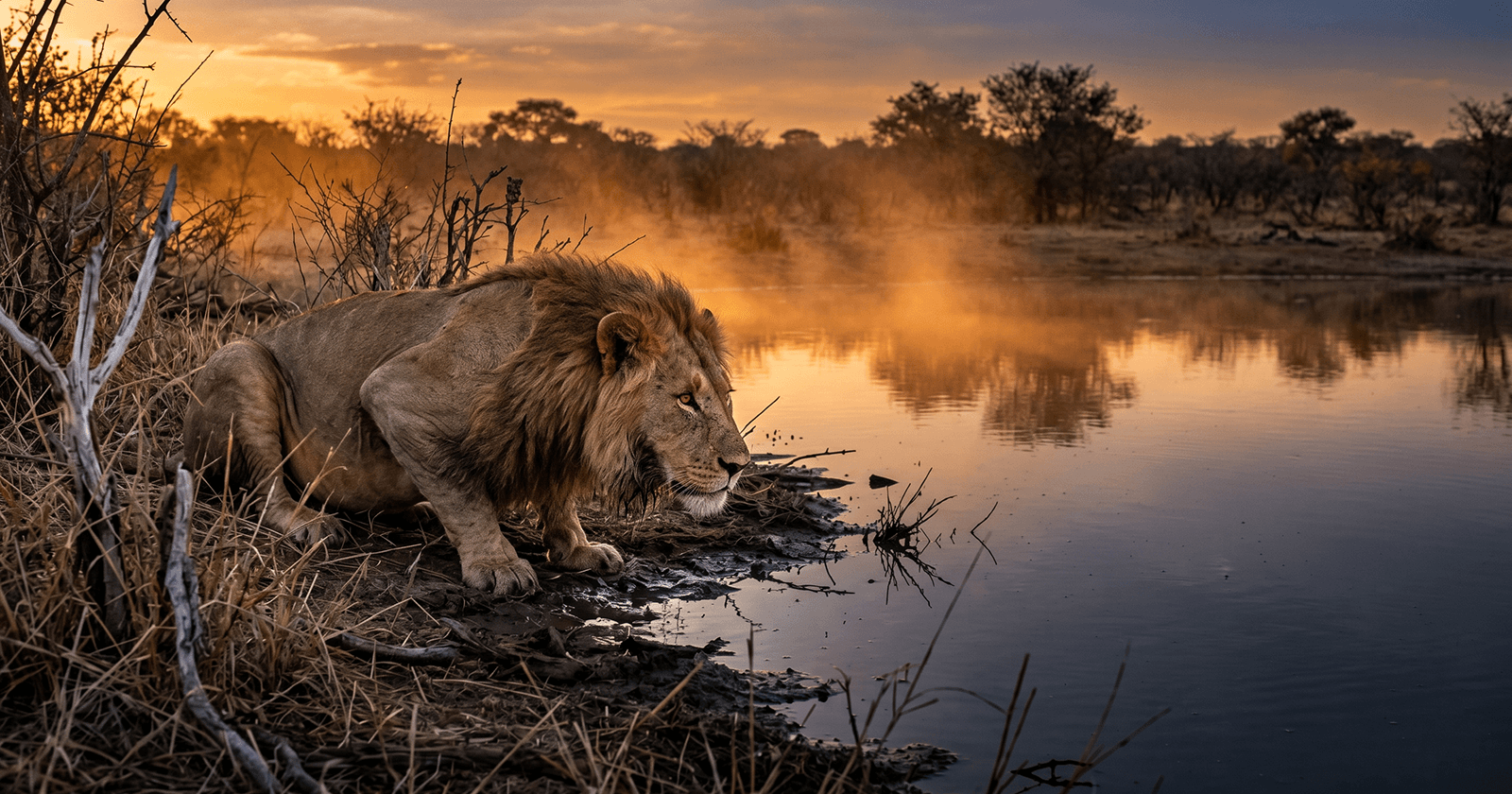
The Sabi Sand is the most densely leoparded private reserve in Africa, and the operational reason is straightforward: the reserve's continuous protection since the 1950s has allowed leopard populations to stabilise, individual territories to be mapped, and field guide knowledge to accumulate across generations of trackers. Idube's positioning on the granitic crests of the central reserve places it at the intersection of several established leopard territories — the rocky outcrops provide denning cover, elevated hunting positions, and the kind of microhabitat that leopards select consistently across southern African landscapes.
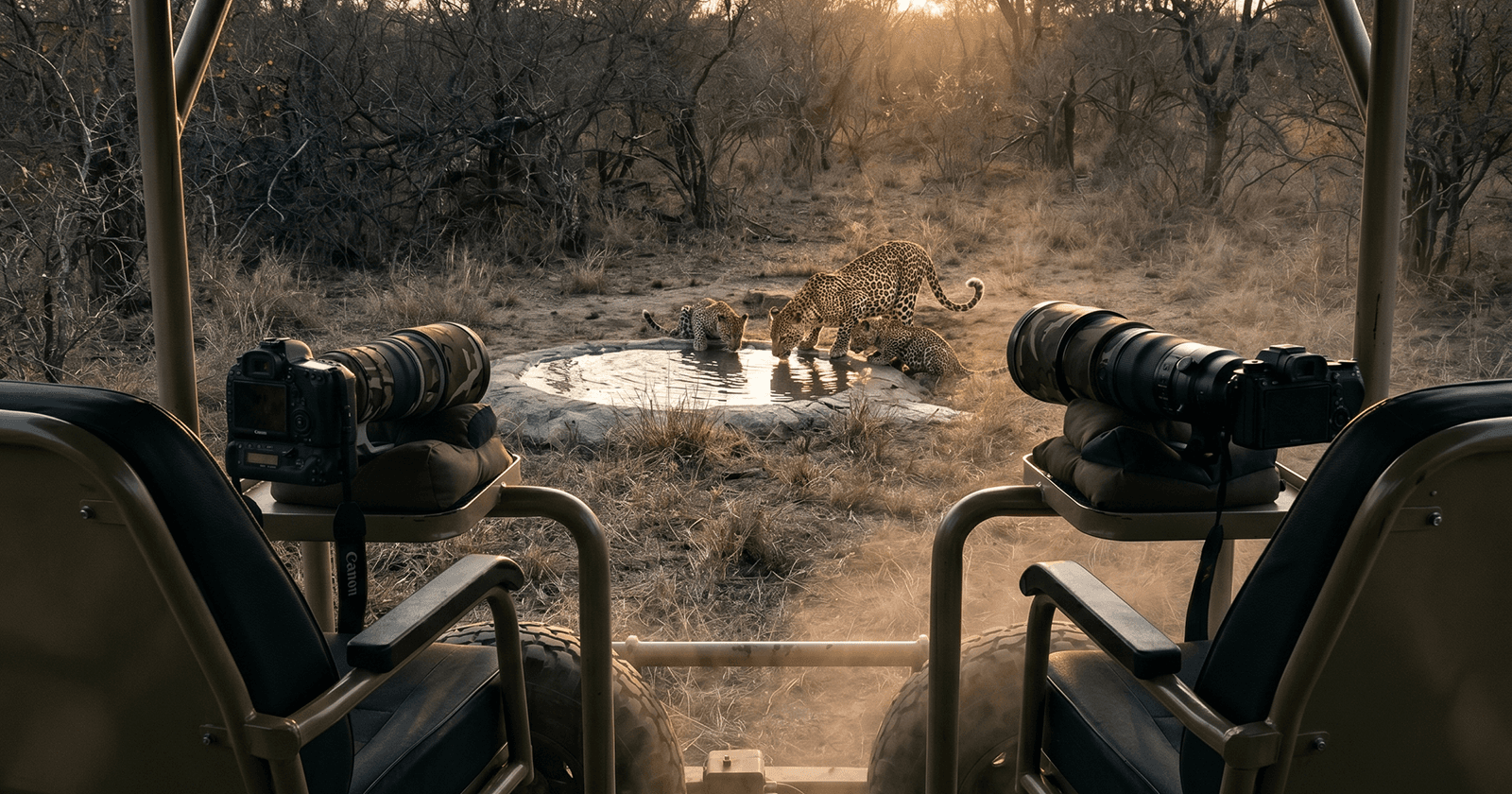
The distinction between Sabi Sand leopard access and public Kruger leopard sightings is not merely a question of numbers. It is a question of observational quality. A leopard sighting on a public Kruger road involves a stationary vehicle on a tarred surface, potentially surrounded by twenty or more other vehicles, with no capacity to reposition as the animal moves into thicker cover. A Sabi Sand sighting under full traversing rights means the vehicle moves with the animal — through jesse bush, off any defined track, following the logic of the leopard rather than the geometry of a road network. The sighting duration, the behavioural range visible, and the photographic opportunity are of a different order entirely.
For those interested in the parallels between photographic methodology and leopard tracking in this terrain, our Leopard Hills photographic safari review covers the specific optics and positioning requirements for the Sabi Sand's thicker river-margin vegetation — a terrain profile that Idube guests will recognise from the Sand River approaches.
The Big Five completion rate across the combined Idube-Lukimbi itinerary is among the highest in the southern Africa market, and the structural reasons are clear: two distinct ecosystems, two distinct wildlife concentration mechanics, and two separate protection frameworks operating simultaneously across a combined area that no single-property safari can replicate.
The Subsurface Water Protocol — Field Science You Don't Get on a Booking Platform
The Lwakahle's underground alluvial aquifer system is the most technically differentiated element of this itinerary, and it demands a precise explanation because it determines the dry-season sighting quality argument that this package's value proposition rests on.
An alluvial aquifer forms when a river's flood energy deposits sediment — gravels, coarse sands — in the riverbed over thousands of years. This porous substrate retains water long after surface flow has ceased, creating a subsurface reservoir that plants and animals can access through digging, root penetration, and pressure-point seepage. The Lwakahle's aquifer system is fed by seasonal rainfall events upstream, but the retained water persists in the riverbed sediment through the dry months at depths that elephants can reach with their forefeet and tusks. This is the scientific basis for the elephant digging behaviour visible from the Lukimbi suspension bridge — not a unique elephant personality trait, but a consistent response to a known water resource in a proven location.
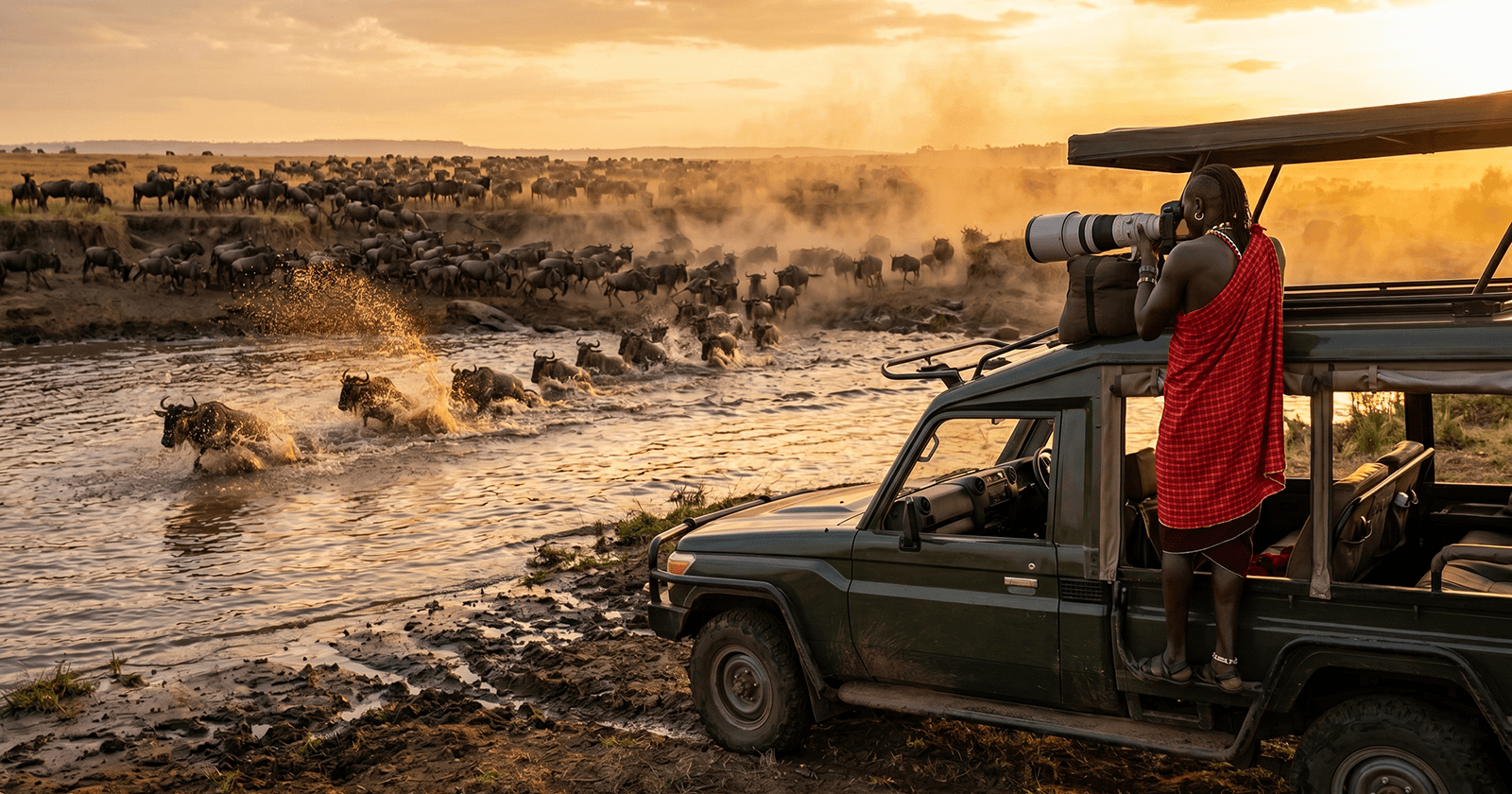
The management implication is significant: wildlife does not disperse from the Lukimbi concession during drought conditions the way it disperses from surface-pan-dependent properties. Elephant, buffalo, and rhino anchor to the Lwakahle corridor year-round, and the predator load — lion, leopard, wild dog — follows the prey concentration. The result is a sighting consistency across calendar months that properties relying on seasonal pans and man-made waterholes cannot match with the same reliability.
For a broader context on what premium private reserve access delivers relative to standard Kruger infrastructure, our MalaMala Game Reserve review provides a detailed comparison of the traversing rights architecture and its operational consequences for Big Five sightings — a framework directly applicable to evaluating the Idube-Lukimbi pairing.
Logistics — The Practical Architecture of the Itinerary
The fly-in access point is OR Tambo International to Kruger Mpumalanga International Airport. Private vehicle transfers are pre-arranged as part of the package, with the Idube transfer running approximately one hour forty-five minutes and the inter-lodge transfer between properties approximately one hour fifty-five minutes. All meals, local beverages, and twice-daily game drives in open 4x4 vehicles are included across both properties, alongside interpretive bush walks — the latter a distinct specialist experience in the Sabi Sand, where walking is conducted under the same traversing rights framework as vehicle-based drives. An insulated field tumbler earns its place on every dawn drive — the Krantz Outdoors Polar Camel Skinny Tumbler 22oz keeps your coffee at temperature from first light through to the 09h00 sighting debrief.
Accommodation at Idube is in the Leadwood or Makubela Suites, both with private plunge pools. At Lukimbi, Classic or Premier Suites are available, with the Premier offering the most direct Lwakahle river frontage and the most unobstructed sightline to the elephant digging corridor beneath the suspension bridge. The floor-to-ceiling glass river views frame the Lwakahle waterway at every hour of the day — from the blue-hour mist at 05h00 to the gold-and-ochre last light at 19h30.
The structural advantage of this itinerary over packages that rotate guests between multiple mid-tier lodges is the depth of field intelligence that accumulates over three consecutive nights at each property. Field guides at both Idube and Lukimbi develop a three-night relationship with each group — mapping individual animal movements, adjusting drive timing to specific sighting windows, and building a programme that is responsive to what the bush is doing in real time rather than executing a fixed menu of standard activities. This operational depth is not available on one-night or two-night stays, regardless of the headline lodge quality.
Reserve your suite on the 7-Day Ultra Lux Sabi Sand and Kruger Safari
People Also Ask
Does Lukimbi Safari Lodge have a private concession in Kruger?
Yes. Lukimbi operates on an exclusive 15,000-hectare private concession within the southern Kruger National Park under a SANParks concession agreement. Guests have full off-road traversing rights, zero public vehicle access, and a managed white rhino protection framework. No self-drive vehicles share the concession.
What is the difference between Sabi Sand and Lukimbi wildlife sightings?
The Sabi Sand — where Idube operates — is a fenced private reserve adjacent to Kruger, known for the highest leopard density in Africa and full off-road traversing rights through dense riverine vegetation. Lukimbi operates inside Kruger National Park itself on a private concession along the Lwakahle river system, where a permanent alluvial aquifer concentrates elephant, buffalo, rhino, and the predators that follow them year-round. The Sabi Sand delivers the continent's most consistent leopard encounters; Lukimbi delivers a white rhino protection zone with wildlife anchored by hydrology rather than season. The combined itinerary provides both within the same six-night period — two ecosystems, two distinct concentration mechanics, and two separate protection frameworks that no single-property safari can replicate.
Can you see the Big Five at Idube Safari Lodge?
Yes. Idube's full traversing rights across the central Sabi Sand produce consistently high Big Five encounter rates, with lion and leopard as the headline species. Off-road access means vehicles follow animals through cover rather than waiting at road-side points — the sighting quality is categorically different from any public reserve experience.
How do you transfer from Sabi Sand to Kruger National Park?
The inter-lodge transfer between Idube and Lukimbi is by private vehicle, taking approximately one hour fifty-five minutes, and is included in the package. The itinerary begins with a fly-in from OR Tambo International to Kruger Mpumalanga International Airport, followed by a private vehicle transfer to Idube of approximately one hour forty-five minutes. All logistics are pre-arranged — no self-drive coordination is required at any point in the itinerary.
Are there private plunge pools at Idube Makubela Suites?
Yes — both the Leadwood and Makubela Suites at Idube include private plunge pools. At Lukimbi, Premier Suites offer floor-to-ceiling glass river views directly over the Lwakahle digging corridor.
| Feature | 7-Day Ultra Lux Package (Idube / Lukimbi) | Standard National Park Safari |
|---|---|---|
| Crowd Control | Zero-congestion 15,000-hectare private Lukimbi concession | Public road congestion at sightings; up to 50+ vehicles |
| Tracking Range | Full off-road traversing in Sabi Sand for predators | Strictly confined to tarmac and gravel roads in public areas |
| Water Dynamics | Permanent alluvial water at Lukimbi/Lwakahle system | Seasonal pans only; wildlife disperses in dry months |
| Visual Access | Private suites with direct riverbed and koppie views | Generic bush-view units with limited private deck activity |
| Conservation Framework | White rhino IPZ with managed anti-poaching protocols | General Kruger ranger deployment; no concession-specific protection |
| Sighting Depth | Three consecutive nights per property; guide relationship builds | One to two nights typical; no accumulated field intelligence |
Six nights. Two ecosystems. One itinerary that earns the word "ultra-lux" in the field, not the brochure.
Three nights at Idube on the Sabi Sand's granitic crests — full off-road leopard tracking, private plunge pools, the resinous heat of old African bush. Three nights at Lukimbi on the Lwakahle — a 15,000-hectare white rhino sanctuary, permanent alluvial water, floor-to-ceiling glass river views, and elephants digging for water beneath your suspension bridge at 05h30. No self-drive congestion. No surface-pan dependency. No generic bush view.
This is not a lifestyle product. It is a field intelligence itinerary that happens to be magnificent.
Book the 7-Day Ultra Lux Sabi Sand and Kruger Safari
Krantz Outdoors is a specialist pan-African safari research publication. Our editorial team aggregates field intelligence from professional trackers, wildlife photographers, and conservation scientists to deliver technically verified safari briefings.
This article is compiled from operator specifications, verified field reports, and specialist photography research. Krantz Outdoors conducts independent editorial review of all promotional content.
Affiliate disclosure: This article contains affiliate links. If you book through our Safari.com, Krantz Outdoors may earn a small commission at no additional cost to you. We only recommend experiences we genuinely believe in.
Wild by Nature. Africa by Choice.