
Leopard Hills Photographic Safari Review
A Strategic Technical Brief on Value-Optimized Leopard Acquisition in the Western Sabi Sands
Wild by Nature. Africa by Choice.
→ Secure Your Sabi Sands Optimization Here
The Sabi Sands is not a destination. It is a hydraulic system — and the photographer who understands that distinction will consistently outperform the one who doesn't. Prey moves through this landscape the way trout orient to oxygen in a river: not randomly, but in direct response to water availability, temperature gradients, and the seasonal behaviour of the Sand River below. Predators follow prey. Photographers follow predators. The entire food chain, from impala to leopard to lens, is ultimately governed by hydrology. This is the foundational intelligence that makes the western sector of the Sabi Sands the most productive photographic theatre on the African continent — and it is precisely why this 54% value-optimized Leopard Hills promotion, currently live on Safari.com, represents a mission-critical deployment window. The platform is engineered. The concession is exclusive. The window is finite.
Q: What does the Leopard Hills Photographic Safari include?
A: The Leopard Hills Photographic Safari includes ultra-luxury glass-fronted suite accommodation with private plunge pools on an elevated granite ridge, round-trip fly-in logistics via Federal Air directly to the private lodge airstrip, gourmet fully inclusive dining, and specialized photography-led game drives on a dedicated photographic chassis. The package is distinguished by its individual vibration-isolated bucket-seat vehicles and exclusive off-road tracking rights across a private 10,000-hectare concession bordering the Sand River in the western Sabi Sands.
→ Secure Your Sabi Sands Optimization Here
Reading the Water: How Sand River Hydrology Dictates Your Photographic Opportunity
Every serious field photographer eventually learns the same lesson: the best shot is not found by chasing animals — it is found by reading the landscape they cannot leave. In the western Sabi Sands, that landscape is defined by the Sand River and its seasonal behaviour.
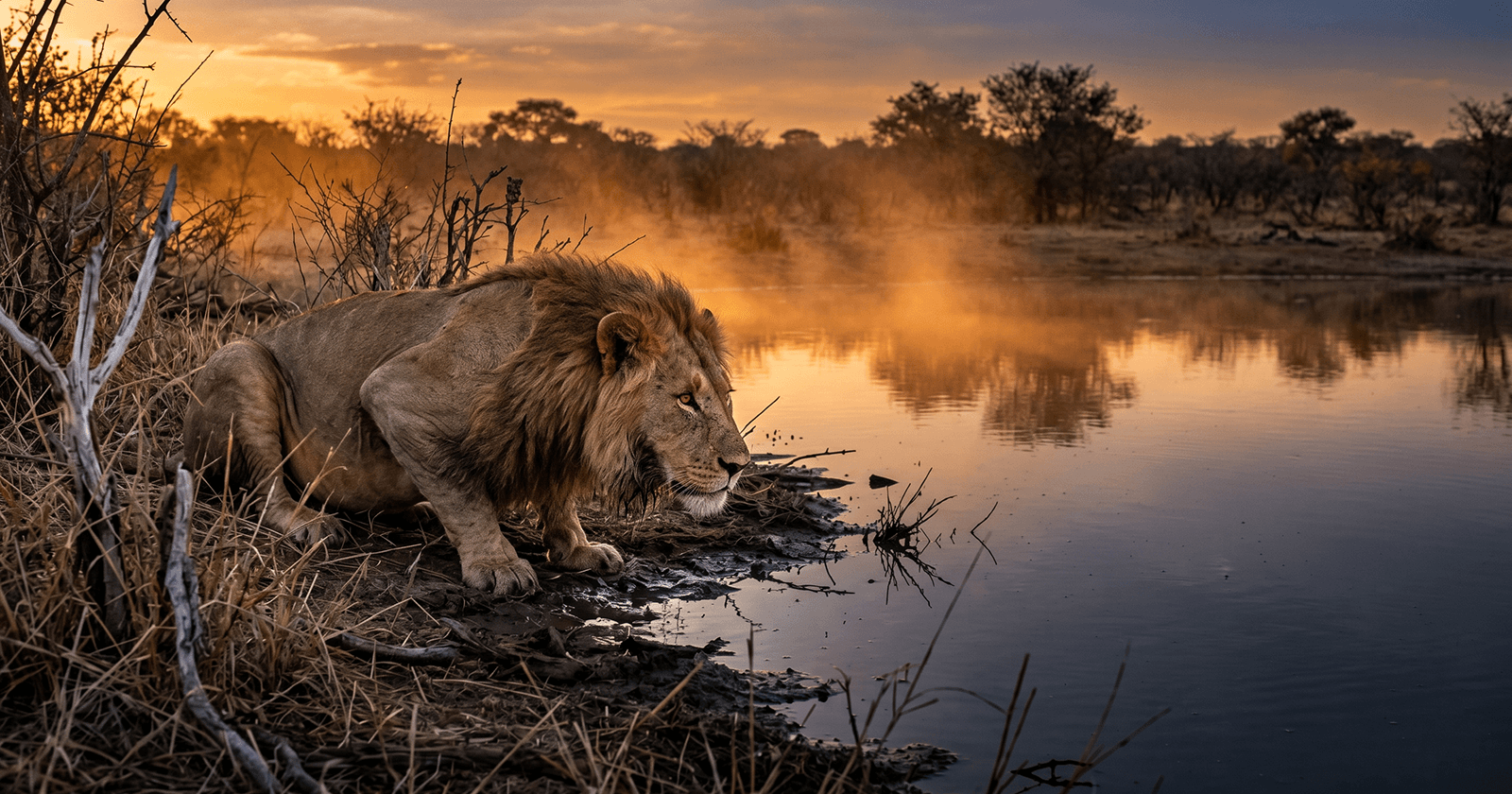
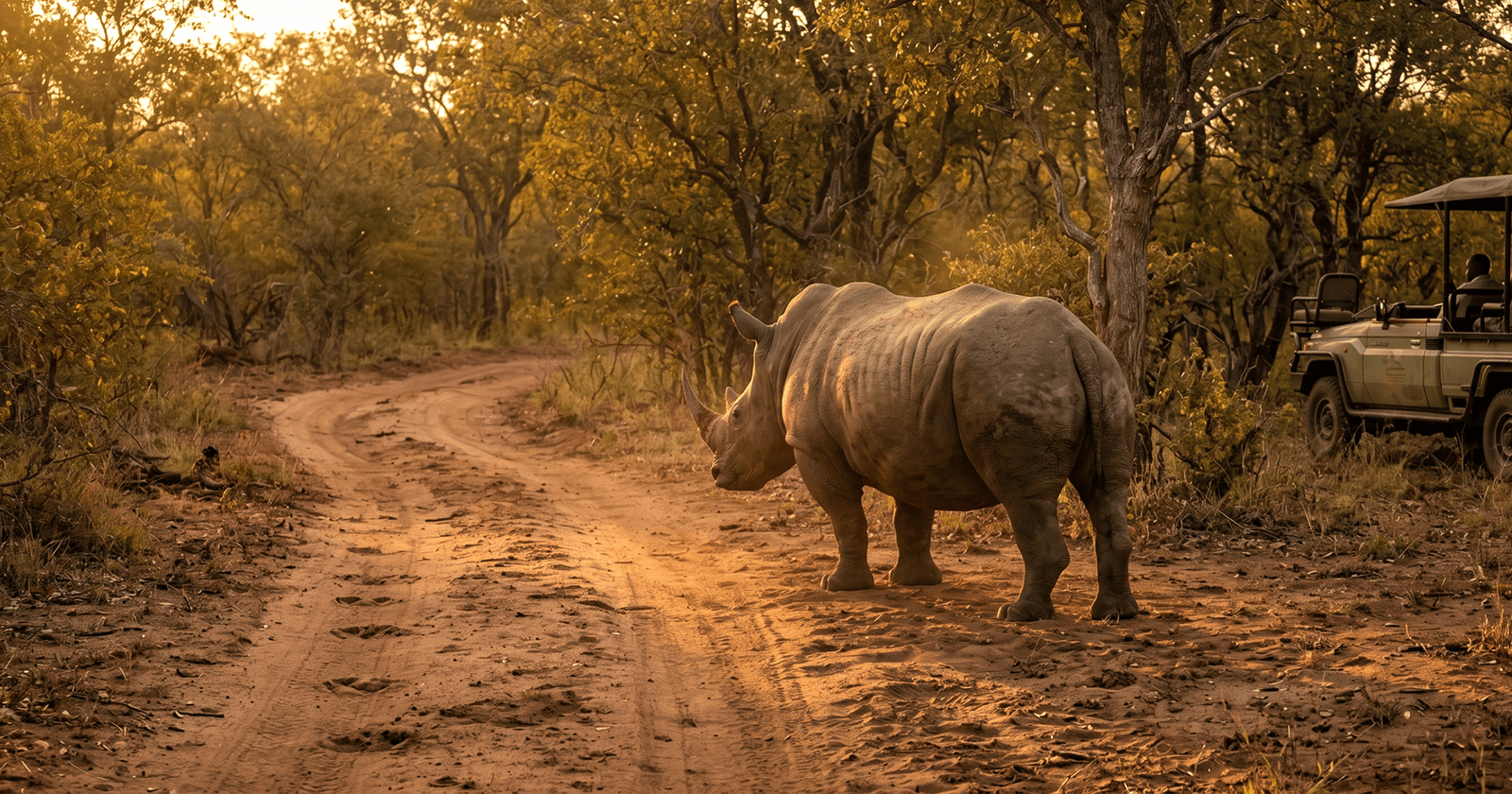
During October's peak dry season, the Sand River recedes to a series of disconnected pools and shallow crossings. What appears to be a diminishing resource is, in photographic terms, a concentration mechanism of exceptional power. When surface water contracts to discrete points, the Big Five — elephant, buffalo, lion, leopard, and rhino — are no longer distributed across 10,000 hectares of open bush. They are funnelled, predictably and repeatedly, toward the same crossing points and drinking sites. Day after day. Drive after drive.
This is what field operators mean when they talk about "reading the water." A tracker with Sand River hydrology intelligence does not search for leopards. He identifies which pool still holds water, calculates the time of day when the ambient temperature will push prey animals toward it, and positions the vehicle downwind and downlight before the cats arrive. The photographer in the bucket seat behind him is not reacting to Africa — he is executing a pre-planned intercept. That distinction is the difference between a full card and an empty one.
The Leopard Hills concession borders the Sand River directly. This is not incidental geography — it is the core tactical asset of the property. For a comparative benchmark within the same ecosystem, our MalaMala Safari Review details how the eastern sector operates under different hydrological and tracking conditions. No other lodge in the western sector holds the same combination of riverine frontage, elevated ridge position, and off-road tracking rights that allow vehicles to follow movement from the water's edge into the surrounding drainage lines. When the river speaks, the Leopard Hills team is already listening.
The Photographic Strategy: ISO Management, Lens Selection, and the Physics of Vibration Isolation
Understanding why Leopard Hills produces consistently sharper images than comparable properties requires a brief technical examination of the three variables that determine image quality in the field: light management, optical selection, and mechanical stability.
ISO Management in Lowveld Conditions
The October Lowveld presents a photographic paradox. The same dry-season conditions that maximise sighting frequency — clear skies, thinned vegetation, concentrated wildlife — also produce the harshest, most contrast-heavy light on the continent. By 08h00, the sun is already generating a hard, directional quality that blows highlights on pale subjects and crushes shadows on darker ones. The dynamic range challenge is significant.
The experienced Sabi Sands photographer manages this through disciplined ISO strategy across three distinct shooting windows:
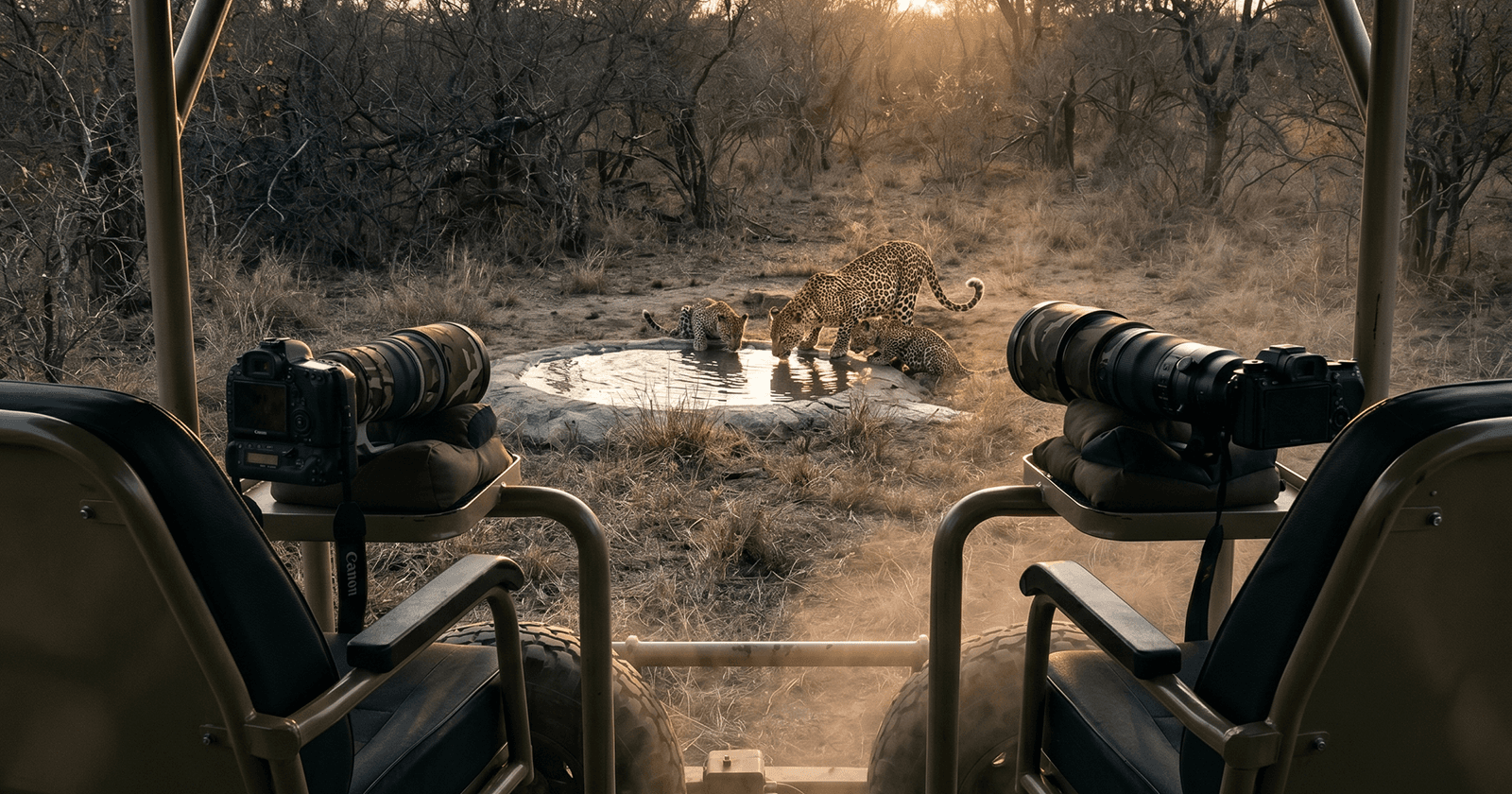
Blue Hour (04h30 — 06h00): This is the critical window where the Leopard Hills photographic chassis delivers its most significant advantage. Ambient light levels are low, requiring ISO settings between 3200 and 6400 on most modern mirrorless bodies. At these sensitivities, any mechanical vibration transmitting through the shooting platform becomes immediately visible as motion blur — particularly at the 400mm and 500mm focal lengths that leopard photography demands. The individual bucket seat, with its vibration-isolated contact surface and fold-down armrest support, allows shooters to hold sharp frames at shutter speeds as low as 1/100s during blue hour. On a bench-seat vehicle idling at the same scene, 1/100s at 500mm is a gamble. On the Leopard Hills chassis, it is a controlled technical decision.
Golden Hour (06h00 — 08h00): ISO drops to 800–1600 as light quality improves. This is the window for longer sequences and behavioural documentation. Shutter speeds climb to 1/500s and above, reducing the vibration sensitivity of the platform. Both vehicle types begin to converge in output quality during this window — which means the bucket seat advantage is most pronounced precisely when the light is most challenging.
Harsh Light (08h00 — 10h00): ISO returns to base (100–400), but the contrast challenge intensifies. Subject placement relative to shade becomes the primary compositional variable. The elevated krantz position of the lodge provides tracker teams with a sightline advantage that allows them to identify shaded resting positions — termite mounds, drainage line vegetation, rocky outcrops — before the vehicle commits to an approach vector. This is a positional intelligence advantage that flat-terrain lodges structurally cannot replicate.
Lens Selection: Prime vs. Zoom in the Western Sector
The western Sabi Sands leopard corridor presents a specific optical challenge: sighting distances vary enormously within a single encounter. A leopard moving along a drainage line may be at 200 metres when first spotted, close to 40 metres at the vehicle, and then open into a tree-climbing sequence at 80 metres — all within the same 20-minute window.
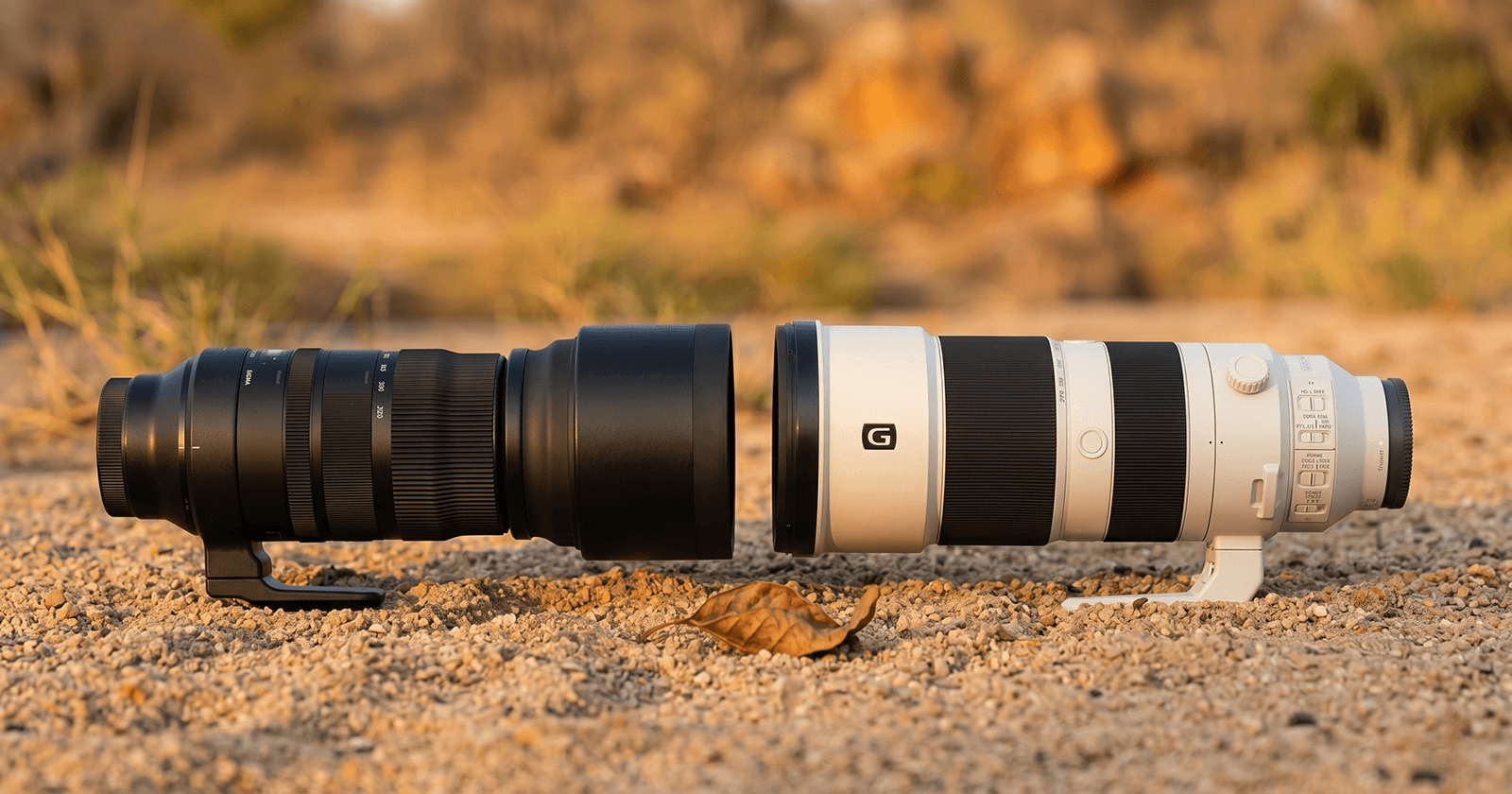
This variability makes the case for a fast zoom — specifically the 200–400mm f/4 or 100–500mm f/7.1 class — over a fixed prime for most working photographers. The ability to recompose without physically repositioning on the vehicle is critical when the subject is moving through variable terrain. A 500mm f/4 prime delivers optically superior results at its fixed focal length, but the operational cost of being locked at a single magnification during a dynamic leopard sequence is significant.
The practical recommendation for Leopard Hills: carry a fast zoom as your primary working lens and a 500mm or 600mm prime as your secondary for stationary subjects at predictable distances — specifically waterhole setups and tree-sighting positions where distance can be pre-calculated. The individual bucket seat's fold-down armrest accommodates both configurations without requiring a tripod collar swap between lenses, which is a meaningful operational advantage during fast-moving sequences. The same optical discipline that governs lens selection in the field applies to every piece of glass you carry. Our Hunting Binoculars Southern Africa covers the broader optical quality argument relevant to any high-contrast Lowveld environment.
The Physics of Vibration Isolation
The mechanical argument for the Leopard Hills chassis deserves a precise explanation, because it is frequently oversimplified in promotional material.
A diesel safari vehicle at idle generates vibration in the 5–20 Hz frequency range. On a conventional bench seat, this vibration transmits through the vehicle frame, through the bench structure, through the photographer's seated contact points, and directly into the shooting platform — whether that is a beanbag, a monopod, or a direct armrest rest. The transmission path is unbroken.
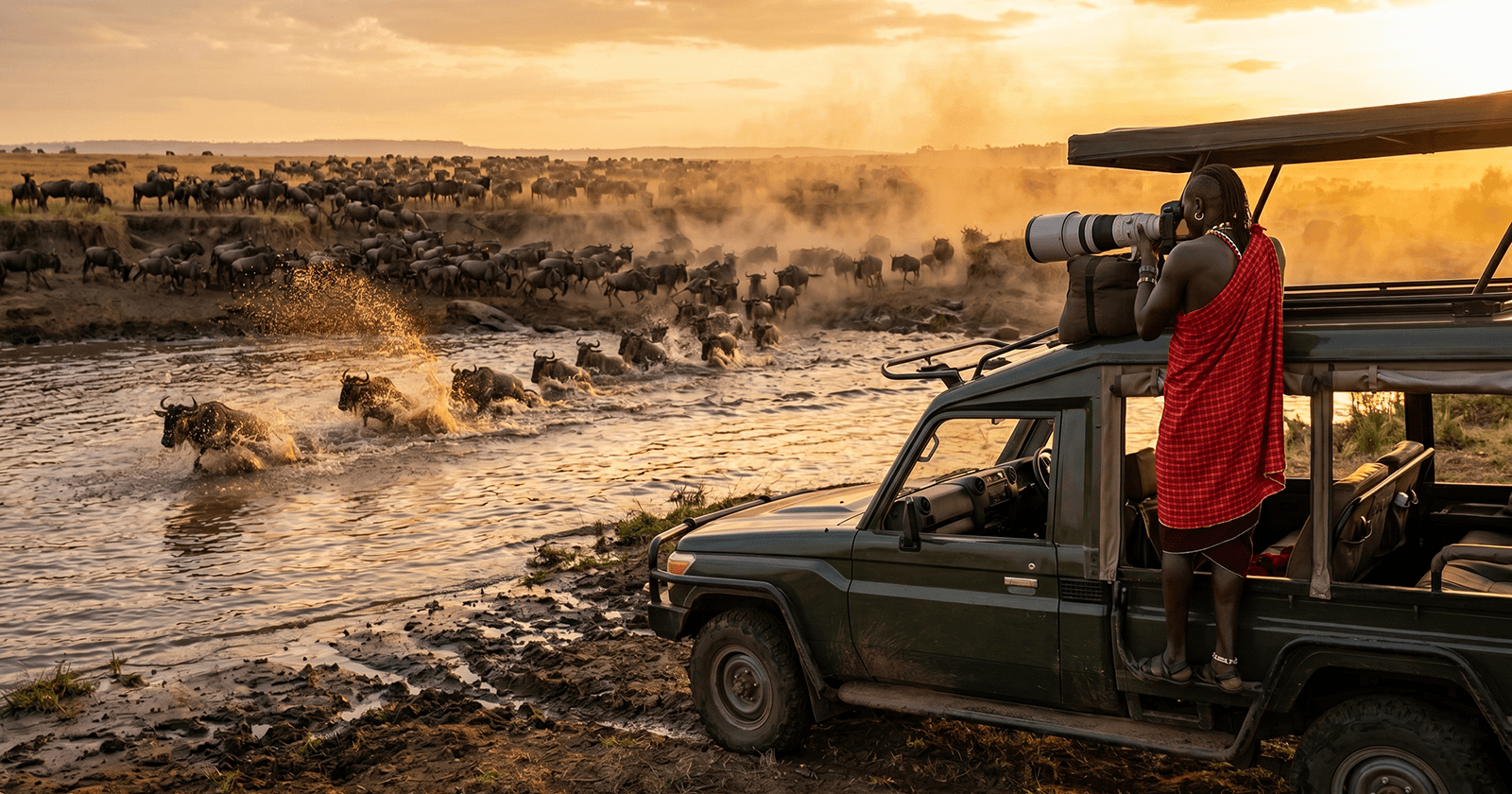
The individual bucket seat interrupts this path. Each seat unit is mechanically independent from adjacent seats, meaning the vibration energy from a neighbouring guest's movement — shifting weight, adjusting a lens, reacting to a sighting — does not transmit across the seating structure. Combined with the fold-down armrest that provides a tertiary contact point between the photographer's elbow and the vehicle structure, the result is a system where the primary vibration input is reduced and the secondary human-movement input is isolated.
In practical terms: this is the equivalent of upgrading from a handheld telephoto to a gimbal head without changing a single piece of personal gear. The physics of the improvement are real, measurable, and directly visible in keeper rate comparisons between vehicle types.
The Atmosphere: Arriving on the Krantz
Federal Air's direct routing to the private Leopard Hills airstrip eliminates the single most underestimated variable in Lowveld photography deployment: arrival fatigue. The standard 5-hour road transfer from Johannesburg delivers guests to their first drive already dehydrated, dust-coated, and operating at reduced concentration. The 90-minute fly-in does not. Touching down on the remote strip, the dry October heat carries the immediate scent of quartz dust and wild sage — and within two hours of landing, you are on the vehicle at first light.
The lodge itself occupies the elevated granite ridgeline — the krantz — that gives the property both its name and its structural advantage. Eight renovated glass-fronted suites with private rock plunge pools deliver 180-degree panoramas across the riverine drainage below. The glass is not a design indulgence. It is a sightline tool: from the suite, the same drainage lines that the tracking team monitors at 04h00 are visible throughout the day, allowing photographers to observe ambient animal movement and pre-plan their approach vectors for the afternoon drive.
The silence on the ridge is structural. It is broken, when it matters, by the mechanical precision of a shutter firing from a stabilized platform forty metres from a leopard.
People Also Ask: Field Intelligence for the Photographic Operator
Why is the Sabi Sands the best place for leopard photography? The Sabi Sands holds the highest concentration of habituated leopards on the African continent. Habituation — the process by which leopards become accustomed to the presence of safari vehicles over multiple generations — is the result of decades of consistent, ethical vehicle exposure. A habituated leopard does not alter its natural behaviour in the presence of a stationary vehicle, which means the photographer documents authentic predator behaviour rather than stress responses. No other ecosystem combines this habituation depth with the private concession off-road access that allows vehicles to follow subjects into drainage lines and dense vegetation.
When is the best time for photography at Leopard Hills? Two distinct windows offer different photographic opportunities. The dry winter months of June through September deliver maximum visibility — thinned vegetation, concentrated wildlife at water sources, and the cool blue-hour light that produces the most technically demanding and rewarding shooting conditions. October extends this window while adding pre-storm atmospheric drama: building cumulus clouds, dramatic back-lighting, and the heightened predator activity that precedes the first rains. The summer months of November through March bring the green season — lush vegetation, newborn animals, and the extraordinary storm-light conditions that produce some of the most dramatic wide-angle environmental portraits available anywhere in Africa.
Do you need a private vehicle for photography at Leopard Hills? No. The dedicated photographic chassis at Leopard Hills removes the primary argument for a private vehicle — vibration isolation and unrestricted field of fire — by engineering those advantages into the standard shared vehicle configuration. Every guest on every drive operates from an individual bucket seat with a fold-down armrest mount. The private vehicle upgrade remains available for photographers who require complete schedule autonomy, but it is not a technical necessity for image quality at this property.
How do I get to Leopard Hills? The recommended and operationally optimal routing is via Federal Air's scheduled service from OR Tambo International Airport directly to the Leopard Hills private airstrip. Total transfer time is approximately 90 minutes, eliminating the standard 5-hour road transfer and arriving guests in optimal condition for their first afternoon drive. Road transfer options exist but are not recommended for photographers prioritising operational readiness on arrival day.
What gear should I bring for a Sabi Sands photographic safari? The working kit recommendation for the western Sabi Sands leopard corridor: a fast zoom in the 200–500mm range as the primary working lens, a fast prime (500mm f/4 or 600mm f/4) as a secondary for stationary setups, a modern mirrorless body with strong high-ISO performance for blue-hour shooting, and a beanbag or fold-down armrest rest rather than a monopod. For field management, the 32oz Matte Black Polar Camel bottle is operationally critical — its non-reflective matte surface prevents lens-glint that can spook subjects during stationary setups, and its ice-retention performance maintains cold hydration through the full duration of a 4-hour morning track in October humidity. The Richardson 112 Cap in Tactical Khaki manages overhead glare during first-light acquisition on the eastern ridge faces where the sun crests directly into the shooter's sightline before the subject is adequately lit.
Value Architecture: The 54% Entry Point
| Feature | Standard "Luxury" Lodge | Leopard Hills Promotion |
|---|---|---|
| Stability | Bench Seats (Vibration) | Indiv. Bucket Seats (Isolated) |
| Vantage | Flat-terrain viewing | Elevated Krantz Ridge Views |
| Access | Public road restricted | Off-Road Private Concession |
| Logistics | 5-hr Road Transfer | 90-min Direct Fly-In |
The seating configuration row determines your keeper rate. Everything else in this table governs your access to the sighting. That single row determines what you do with it once you are there. At 54% below standard rack rate via Safari.com, the Leopard Hills promotion removes the final barrier between the serious photographic operator and the most technically capable platform in the western Sabi Sands.
Eight glass-fronted suites. Maximum sixteen photographers across a 10,000-hectare private concession. A dedicated photographic chassis on every drive. Full inclusion from landing to departure.
The platform is ready. The only remaining variable is the operator.
→ Deploy to Leopard Hills: Finalize Booking via Safari.com
Krantz Outdoors is a specialist pan-African safari research publication. Our editorial team aggregates field intelligence from professional trackers, wildlife photographers, and conservation scientists to deliver technically verified safari briefings.
This article is compiled from operator specifications, verified field reports, and specialist photography research. Krantz Outdoors conducts independent editorial review of all promotional content.
Affiliate disclosure: This article contains affiliate links. If you book through our Safari.com, Krantz Outdoors may earn a small commission at no additional cost to you. We only recommend experiences we genuinely believe in.
Wild by Nature. Africa by Choice.
📄 Read our Privacy Policy and Terms & Conditions