
3 Day Masai Mara Explorer at Entim Mara Camp — The Definitive Wildlife Photography Review
The only mid-reserve camp positioned at the confluence of the Mara and Talek Rivers — where the crossings happen, not where you drive to reach them.
Wild by Nature. Africa by Choice.
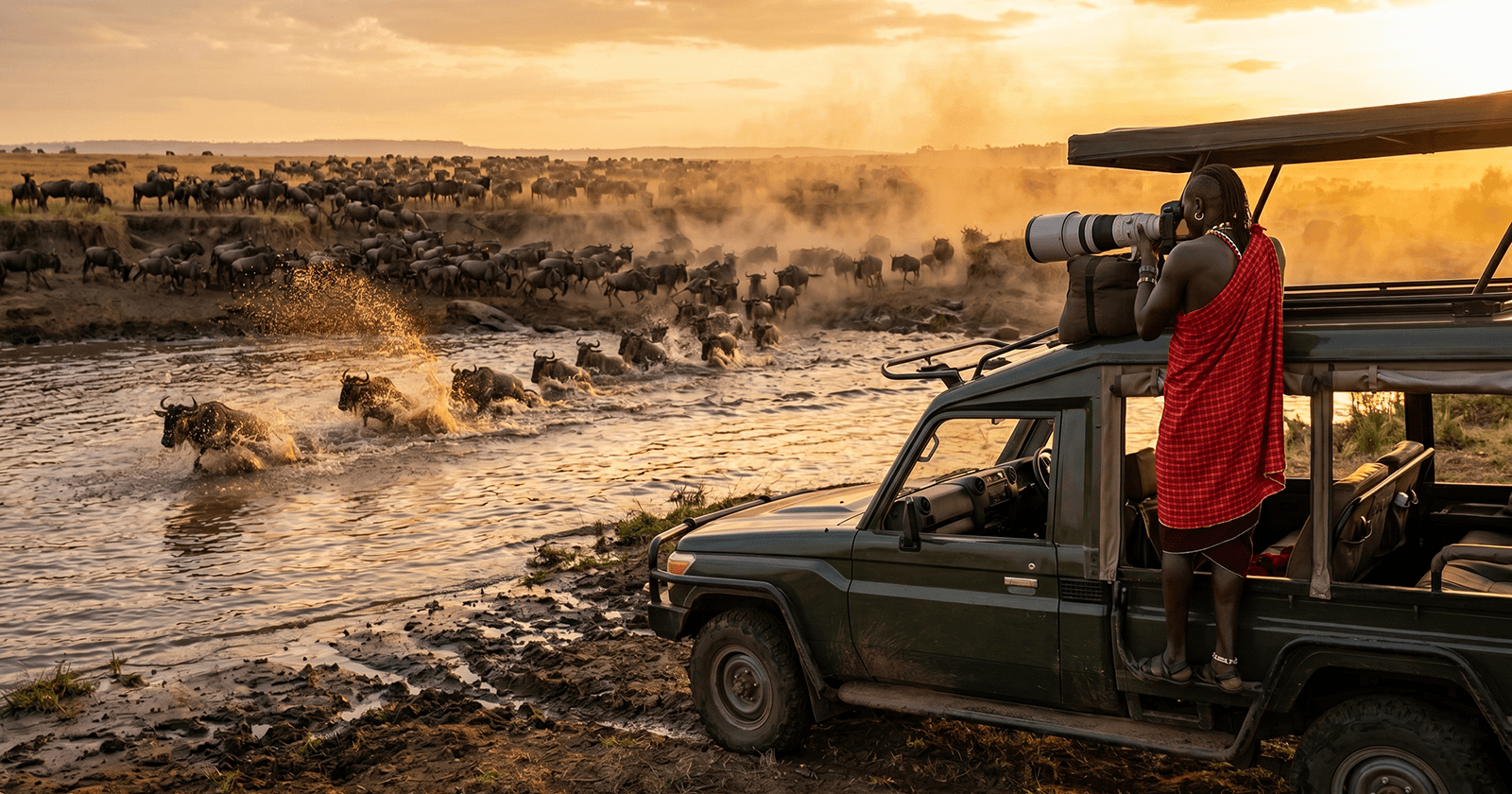
There is a specific moment that separates a great wildlife photograph from an average one, and it has nothing to do with the camera body in your hands. It is the angle of the light at the instant the wildebeest break the waterline — and that angle is determined entirely by where you are standing before the herd commits to the crossing. In the Masai Mara, that position is everything. And position, more than any other variable, is what Entim Mara Camp sells.
Most camps operating outside the reserve's boundaries require their guests to be on the road by 5:30am to stand a chance of reaching the primary river crossing points before the first wave of safari vehicles. By the time those convoys have queued at the gates, cleared the park administration, and covered the 20 to 40 kilometres of reserve road that separates the external conservancy accommodation clusters from the Mara River's main theatre, the light has already shifted. The golden hour — the 45 minutes after sunrise when diffused equatorial light renders the brown Mara River in copper and amber, when dust backlit against the eastern horizon turns crossing photographs into something a wildlife agency will actually purchase — is frequently gone before the first shutter clicks.
Entim Mara Camp sits inside the reserve. Specifically, it sits at the confluence of the Mara and Talek Rivers, which is the primary geographic theatre of the Great Migration's most dramatic act. The camp's guides monitor river bank accumulation in real time. When a herd positions itself above a crossing point, Entim guests are mobilised. There is no gate queue. There is no commute. There is often no other vehicle at the water's edge when the first animals enter the water.
This is not a small logistical advantage. For wildlife photographers — whether working at professional level or serious hobbyist — it is the operational difference between a record shot and a publishable image.
What makes Entim Mara Camp the best choice for wildlife photography at the Great Migration?
Entim Mara Camp is positioned inside the Masai Mara National Reserve at the confluence of the Mara and Talek Rivers — the primary site for Great Migration river crossings. Unlike camps based in external conservancies, Entim guests face no gate queues or reserve-entry commutes, allowing them to reach crossing positions during the golden-hour window that produces the highest-quality wildlife photographs. Camp guides monitor riverbank accumulation in real time and deploy vehicles to optimal photographic positions before competing safari traffic arrives. The result is first-on-scene access to the most photographically productive wildlife spectacle in Africa, from a property that delivers full luxury accommodation, all meals, local beverages, and two daily game drives within a three-day itinerary.
📌 Book the 3-Day Masai Mara Explorer at Entim Mara Camp
Zero-commute access to the Great Migration river crossings. All meals, game drives, and airstrip transfers included.
The Photography Advantage: Why Position Is the Only Variable That Matters
Wildlife photography at the Great Migration is not technically complex. The crossings provide abundant light, fast-moving subjects at predictable locations, and dramatic environmental framing — a wide, fast-moving river, steep clay banks, crocodiles holding position in the shallows. Any competent photographer with a telephoto lens above 400mm and a camera capable of sustained burst-mode will capture usable images at a crossing. The difference between usable and exceptional is almost entirely a function of three variables: light quality, angle of approach, and the absence of competing vehicles in the foreground plane.
Entim Mara Camp's positional advantage directly addresses all three.
Light Quality and Timing
The Mara River runs broadly east-west through this section of the reserve, with the primary wildebeest crossing points situated on the northern bank where herds approach from the Serengeti plains. During the July to October migration window, the sun rises to the northeast, meaning that photographers positioned on the southern vehicle approaches to the major crossing points — Crossing 12, the Fig Tree area, and the upper Talek junction — have the light at a productive angle during the first two hours after sunrise. This is the window that produces backlit dust halos, catch-lights in the eyes of swimming wildebeest, and the spray photography that defines the genre.
By the time external-conservancy camps have completed their gate clearance and reserve transit, this window is frequently reduced to its final 20 minutes. Entim guests can be positioned and shooting within 15 minutes of mobilisation.
Vehicle Positioning and Crowd Control
The Masai Mara's most significant photographic limitation is vehicle density at the major crossing events. During peak migration season, a large crossing at a primary site can attract 60 to 80 safari vehicles within 30 minutes of the herd committing to the water. Once that density is established, foreground contamination — vehicles in the frame, dust plumes from approaching convoys obscuring backgrounds, and the behavioural disruption caused by engine noise — makes clean photography extremely difficult.
Entim's real-time monitoring system, operated through their Maasai guide network who have intimate familiarity with the reserve's river topography, allows the camp to deploy to secondary and tertiary crossing points that are less publicised but regularly used by splitting herds. These subsidiary crossings frequently deliver the most dramatic photography of the season: smaller groups of animals crossing without the distraction of 60 vehicles, with clean sight lines and undisturbed foreground water. The photographic output from a secondary crossing with two or three vehicles positioned correctly frequently exceeds what is achievable at the primary sites under peak traffic conditions.
The Guide Intelligence Factor
Entim's guiding team are Maasai trackers with generational knowledge of this specific section of the Mara ecosystem. This is not a trivial distinction. The decision-making that determines whether a crossing attempt will complete — or whether the herd will abort after the lead animals enter the water, turn and rejoin the main mass on the bank — is readable in the behaviour of the animals at the staging area. Experienced Maasai guides can identify the posture, spacing, and directional energy of a herd preparing to commit versus a herd in the early stages of a false start. This intelligence directly governs positioning decisions: whether to hold the current angle, move upstream to anticipate the actual entry point, or reposition to the far bank for a head-on swim composition.
For photographers, this translates into arriving at the decisive frame rather than the aftermath.
Logistics: Getting to Entim Mara Camp
The access logistics are clean and efficient, which matters for photographers travelling with serious equipment.
The standard routing departs from Nairobi Wilson Airport (WIL), which handles all light aircraft operations for the Kenyan interior. Scheduled and charter flights to Ol Kiombo Airstrip take approximately 45 minutes, overflying the Rift Valley escarpment and dropping into the Mara ecosystem from the northeast. This flight path provides aerial reconnaissance value for photographers — the scale of the wildebeest aggregations is immediately apparent from altitude, and the river system's structure becomes legible in a way that ground-level game driving cannot replicate.
From Ol Kiombo, the camp transfer by game drive vehicle takes approximately 25 minutes, often passing through active wildlife concentrations. Arriving photographers should have accessible camera equipment rather than packing gear into checked luggage during the airstrip transfer — the game drive from the airstrip into camp is frequently productive, and guide briefings en route provide advance intelligence on current crossing activity.
Equipment Considerations for the Mara Photography Context
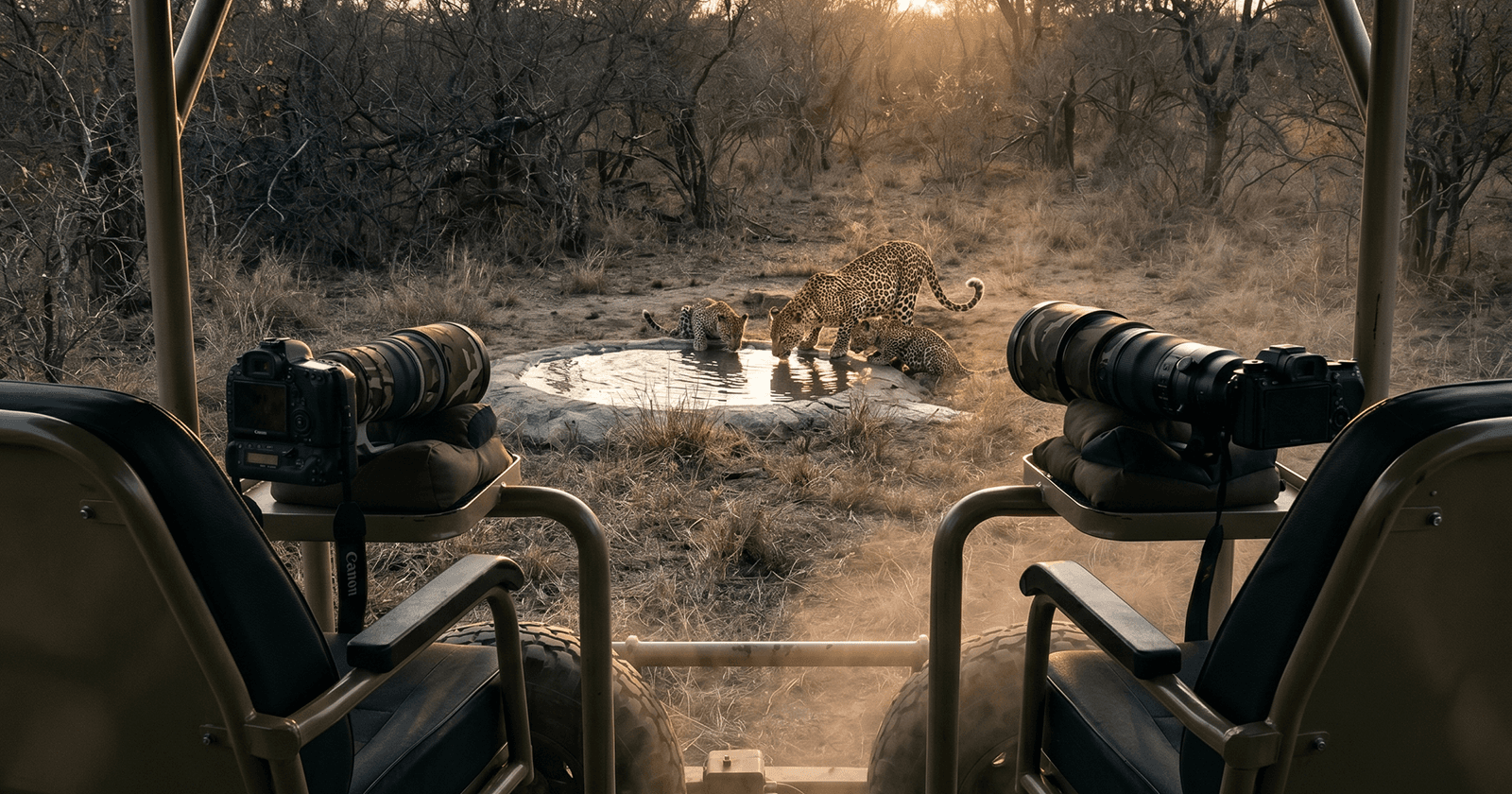
The Masai Mara presents specific equipment demands that differ materially from East African forest photography or the open-plain Serengeti context. The river crossing environment combines high ambient dust loading, frequent water proximity, and the need for rapid repositioning between shots as crossing dynamics shift. Key equipment considerations include:
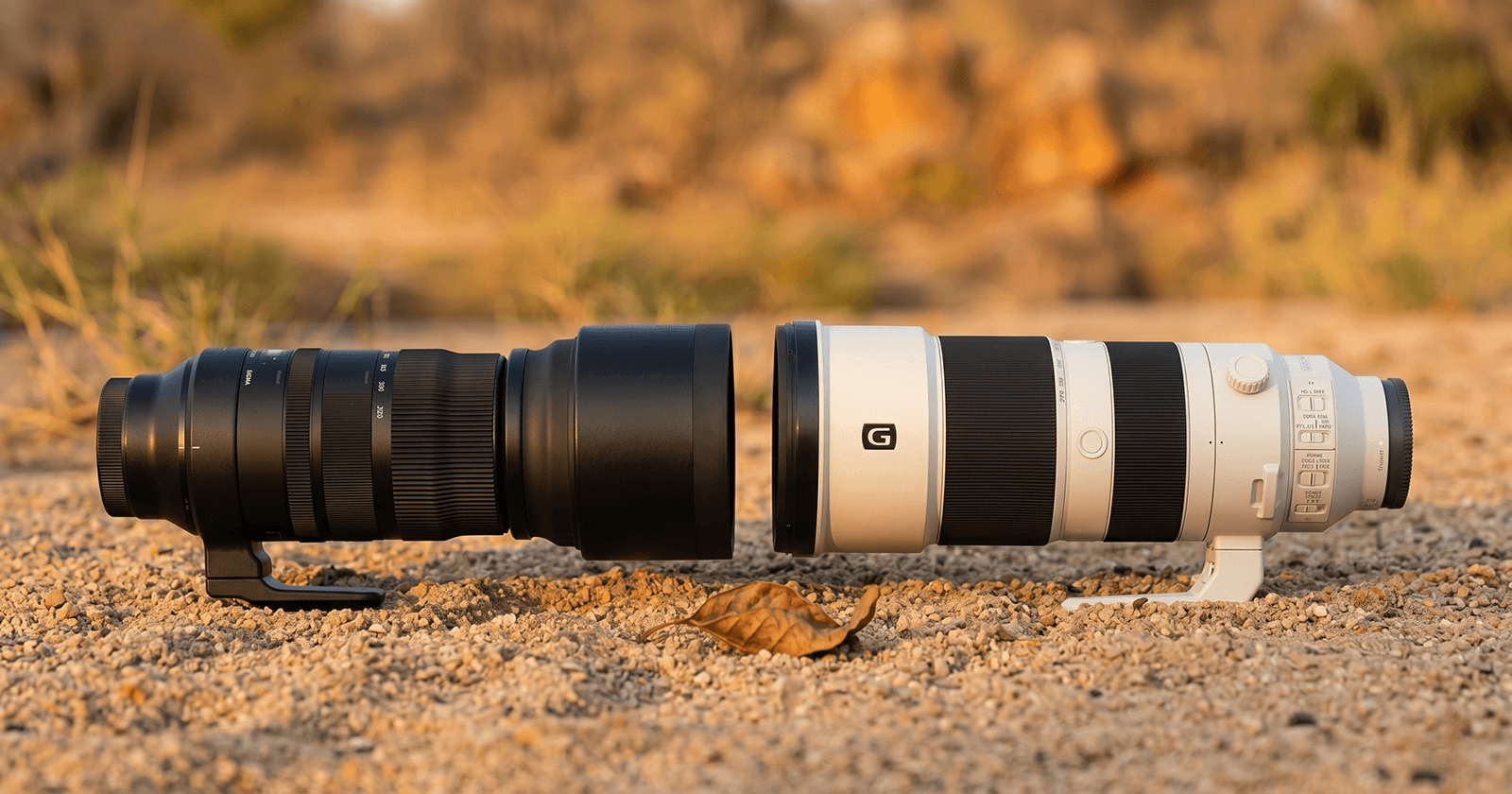
Telephoto reach of at least 400mm is necessary for the swim phase of a crossing, where animals are mid-river and the vehicle approach distance is constrained by riverbank terrain. A 600mm prime or a 100-500mm zoom provides the flexibility to work both the bank staging area and the mid-river action without a lens change.
Weather sealing is non-negotiable. The crossing spray radius extends further than most photographers expect, and the vehicle positioning required for optimal angles frequently places equipment within the effective splash zone. Cameras and lenses without adequate sealing will absorb moisture damage.
High-capacity storage and rapid card management are important in the Mara context because sustained crossing events can run for two to three hours, with burst-mode shooting producing file volumes that exceed single-card capacity. A card rotation protocol — prepared in advance and practiced before the event, not improvised during it — is standard professional procedure.
For optics used in scouting activity between game drives, the same performance demands that apply to hunting in African conditions — low-light transmission, heat-haze stability, and dust resistance — govern binocular selection. The Hunting Binoculars Southern Africa covers the optical specifications relevant to long-range subject identification in the Mara's variable light conditions.
Accommodation: The Entim Tented Suite
Entim Mara Camp operates 12 luxury tented suites positioned on raised wooden decks within the riverine "Entim" forest — the Maasai term that gives the camp its name. The forest canopy provides significant functional advantages beyond the aesthetic: the elevated ambient humidity from the river proximity moderates the equatorial heat that makes midday rest a logistical necessity rather than an indulgence, and the insulation provided by the tree cover means that the camp's cooling management operates without the mechanical intrusion of air-conditioning units that would otherwise contaminate the acoustic environment.
The tented suites are full luxury specification: en-suite bathrooms with hot showers and flush toilets, private verandas oriented toward the river confluence, and sitting areas that double as passive wildlife observation positions. The veranda orientation is a deliberate design decision — guests can observe hippo pod activity and early-morning bird movement from their accommodation without mobilising a vehicle. For photographers, this is preparatory observation that improves the intelligence quality brought to the game drive briefing.
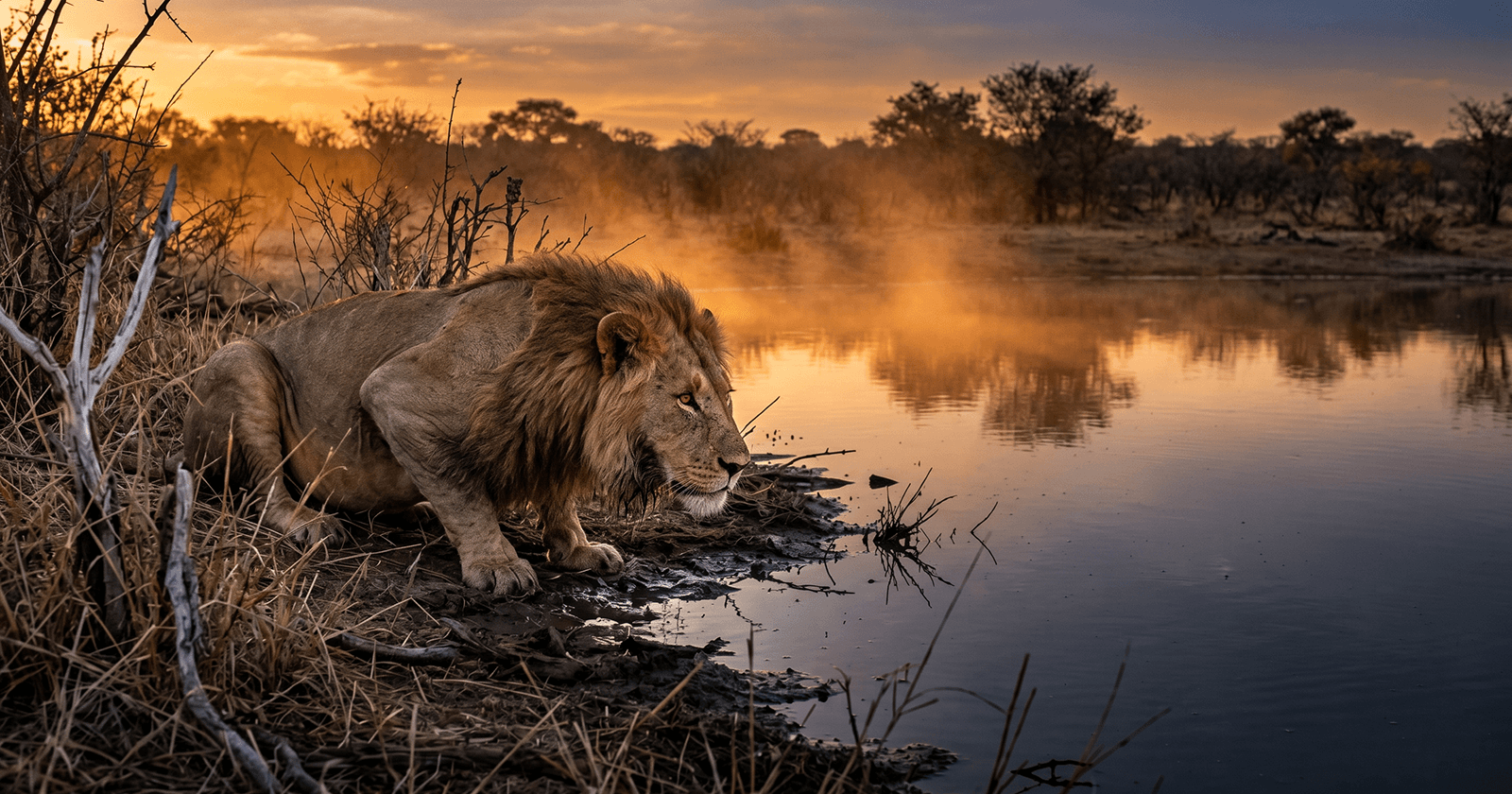
The acoustic environment of the camp deserves specific mention because it is one of the experiential details that differentiates this property from any accommodation outside the reserve boundary. Resident hippo pods maintain a constant sub-vocal communication that is audible from the tented suites at night. Lion activity along the river corridor generates contact calls that carry clearly through the forest canopy. In the hour before dawn, the camp's position within active wildlife territory produces an ambient soundtrack that no external-conservancy property can replicate — not because of facility quality, but because the wildlife is simply not present in the same density outside the reserve.
The Package: What the 3-Day Masai Mara Explorer Includes
The three-day structure is the minimum viable photography itinerary for the Masai Mara context. The first game drive orients the photographer to the current river-crossing activity distribution — which of the primary and secondary crossing points are receiving herd attention, where the accumulation staging is most active, and what vehicle-density conditions currently prevail at the major sites. This intelligence is operationally critical because it governs every positioning decision made on day two and three.
The included package covers full board across all meals, local brand beverages (house wines, beers, and spirits), two daily game drives per day, and all airstrip transfers. The full-board structure removes the logistical friction of meal planning from the itinerary, which matters in a context where game drive departure timing is governed by animal behaviour rather than a restaurant's service window. Guides can mobilise rapidly when crossing conditions develop, without the schedule constraints that affect camps where meal service requires advance coordination.
The two daily game drives are timed for the morning golden hour and the late-afternoon golden-hour window — the two periods of optimal photographic light. The midday period, which produces flat overhead light that is photographically unproductive for most wildlife subjects, is conventionally used for camp rest, equipment management, and image review. This is not lost time for serious photographers — it is when card organisation, lens cleaning, and battery management are addressed before the afternoon drive.
Migration Timing: When to Go
The Great Migration's river crossing phase in the Masai Mara operates within a broadly predictable seasonal window, but the specific timing of individual crossings is governed by herd behaviour rather than calendar dates. The general framework that guides planning decisions is as follows:
The main wildebeest columns begin crossing from Tanzania's Northern Serengeti into the Kenyan Mara ecosystem from late June, with the primary crossing season running through July, August, and September. October typically sees the herds beginning their southward return, with crossing activity at the Mara River declining as the month progresses. November through May, the herds are on the Tanzanian circuit and river crossing activity in the Kenyan sector is minimal.
For photographers prioritising the crossing event specifically, the window from mid-July through mid-September represents the highest-probability period. August is statistically the most active single month for Mara River crossings, though "statistically active" in this context means only that the highest number of crossing events occur — not that any specific crossing is guaranteed on any specific day.
This is the critical planning caveat for the Masai Mara photography itinerary: the crossings cannot be scheduled. Herds are driven by grass condition, predator pressure, and collective animal instinct — not tourism season requirements. A three-day itinerary during peak season may produce three crossing events, or it may produce none. What the Entim position delivers is maximum probability — because when a crossing does develop, the camp's proximity ensures that guests are positioned before the critical photographic window has passed.
For travellers planning a broader East African migration itinerary that incorporates both the Serengeti's calving season and the Kenyan crossing phase, the Northern Tanzania Migration Safari covers the Tanzania circuit in detail, including the northern Serengeti crossing dynamics that precede the Mara phase of the migration cycle.
Value Assessment: The Positioning Argument
The standard objection to mid-reserve accommodation — higher cost relative to external conservancy camps — deserves direct engagement, because for the photography-focused traveller it fundamentally misframes the value calculation.
The cost differential between mid-reserve and external-conservancy accommodation, when assessed against the photographic output of a three-day itinerary, is best evaluated not as a nightly rate comparison but as a cost-per-productive-photographic-hour analysis. If a photographer loses two hours of golden-hour access per day to reserve commute — the equivalent of six hours across a three-day itinerary — and those are the six hours that produce the highest-quality images, then the mid-reserve premium is not an accommodation upgrade. It is a professional equipment investment in the same category as the choice of lens.
| Feature | Standard Masai Mara Experience | Entim Mara Explorer |
|---|---|---|
| Location | Outside Reserve (gate queues daily) | Mid-Reserve (immediate wildlife access) |
| Migration View | Requires 1–2 hour drive to river | Visible from tent veranda and dining deck |
| Crowd Control | High traffic at major sightings | First-on-scene priority for crossings |
| Night Sounds | Distant wildlife / human activity | Immersive riverine acoustics (hippos/lions) |
| Photography Window | Reduced by commute time | Full golden-hour access, morning and evening |
| Guide Intelligence | Standard reserve guide allocation | Maasai trackers with site-specific river knowledge |
The three-day package's all-inclusive structure — meals, beverages, game drives, and airstrip transfers — also removes the budget uncertainty that affects costing in the Mara ecosystem, where activity supplements, meal charges, and vehicle hire can significantly alter the final cost of an external-conservancy stay.
The zero-commute positioning advantage, the Maasai guide intelligence, and the all-inclusive structure make this one of the most operationally complete photography packages in the East African ecosystem — book the 3-Day Masai Mara Explorer Safari.com before the peak July to September window fills.
People Also Ask
Can you see the Great Migration from Entim Mara Camp?
Yes. Entim Mara Camp is positioned at the confluence of the Mara and Talek Rivers, which is the primary geographic theatre for Great Migration river crossings within the Masai Mara National Reserve. Guests can observe hippo activity and general wildlife movement from their private verandas. During peak migration season, herd staging activity on the opposite riverbank is visible from the camp's dining and lounge decks. Game drive vehicles deploy to active crossing sites within 15 minutes of mobilisation — without the gate queues that affect camps positioned outside the reserve boundary.
How do I get from Nairobi to Entim Mara Camp?
The standard routing departs from Nairobi Wilson Airport (WIL) on a scheduled or charter light aircraft flight to Ol Kiombo Airstrip, which takes approximately 45 minutes. From Ol Kiombo, a game drive vehicle transfer to Entim Mara Camp takes approximately 25 minutes. The airstrip transfer is included in the 3-Day Masai Mara Explorer package. Nairobi Wilson Airport handles all light aircraft departures for the Kenyan interior and is distinct from Jomo Kenyatta International Airport, which handles international long-haul arrivals. Guests arriving on international flights should allow adequate transfer time between airports, or plan a Nairobi overnight before their Mara departure.
Is Entim Mara Camp better than staying in a private conservancy?
For wildlife photography focused on the Great Migration river crossings, Entim Mara Camp's mid-reserve position delivers a specific operational advantage that external conservancy accommodation cannot replicate: zero-commute access to the primary crossing sites during the golden-hour light window. Private conservancies adjacent to the reserve offer lower vehicle density at general wildlife sightings and often permit off-road driving, which is restricted within the national reserve. The trade-off is distance from the Mara River's main crossing theatre. For photographers prioritising crossing photography specifically, mid-reserve positioning is the decisive factor. For guests prioritising general Big Five sightings with more solitary game drive experiences, a private conservancy may be preferable.
What is the best month to witness river crossings in the Masai Mara?
August is statistically the most active month for Great Migration river crossings in the Masai Mara, with the primary crossing window running from mid-July through mid-September. The herds typically begin crossing from Tanzania's Northern Serengeti into Kenya from late June. October sees the southward return movement begin, with crossing activity declining as the month progresses. Specific crossing dates cannot be predicted in advance — crossings are governed by grass condition, predator pressure, and collective herd behaviour. A mid-reserve camp positioned at the primary crossing sites maximises the probability of being present at a crossing event when one develops.
Are game drives included in the 3-Day Masai Mara Explorer package?
Yes. The 3-Day Masai Mara Explorer package includes two daily game drives, full board (all meals), local brand beverages including house wines, beers, and spirits, and all airstrip transfers. The game drives are timed to coincide with the morning and late-afternoon golden-hour windows, which are the optimal photographic light periods in the Mara ecosystem. Midday game drives are not included, as the overhead midday light is photographically unproductive for most wildlife subjects and guides use this period for rest and camp briefings.
📌 Secure Your Position at Entim Mara Camp
First-on-scene access to the Great Migration's most dramatic crossings. Full board, two daily game drives, and airstrip transfers included in the 3-Day Explorer package.
Krantz Outdoors is a specialist pan-African safari research publication. Our editorial team aggregates field intelligence from professional trackers, wildlife photographers, and conservation scientists to deliver technically verified safari briefings.
This article is compiled from operator specifications, verified field reports, and specialist photography research. Krantz Outdoors conducts independent editorial review of all promotional content.
Affiliate disclosure: This article contains affiliate links. If you book through our Safari.com, Krantz Outdoors may earn a small commission at no additional cost to you. We only recommend experiences we genuinely believe in.
Wild by Nature. Africa by Choice.
Read our Privacy Policy and Terms & Conditions