
10-Day Botswana to Zambia Luxury Safari — The Hydrological Intelligence Briefing
Two countries. Two drainage systems. One window where both converge to produce the most technically layered safari itinerary in Southern Africa.
Wild by Nature. Africa by Choice.
The first thing most itineraries get wrong about a Botswana-to-Zambia combination is the framing. They call it a two-country safari and leave it there, as though the border crossing were the point of interest. It is not. The point of interest is what happens to water on either side of that border — and what that means for every animal, every predator, and every field activity you can plan around it.
The Okavango Delta is an endorheic basin. The water that floods in from the Angolan highlands each year does not reach the sea. It fans out across the Kalahari sands, seeps into the substrate, and evaporates. The Delta is a hydrological dead end by design. This creates one of the most ecologically unusual wetland systems on earth — one that exists in the middle of a semi-arid desert, fed by distant rains the local sky never produces.
The Lower Zambezi is its structural opposite. The Zambezi cuts a rift valley — carved by tectonic forces over millions of years — and drains east to the Indian Ocean. The escarpment walls that frame the valley are ancient fault lines. The Winterthorn forests on the valley floor exist because the soil chemistry there is radically different from the Kalahari sand to the west. And that soil chemistry drives a wildlife mechanic that the booking platforms never explain.
This is what you are actually booking when you choose this itinerary. Not a two-country experience. A traverse across two of the most geologically and hydrologically distinct ecosystems in Africa — timed to the specific dry-season window when both systems are simultaneously at their most concentrated, most accessible, and most compelling.
What is included in a luxury safari from Botswana to Zambia?
A fully guided 10-day private fly-in safari covering three distinct ecosystems — the Okavango Delta at Atzaro Okavango, the Victoria Falls corridor at Thorntree River Lodge on the Zambezi, and the Lower Zambezi Valley at Lolebezi. Private air charter transfers between all properties. Exclusive concession access with off-road driving and night drives throughout. All game activities, specialist guiding, and full board included across all three camps.
Explore the 10-Day Botswana to Zambia Luxury Safari on Safari.com
What Makes a Luxury Safari Botswana to Zambia Different From a Standard Package
The technical answer is access. Not the access that gets you into a reserve — that's the minimum standard — but the access that determines what you can actually do once you're there.
Every camp on this itinerary operates within a private concession. This is not a semantic distinction. Public national park access means roads, sunrise-to-sunset operating windows, and the requirement to stay in the vehicle. Private concession access means the off-road tracking that follows a leopard into jesse bush at 09:00. It means the night drive that picks up a civet 200 metres from camp in the dark. It means two vehicles maximum at any sighting, not the 22-vehicle cluster that forms around a lion kill in Chobe's public zones in peak season.
The guide quality differential is equally significant. Private specialist guides operating at Level 2 and above carry a different kind of knowledge than resort guides working general game drives. They know the individual animals. They understand the seasonal mechanics. On this itinerary, that means guides who can explain why the lechwe is running across that specific floodplain in that specific direction — and why the lions positioned themselves on that island three days ago in anticipation of exactly this movement.
The accommodation tier completes the picture. Atzaro Okavango's 12 ultra-luxury suites, built in 2024, exceed 200 square metres each with private plunge pools. Thorntree River Lodge positions 12 tented suites directly on the Zambezi bank with indoor and outdoor showers and private decks facing the river. Lolebezi's eight suites include four family configurations and four signature suites with private sala lounges and floor-to-ceiling glass on the valley floor. None of these are aspirational descriptions. They are operational specifications for properties that earn their prices in access and intelligence, not décor alone.
| Feature | This Package — Safari.com | Standard Alternative — Public Park |
|---|---|---|
| Crowd Density | Maximum 2–3 vehicles per sighting | 20+ vehicles at Chobe and Victoria Falls in peak season |
| Access Rights | Off-road tracking and night drives included | Strictly on-road, sunset curfew, vehicle only |
| Transport | Private air charter and helicopter transfers | Road transfers and shared shuttle flights |
| Room Specification | 150sqm+ private plunge pool suites | 40sqm standard hotel and lodge rooms |
| Guide Quality | Private specialist guides, Level 2 and above | General resort guides, shared game drives |
The Okavango Delta — Where Water Disappears Into the Sand
The flood arrives in the Delta between May and August — delivered from the Angolan Highlands by rivers that began filling months earlier, timed by gravity rather than local weather patterns. By the time it reaches the Okavango system, it spreads across 15,000 square kilometres of Kalahari sands via a network of channels, seasonal floodplains, and palm-studded islands that shift and reconnect year to year.
The Atzaro Okavango property sits within the Kwara concession — one of the most technically capable areas of the Delta for both water-based and land-based activity. The flood recession timing here, from May through August, coincides with the concentration of aquatic specialists into the shrinking channels. Sitatunga — the most water-adapted antelope in Africa, standing chest-deep in the shallows to feed on aquatic vegetation — reach their highest density in the Kwara channels during this window. Red lechwe move in breeding herds across the floodplains. And the predator community has adapted its tactics to the water.
The lions here have developed a specific island-hopping hunting mechanic that no Kalahari pride uses. The floodwaters function as tactical barriers. Prides position themselves on elevated islands and drive lechwe and zebra into the shallows, where the prey's movement speed drops dramatically in the water resistance. What looks like chaos from the vehicle is a calculated sequence the guides can read three moves ahead once they know the pride's territory and the island geometry.
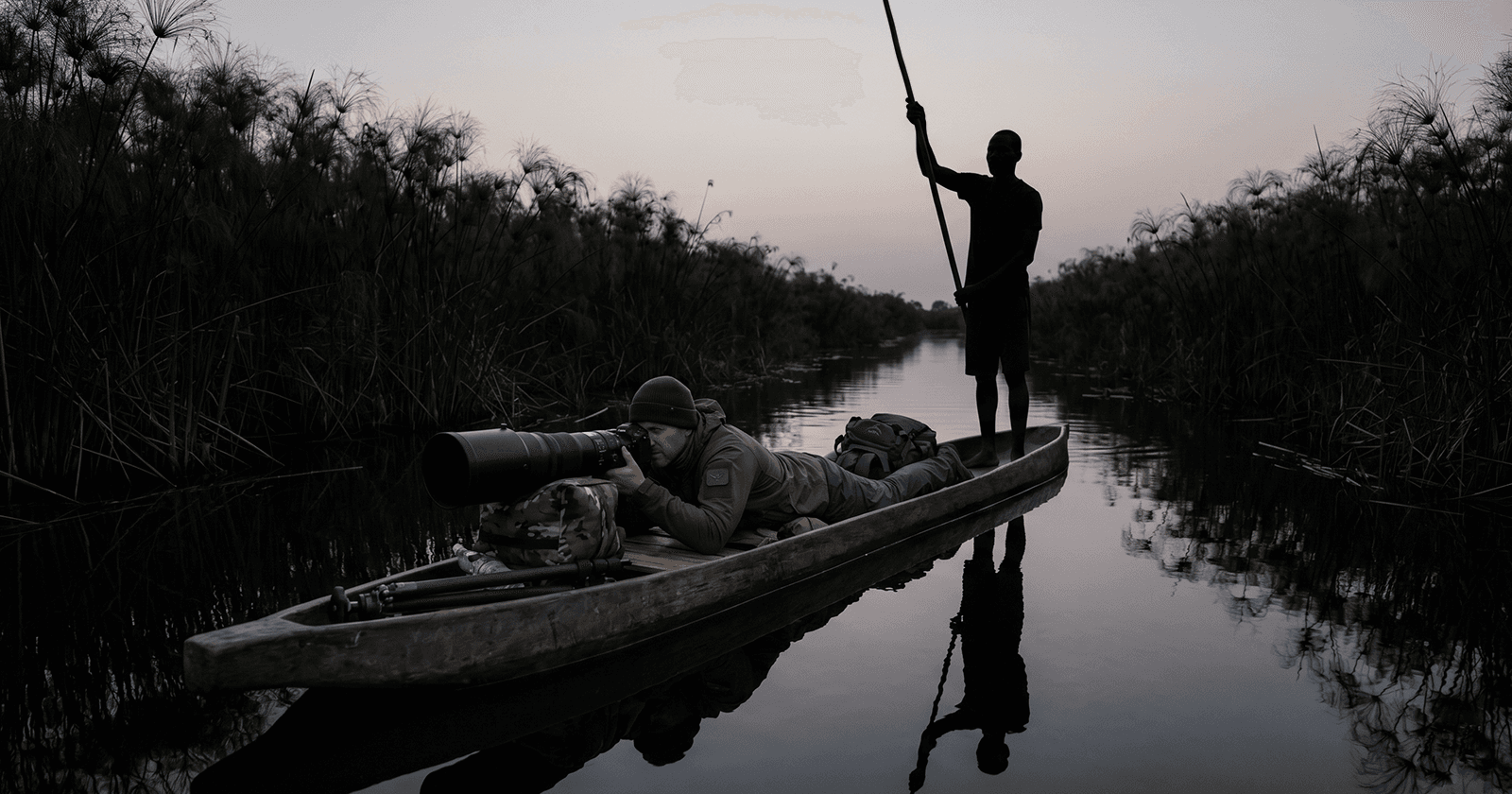
The mokoro is not a tourist novelty here. It is the operationally correct vehicle for a flooded Delta. The dugout canoe sits low in the water, displaces almost no sound, and allows approach distances to aquatic wildlife — particularly sitatunga, nesting fish eagles, and wattled cranes — that a motorised boat would scatter at 300 metres. At first light, when the reed frogs go silent and the hippos withdraw to their deep pools, a mokoro in the right channel is one of the quietest places in Africa.
Helicopter access amplifies the perspective available from the ground. A 30-minute scenic flight at doors-off altitude above the flood reveals the Delta's structure — the dendritic channel network, the islands crowned with date palms, the brown migration lines of buffalo herds crossing the open floodplain — in a way that rewires the spatial intelligence for every game drive that follows. The ecosystem makes more sense from above. The wildlife mechanics become legible at altitude.
Victoria Falls and the Zambezi Corridor — Reading the Rift Valley
The transfer from the Delta to Victoria Falls is itself a piece of geological education. The flight from Maun crosses the Kalahari — flat, ochre, scrubby, ancient — before the Zambezi valley opens beneath you and the landscape drops away into something older and more dramatic. The basalt plateaus that flank the Falls were laid down by volcanic activity 180 million years ago. The gorge below the Falls — seven separate gorges, each one the former path of the river before it cut a new notch in the basalt — reads as a structural record of the Zambezi's geological history visible from the air.
Thorntree River Lodge on the Zambezi National Park bank positions guests within reach of both the Falls corridor and the river wildlife. The Zambezi here hosts one of the highest hippopotamus concentrations in Africa alongside resident elephant populations that have learned the river's seasonal rhythms across generations. The crocodile population in the deep pools below the Falls gorge is substantial — an important context for understanding why the prey species along the riverbank move with the specific alertness they do, especially at the water's edge at dusk.
The Mosi-oa-Tunya National Park on the Zambian bank of the river protects one of the most accessible white rhino populations in Southern Africa. Rhino tracking on foot here operates in an open landscape — mopane and combretum woodland rather than the dense jesse bush typical of most rhino habitat — which produces sightings of genuine quality at close range. The animals are habituated to guided foot traffic and the tracks are read by guides who understand the difference between a browsing circuit and a territorial patrol.
For travellers who want to engage the Falls corridor from the air, the microlight flight above "The Smoke That Thunders" operates throughout the year. The mist column from the Falls rises 400 metres at peak flow and is visible from 30 kilometres distant — from the air, the rainbow arcing permanently across the gorge entrance is one of the most dependably extraordinary natural spectacles in Africa. For guests seeking active adventure, the Class IV and V white water rafting on the gorge below the Falls — running during the low-water season between August and December — is considered among the most technically demanding commercially operated white water in the world. The Victoria Falls luxury lodge Zimbabwe intelligence developed across our Victoria Falls coverage provides the detailed activity matrix for planning this corridor.
The Lower Zambezi — Elephants, Albida Forests, and the Leopard on the Floodplain
The drive down the escarpment into the Lower Zambezi Valley is a topographic shift of several hundred metres over a few kilometres. The air changes temperature measurably. The vegetation changes from dry miombo woodland to the tall riverine forest and Winterthorn groves of the valley floor.
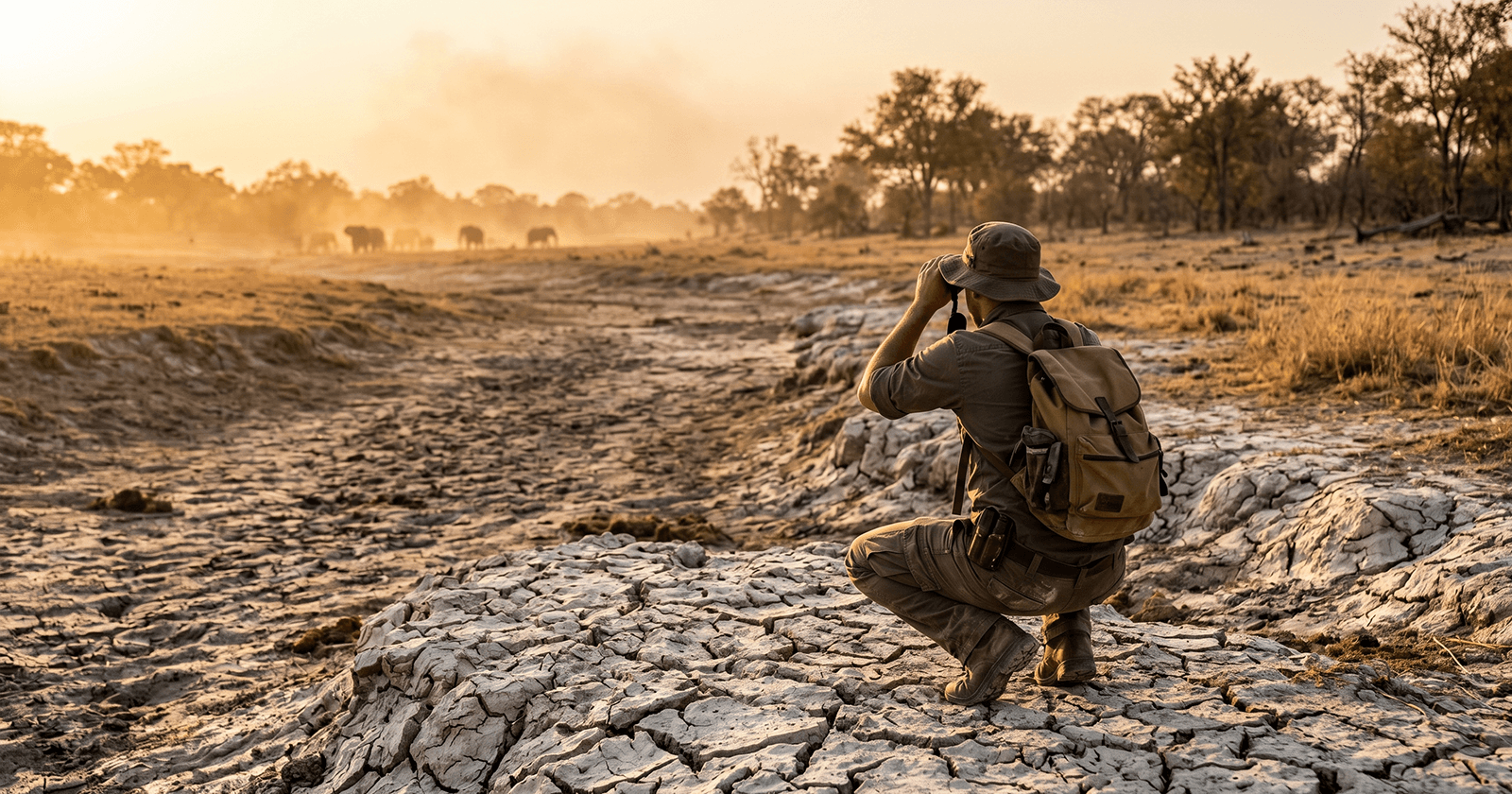
Faidherbia albida — the Winterthorn or Apple Ring Acacia — is the ecological keystone of the Lower Zambezi. It grows on the deep alluvial soils of the valley floor and, crucially, operates on an inverted phenology: it drops its protein-rich seed pods during the dry season, precisely when every other food source in the valley is at its minimum. This is not accidental. It is a co-evolved feeding signal that pulls the valley's large herbivore population — elephant bulls in particular — into predictable high-density aggregations around the albida groves from July through October.
Bull elephants in the Lower Zambezi have an intimate relationship with the albida trees. Individual bulls track the pod-fall sequence by grove. They arrive at specific trees in a specific order, stay until the pods are exhausted, then move to the next grove. Guides who know the bull population can tell you which individual is likely at which grove on a given week of the dry season. This is not general elephant knowledge — it is site-specific field intelligence built over years of observation.
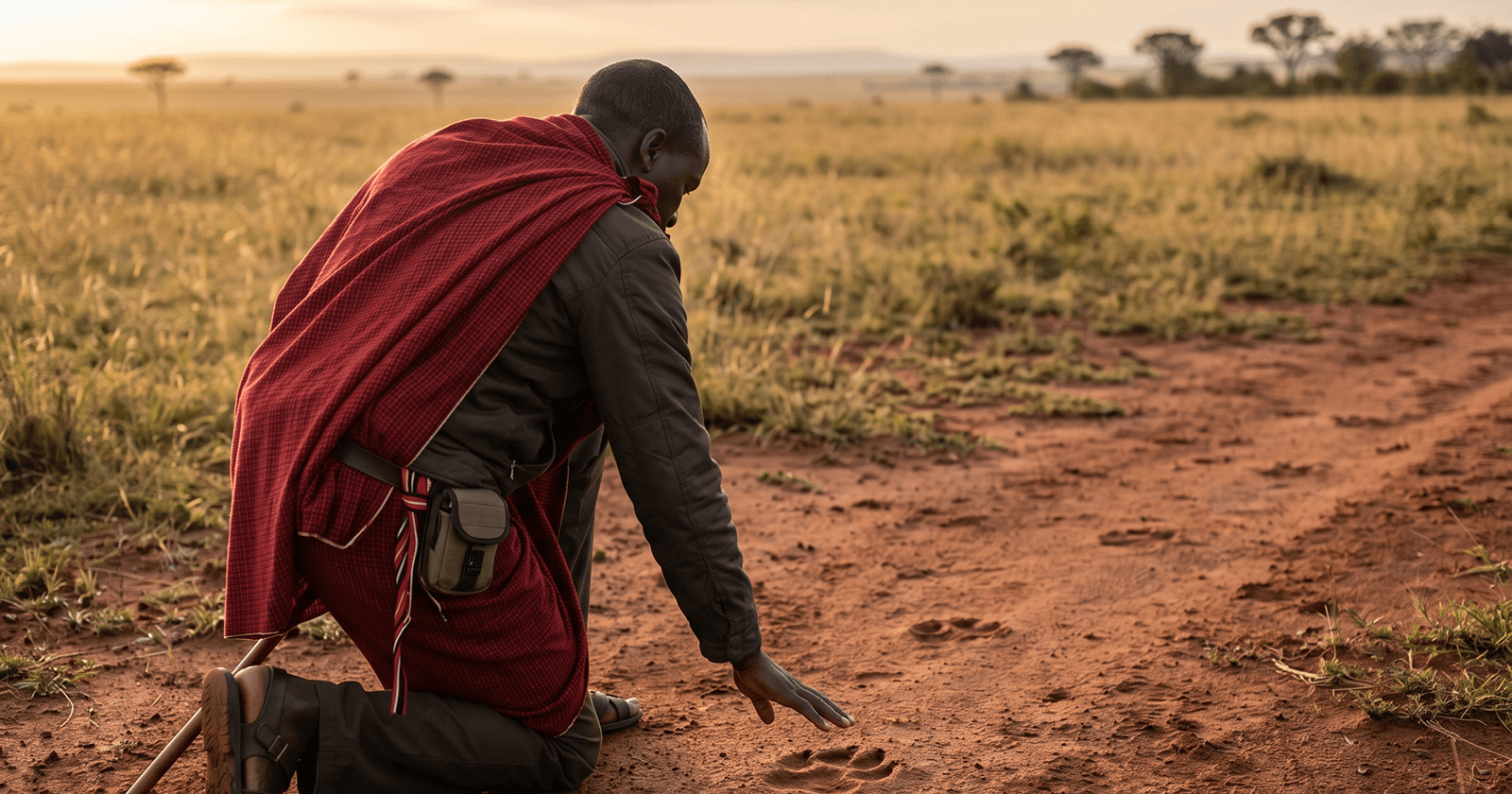
The leopard mechanic in the valley follows the albida dynamic. Leopard territory in the Lower Zambezi is structured around the interfaces between the albida groves and the open floodplain — specifically the tree canopy edges where a leopard can position and watch the prey concentration at ground level below. Tracking here relies on canopy positioning rather than ground spoor alone. A guide reading leopard territory in this valley is reading the tree structure as much as the substrate.
Lolebezi sits within this system. The property's access to the national park fringe means the game drive routes move through albida groves, along the floodplain edge, and up the alluvial channels where the leopard activity is highest. The canoe trail option on the Zambezi here gives the same low-profile approach mechanic that the mokoro provides in the Delta — and the wildlife accessible from the river at this level of the valley includes the elephant bulls drinking at the bank, the Nile crocodile populations in the deep channels, and the enormous saddle-billed stork concentrations on the seasonal sand islands.
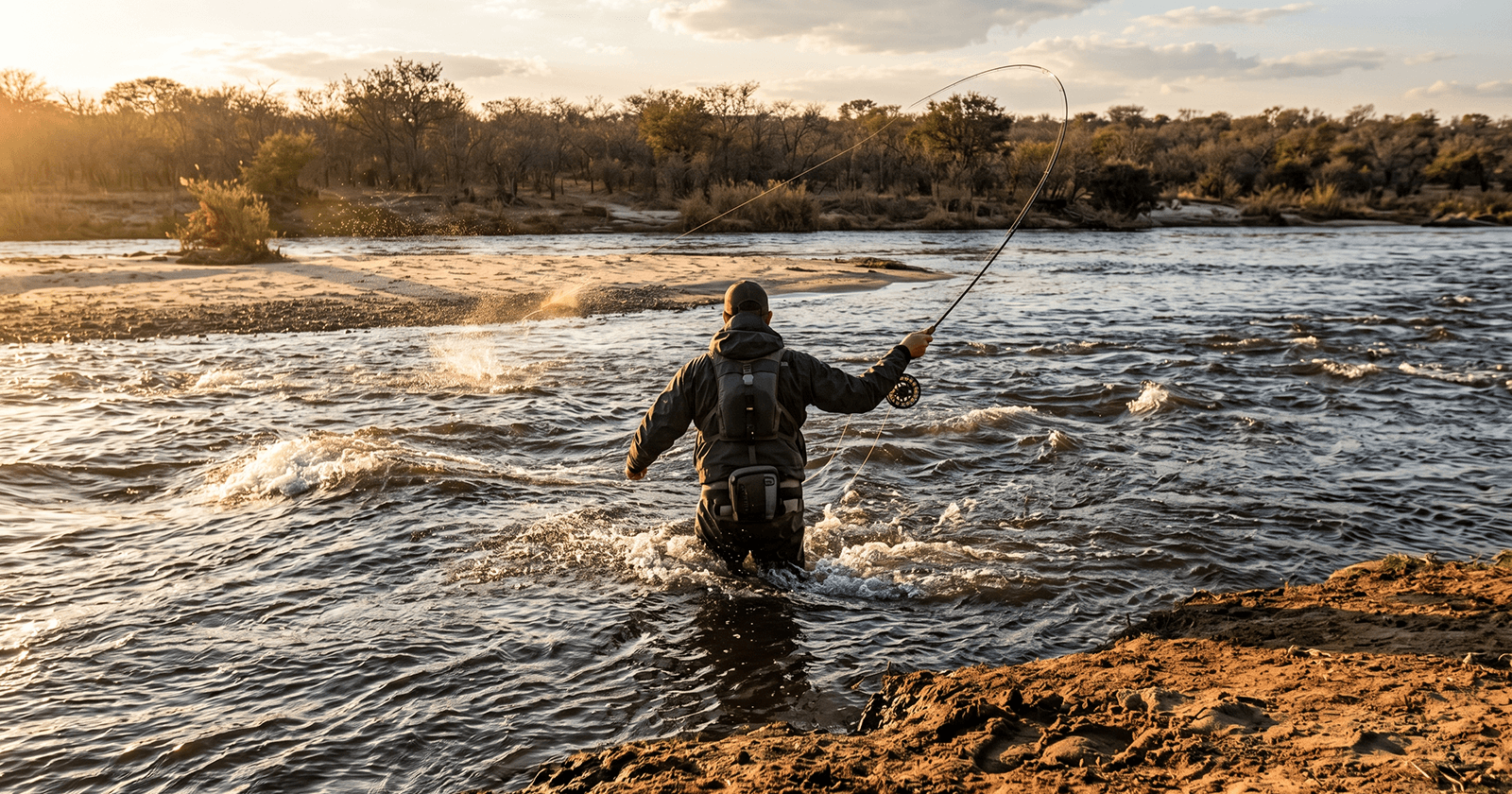
For the tigerfishing component: the Lower Zambezi in dry season is the technically correct window for Tigerfish. The water is low and clear, the fish are concentrated in the pools and runs, and catch-and-release operations here require a specific set of skills — light tackle in fast water, with fish that run in unpredictable directions through submerged structure. The Zimbabwe fly-in safari logistics intelligence across our Zambezi coverage covers the regional fly-in mechanics for the broader corridor.
Reserve your suite at Lolebezi on the 10-Day Botswana to Zambia Luxury Safari
What the Ecosystem Transition Means for Your Safari Timeline
The structural intelligence of this itinerary is the alignment of two distinct ecological peak windows.
The Okavango flood recession — May through August — is the period when the Delta's productivity is highest from a wildlife concentration perspective. The channels are full but receding, the floodplains are accessible but not yet dry, and the aquatic prey species are at their most visible and most huntable.
The Lower Zambezi dry season — June through October — is the period when the albida pod-fall pulls the large herbivore concentration onto the valley floor, the river levels drop to their lowest, and the game viewing density reaches its annual maximum along the floodplain.
The overlap window — July and early August — is where both systems are simultaneously at their most compelling. This itinerary is designed to move through that window. The Okavango leg captures the receding flood at its most productive. The Zambezi leg lands exactly as the albida pod-fall begins to concentrate the elephants. The Victoria Falls crossing happens between the two — at a point in the year when the Falls are running at medium flow, the water levels in the gorge are manageable for activity planning, and the rhino tracking in Mosi-oa-Tunya is at its most accessible.
This is the hydro-logical argument for this specific itinerary at this specific time of year. Not marketing calendar. Field intelligence.
| Destination | Geology / Terrain | Water Source | Primary Wildlife Driver | Signature Experience | Best Activity | Peak Season | Transfer Method |
|---|---|---|---|---|---|---|---|
| Okavango Delta | Alluvial fan — Kalahari sands | Angolan Highlands — seasonal flood | Sitatunga and Red Lechwe at flood recession | Helicopter and mokoro hybrid | Mokoro canoe — dawn channel | May–August | Cessna Grand Caravan charter |
| Mosi-oa-Tunya | Basalt plateaus — rift gorge | Zambezi River — perennial | White rhino sanctuary | Mist-walking the Falls and microlight | Rhino tracking on foot | Year-round | Road transfer from Livingstone |
| Lower Zambezi | Rift valley floor — escarpment | Zambezi River and channels | Elephant and albida symbiosis | Canoe safari and bush walk | Tigerfishing and canoe trail | June–October | Cessna from Jeki Airstrip |
The Logistics That Make This Itinerary Work
Fly-in access is exclusive throughout. The Okavango leg transfers from Maun on a 20-minute Cessna Grand Caravan or helicopter flight to the Kwara concession airstrip. The crossing to Victoria Falls requires a 90-minute combination of road and border transfer to Kasane, then onward to the Livingstone/Victoria Falls corridor — the only road leg in the itinerary, and manageable within a half-day. The final transfer to the Lower Zambezi flies from Livingstone to Jeki Airstrip in 45 minutes.
The accommodation specifications have been noted above. The operational detail worth flagging: all three properties operate exclusive concession traversing rights. This is the legal permission structure that allows off-road driving and night drives — activities that are categorically prohibited in Zimbabwe National Parks public access zones and in Botswana's national park designated roads. Without a private concession, the activities that define this itinerary do not exist.
The seasonal window of July and August aligns with Southern Africa's dry winter. Temperatures in the Okavango range from a sharp 5°C at pre-dawn to a comfortable 28°C by midday. The Lower Zambezi valley floor runs slightly warmer — the escarpment walls retain heat — with night temperatures rarely dropping below 12°C at peak dry season. Malaria prophylaxis is required for all three destinations. Visa requirements vary by nationality — confirm current entry requirements for Botswana and Zambia before departure. The border crossing at Kazungula Bridge between Botswana and Zambia is the standard transit point and adds minimal time to the transfer schedule.
People Also Ask
Is a private concession better than a national park in Botswana?
For specialist field intelligence and activity access, yes — significantly. Private concessions permit off-road driving, night drives, and walking in areas where national park rules restrict visitors to designated roads and daylight operating hours. The concession model also controls vehicle density at sightings — typically a maximum of two or three vehicles per sighting compared to twenty or more in popular public areas. The trade-off is cost: private concession camps carry a premium. For travellers whose priority is quality of wildlife encounter over value per night, the concession model is the correct choice.
How do you get from the Okavango Delta to Victoria Falls?
By air. Direct charter flights connect the Delta airstrips to Kasane or Livingstone. Transfer times vary by routing — the most efficient connection is a 90-minute road and border transfer from Kasane to Livingstone, which is the standard logistics for this itinerary. Commercial options exist via Air Botswana through Maun and Johannesburg, but private charter from the concession airstrip eliminates the Maun connection and substantially reduces total transfer time. Budget for a half-day transfer when moving between the two destinations.
What is the best month for a Botswana and Zambia combo safari?
July through early August is the optimal window for this itinerary. The Okavango flood is at its most productive during the recession phase — channels full but receding, aquatic prey concentrated, mokoro and helicopter access both operational. The Lower Zambezi's albida pod-fall begins in earnest from July, pulling elephant concentrations onto the valley floor. The Victoria Falls corridor runs at medium-high flow in July, providing spectacular Falls viewing without the extreme mist of peak flow in March and April. Wildlife density across all three destinations is at its annual maximum in this window.
Are private plunge pools safe from wildlife in the Okavango?
Yes — private plunge pools at all Okavango concession camps are enclosed within the property perimeter and positioned to prevent access by large wildlife. Hippos, which are the primary animal traffic between waterways and grassland at night, move on established corridors outside the lodge perimeter. Guests are escorted between rooms and common areas after dark as a standard operational protocol — not because the plunge pool is unsafe, but because large wildlife moves through the broader lodge footprint on predictable routes at night. The escort system is precautionary, not reactive.
What is the flight time between Maun and Livingstone?
Direct charter flight time from Maun to Livingstone is approximately two hours and fifteen minutes, subject to aircraft type and routing. The standard itinerary transfer does not fly this route directly — it uses the concession airstrip to Kasane connection combined with a 90-minute road and border transfer to Livingstone, which is operationally faster than routing through Maun for guests who are already within the Delta concession. Confirm specific routing with the Safari.com booking team based on your arrival and departure airports.
Book the 10-Day Botswana to Zambia Luxury Safari
Krantz Outdoors is a specialist pan-African safari research publication. Our editorial team aggregates field intelligence from professional trackers, wildlife photographers, and conservation scientists to deliver technically verified safari briefings.
This article is compiled from operator specifications, verified field reports, and specialist hydrology and ecosystem research. Krantz Outdoors conducts independent editorial review of all promotional content.
Affiliate disclosure: This article contains affiliate links. If you book through our Safari.com, Krantz Outdoors may earn a small commission at no additional cost to you. We only recommend experiences we genuinely believe in.
Wild by Nature. Africa by Choice.
Read our Privacy Policy and Terms & Conditions