
8 Day Exclusive Northern Tanzania Migration Safari — Serengeti, Ngorongoro & Tarangire
A Private Journey Through the Greatest Wildlife Spectacle on Earth — and Why Your Vehicle Makes All the Difference
Wild by Nature. Africa by Choice.
→ Secure Your Northern Tanzania Migration Safari Here
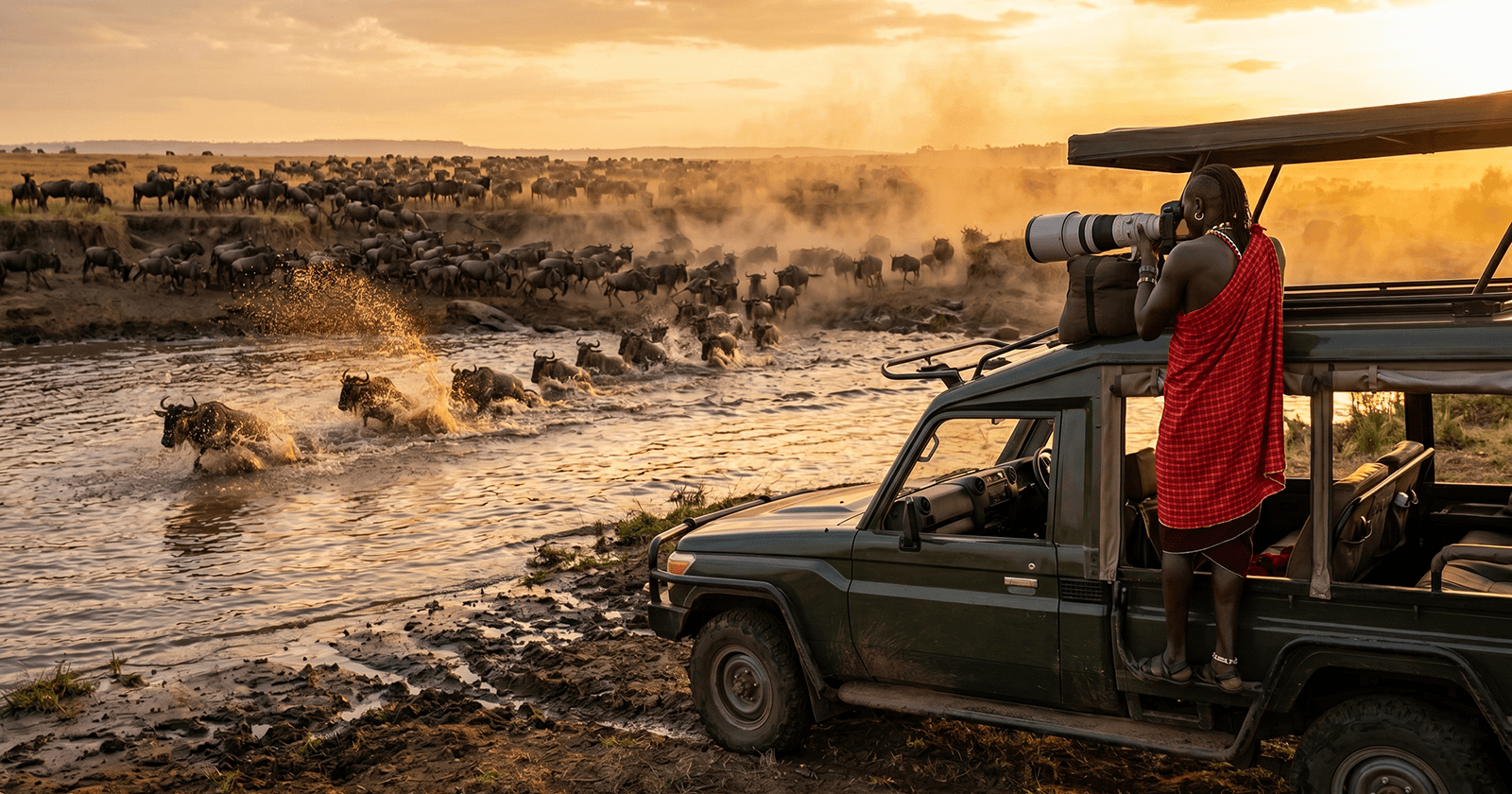
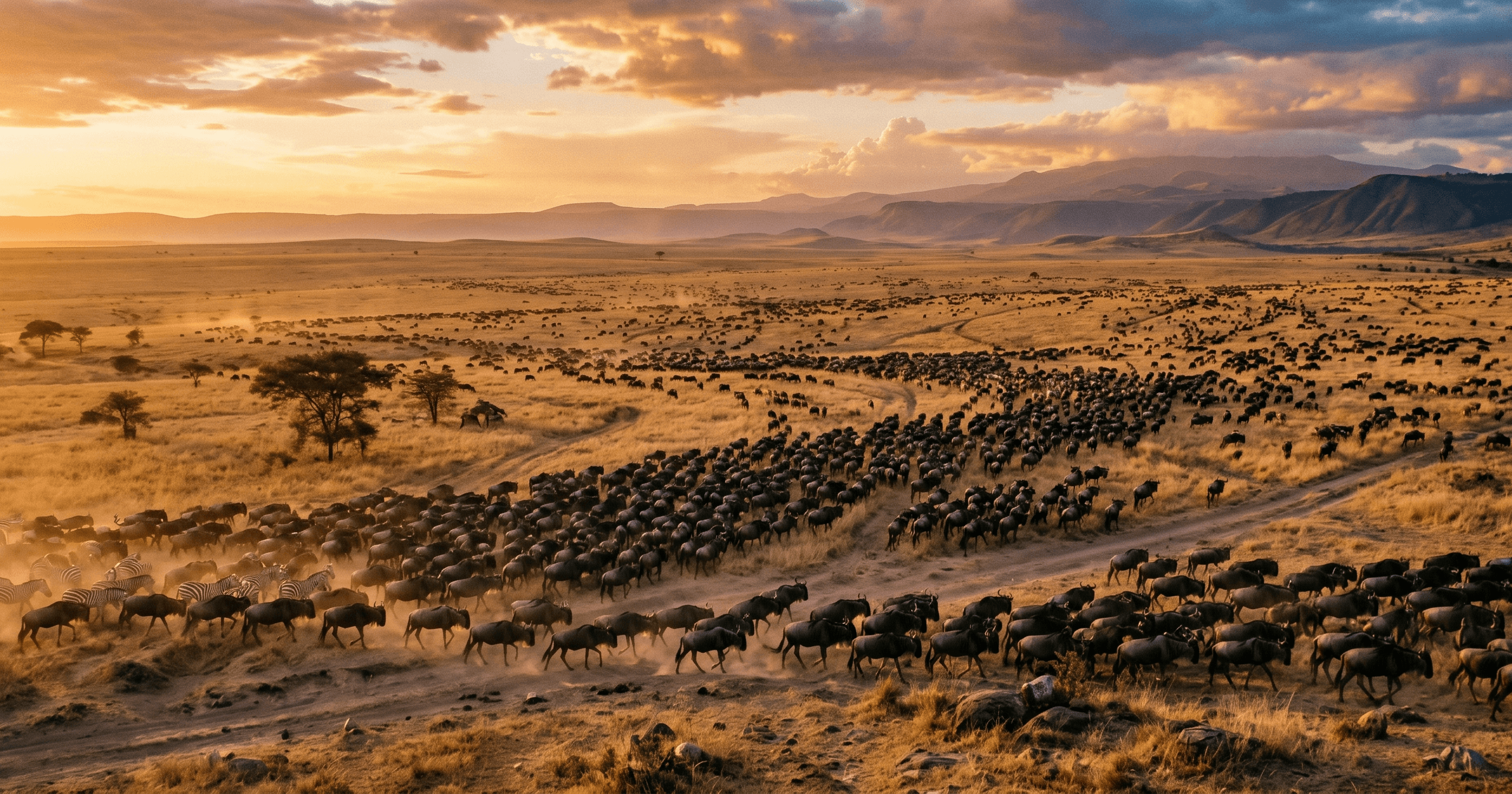
There is a moment on the northern Serengeti plains when the horizon disappears. Not because of darkness or weather — but because of wildebeest. Over 1.2 million of them, moving in ancient columns across the Tanzanian savannah, driven by nothing more than rain, grass, and instinct. The Great Migration is the largest movement of land mammals on the planet — a continuous clockwise journey through the Serengeti-Mara ecosystem that has repeated for hundreds of thousands of years. Every safari operator in East Africa will tell you they can get you to it. What most will not tell you is that witnessing a Mara River crossing versus missing one entirely comes down to a single variable — your vehicle, your guide, and whether you have the operational freedom to move when the herds do. This 8-day exclusive private safari, available through Safari.com, is built around that freedom. One guide. One vehicle. Your pace. Your Africa — earned, not shared.
Q: What does the 8 Day Exclusive Northern Tanzania Migration Safari include?
A: The 8 Day Exclusive Northern Tanzania Migration Safari includes one night at Arusha Coffee Lodge, one night at Lemala Mpingo Ridge in Tarangire, one night at Melia Ngorongoro Lodge on the crater rim, two nights at Siringit Serengeti Camp in the Central Serengeti, and two nights at Siringit Migration Camp in the Northern Serengeti. The package includes a private vehicle and guide throughout all game drives, all transfers between camps, a one-way flight from Kogatende to Kilimanjaro Airport, all meals on full board, and packed lunches for all game drive days. Every game drive is exclusively private — no shared vehicles, no compromised positioning at river crossings.
→ Secure Your Northern Tanzania Migration Safari Here
The Private Vehicle Advantage: Why It Changes Everything
Most travellers booking a Tanzania migration safari focus on the destination — the Northern Serengeti, the Mara River, the crossing spectacle. Very few focus on the operational variable that determines whether they actually witness a crossing or spend three hours at an empty riverbank watching a shared vehicle convoy slowly disassemble.
The Mara River crossing is not a scheduled event. It is an instinct-driven, unpredictable moment that can occur at any point across a 12-hour window — or not at all. The herds build at the bank, test the water, retreat, regroup, and then — triggered by a single animal's decision — plunge. The entire sequence from build-up to crossing can last four minutes. From the moment a guide identifies the build-up to the moment the leading animals hit the water, a shared game drive vehicle has two problems a private vehicle does not: it cannot move without consensus, and it cannot position without competing against every other vehicle at the same crossing point.
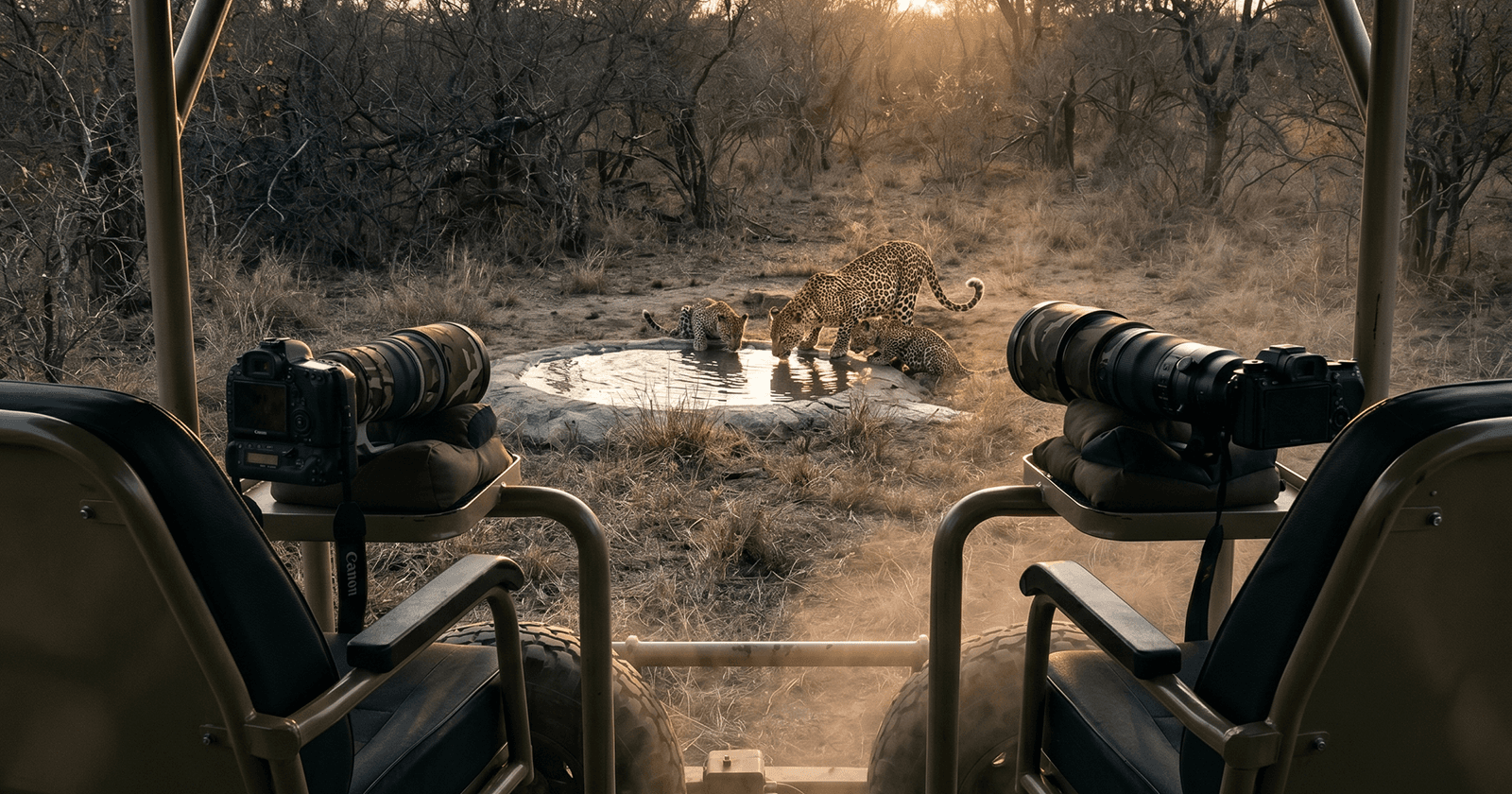
A private vehicle operates on a single decision framework — your guide's. When he identifies the build-up on the northern bank at 06h45, he moves. He does not wait for a group vote. He does not hold position while another vehicle from the same camp completes its breakfast transfer. He reads the herd, selects the optimal angle — downwind, downlight, clear sightline to the entry point — and commits. The difference in positioning between a private vehicle and a shared one at a Mara River crossing is not a comfort consideration. It is the difference between a career frame and an empty memory card.
This is the foundational intelligence that makes this package worth understanding before you book — and it threads through every game drive from Tarangire to the Northern Serengeti. Private access is not a luxury upgrade on this itinerary. It is the operational architecture that makes every wildlife encounter on the package work correctly.
The Northern Circuit: Why the Lodge Sequence Is Tactically Intelligent
The five ecosystems covered on this itinerary are not simply Tanzania's most famous parks strung together for marketing convenience. They are a deliberately sequenced progression through five fundamentally different wildlife environments — each one preparing the traveller's eye for the next, and each one positioned at the precise point in the landscape where its resident wildlife is most concentrated and most accessible.
Day 1 — Arusha Coffee Lodge: The Gateway
Your introduction to Tanzania begins in Arusha — the operational gateway to the entire Northern Circuit. Arusha Coffee Lodge sits on a working coffee plantation on the outskirts of town, offering a peaceful and genuinely elegant arrival experience before the bush begins. This is not a safari night — it is a decompression and reorientation night, designed to absorb the long-haul flight and prepare for the intensity of the days ahead. The plantation setting, the quality of the rooms, and the proximity to Kilimanjaro Airport make it the correct operational choice for an arrival lodge.
Day 2 — Lemala Mpingo Ridge: Tarangire and the Elephant Corridor
The transfer from Arusha to Lemala Mpingo Ridge delivers you into one of Tanzania's most underrated wildlife environments. Tarangire National Park is not the Serengeti — it does not carry the same international recognition — but for sheer elephant volume it is unmatched anywhere in Tanzania. The park hosts the largest elephant concentrations in the country, and during the dry season months the Tarangire River becomes the primary water source for a wildlife population that includes lion, leopard, cheetah, buffalo, and over 500 recorded bird species.
Lemala Mpingo Ridge sits on an elevated position above the park with sweeping views across the iconic baobab-studded landscape. The afternoon private game drive on arrival day is your first operational deployment — and Tarangire's open woodland terrain, combined with the private vehicle's ability to leave the main road and track elephant movement into the drainage lines, sets the tactical tone for everything that follows.
Day 3 — Melia Ngorongoro: The Crater Rim and Lake Manyara
The transfer from Lemala to Melia Ngorongoro includes an afternoon private game drive through Lake Manyara National Park — a compact but exceptionally productive wildlife corridor famous for its tree-climbing lion population and the flamingo aggregations that colour the lake's alkaline shoreline pink during peak season. It is a transfer-day drive rather than a dedicated overnight, but the Lake Manyara ecosystem rewards the hour invested — particularly for birders working the 400+ species list that the lake's diverse habitats support.
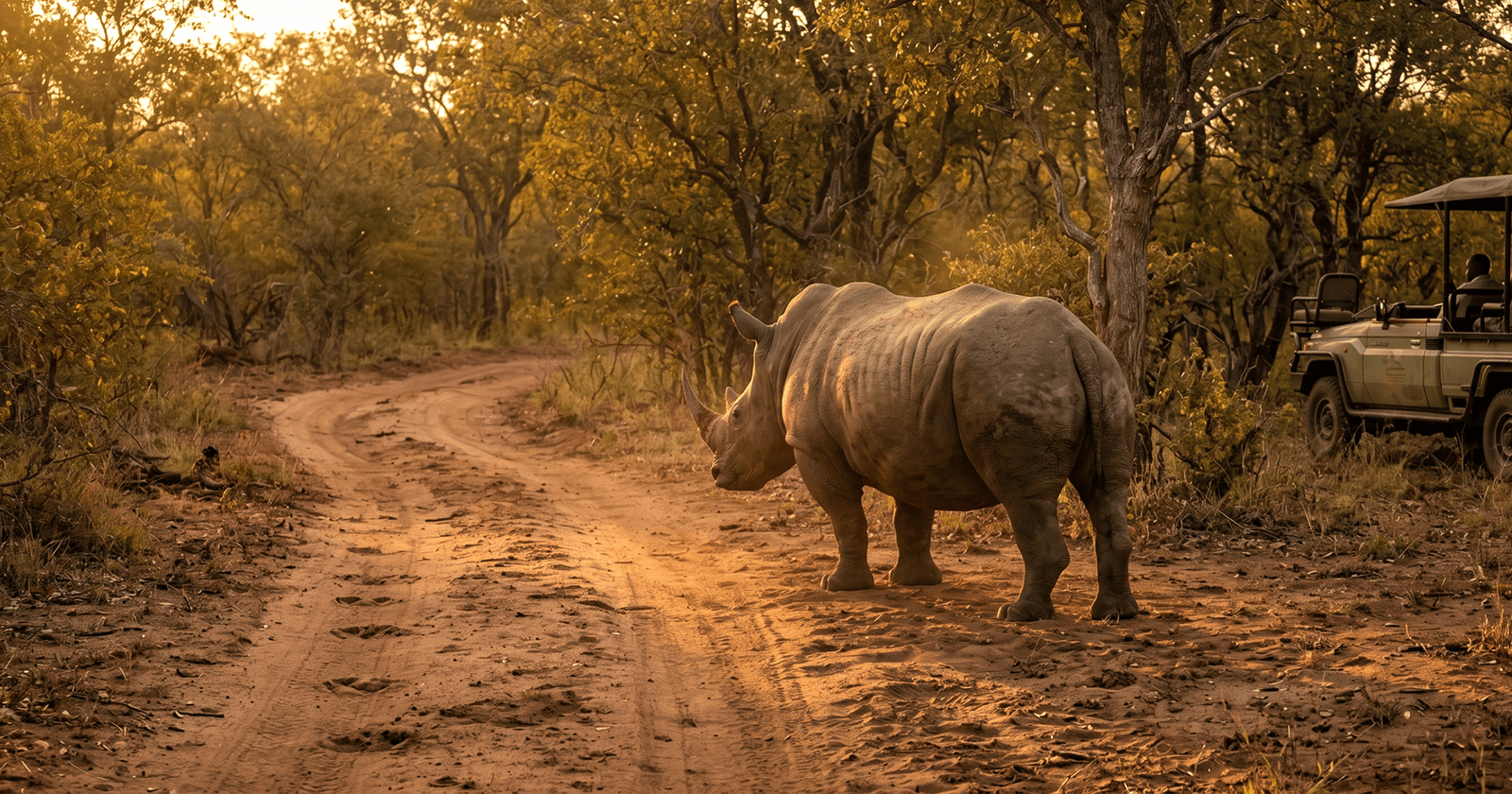
Melia Ngorongoro Lodge sits on the rim of the Ngorongoro Crater — a UNESCO World Heritage Site and one of the genuine natural wonders of the African continent. The crater is a collapsed volcanic caldera 19 kilometres across and 600 metres deep, hosting approximately 30,000 animals within its walls. The caldera geology creates a self-contained ecosystem that functions differently from open savannah — wildlife cannot easily leave, predators and prey are compressed into a defined area, and the game viewing density on the crater floor is extraordinary. Lion, leopard, elephant, buffalo, and black rhino are all regularly encountered in a single full-day descent.
The crater rim position of the lodge provides one of the most dramatic lodge views in Africa — a 180-degree panorama across the caldera from your room, before a single game drive wheel turns.
Days 4 and 5 — Siringit Serengeti Camp: The Central Plains
Two nights in the Central Serengeti establish the landscape context for everything the Northern Serengeti will deliver. The central plains are where the Serengeti's open savannah character is at its most iconic — vast, flat, seemingly endless grassland that produces the kind of predator-prey dynamics that have made this ecosystem the most studied wildlife environment on earth.
Siringit Serengeti Camp positions guests for full-day private game drives across the central plains, tracking the resident lion prides, cheetah coalitions, and leopard that hold territory in this sector year-round regardless of migration movement. The private vehicle architecture means your guide can spend four hours with a single cheetah coalition working a hunt sequence without needing to rotate back to camp for a schedule that serves other guests. That operational patience is what separates a wildlife documentary experience from a tourist drive.
Days 6 and 7 — Siringit Migration Camp: The Northern Serengeti
This is the operational epicentre of the entire itinerary. The Northern Serengeti hosts the most dramatic phase of the Great Migration — the Mara River crossings — and Siringit Migration Camp positions guests directly within the crossing corridor. Two nights here is the minimum required to give the private vehicle maximum operational flexibility across the crossing window.
The Northern Serengeti operates at significantly lower vehicle density than the central plains. Fewer camps, fewer shared drives, and the remote positioning of the Kogatende sector mean that even during peak migration season the bush retains an intimacy that the more heavily trafficked central and southern sectors cannot match. Your private vehicle amplifies this advantage further — in a sector already operating at lower density, a guide with complete operational autonomy and no shared-vehicle constraints is working with every tactical variable in your favour.
The carmine bee-eater colonies that establish themselves along the Mara River banks between October and November add a specialist birding dimension to the Northern Serengeti experience that most migration-focused briefings omit entirely. For birders working the East African list, the carmine bee-eater nesting sites along the river cutbanks represent one of the most visually extraordinary avian spectacles on the continent — a secondary highlight that the private vehicle's schedule flexibility allows you to pursue between crossing vigils without compromising either objective.
The Mara River Crossing: What to Expect and How to Read It
Understanding the mechanics of a Mara River crossing transforms the experience from a passive spectacle into an active field intelligence exercise. The crossing cycle has four distinct phases that an experienced guide reads in sequence:
The Build-Up: Herds begin aggregating on the northern bank in the early morning hours, typically between 06h00 and 09h00. The animals are visibly agitated — moving in tight groups, testing the bank edge, retreating. This phase can last minutes or hours. A private vehicle in position during the build-up has the time to select the optimal angle without competing for space.
The False Start: The leading animals approach the water, pause, and retreat. This can happen multiple times before a crossing commits. Shared vehicle groups frequently abandon position during extended false starts — a private vehicle stays as long as the guide's read of the herd behaviour warrants it.
The Commitment: A single animal — rarely the largest or most dominant — makes the decision and enters the water. Within seconds the entire leading edge of the herd follows. The noise, the movement, and the crocodile response are simultaneous. This phase lasts between four and fifteen minutes for a full crossing.
The Aftermath: Stragglers, separated calves, and crocodile pursuit sequences extend the photographic and observational window by thirty to sixty minutes after the main crossing. A private vehicle stays for the full aftermath. A shared vehicle is already calculating the return transfer.
Reading these four phases correctly is what separates a guide with genuine Mara River experience from one who is simply following other vehicles to the crossing point. The Safari.com specialists who built this itinerary have selected Siringit Migration Camp specifically for its Northern Serengeti positioning — and the private vehicle architecture ensures your guide has the operational freedom to execute on that positioning correctly.
Best Time to Visit: Matching the Season to Your Migration Objective
Peak Migration — July to October The Mara River crossings are most frequent between late July and early October when the herds are concentrated in the Northern Serengeti. This is peak safari season — maximum wildlife drama, maximum crossing probability, and the highest camp occupancy across the Northern Circuit. Book well in advance for this window. The private vehicle advantage is most commercially significant during this period when shared vehicle competition at crossing points is at its highest.
Green Season — November to June The green season delivers a fundamentally different Tanzania experience. The Serengeti transforms into a lush, photogenically rich landscape with dramatically fewer visitors. Calving season between January and March in the Southern Serengeti produces the highest predator activity of the year — lion, cheetah, and wild dog are all working the calving herds with extraordinary frequency. The crossing spectacle is absent during this window but the overall game viewing quality remains exceptional and the reduced visitor numbers mean a quieter, more operationally relaxed experience across all five ecosystems on the itinerary.
For guests whose primary objective is the river crossing photography rather than the broader Northern Circuit ecology, our Entim Mara Wildlife Photography review covers the zero-commute positioning advantage in detail.
Shoulder Season — October to November The transition between peak migration and green season delivers a hybrid experience — residual migration herds in the Northern Serengeti, building vegetation in the south, and the carmine bee-eater colonies at their most active along the Mara River banks. Camp rates typically step down from peak season pricing during this window, which makes it the most value-optimised entry point for the itinerary without sacrificing Northern Serengeti wildlife quality.
People Also Ask: Everything You Need to Know Before You Book
What is the best time to see the Great Migration river crossings in Tanzania? The Mara River crossings in the Northern Serengeti are most reliably witnessed between late July and early October. During this window the wildebeest herds are concentrated in the Kogatende sector and crossing activity is at its peak frequency. It is important to understand that crossings are never guaranteed on any single day — they are driven by herd instinct rather than schedule. A private vehicle with an experienced guide and the operational flexibility to spend a full day at the river gives you the best possible probability of witnessing a crossing within your stay window.
How many days do you need for a Tanzania migration safari? Eight days is the minimum itinerary length that allows you to cover the full Northern Circuit — Tarangire, Ngorongoro, Central Serengeti, and Northern Serengeti — without rushing the ecosystem transitions. Two nights in the Northern Serengeti is the operational minimum for crossing probability. A longer itinerary of ten to twelve days adds a second Northern Serengeti night and a dedicated Ngorongoro crater descent, which significantly improves both crossing probability and overall Big Five coverage.
Is a private vehicle worth it for a Tanzania safari? For a migration safari specifically, a private vehicle is not a luxury consideration — it is an operational one. The Mara River crossing window is unpredictable and time-sensitive. A private vehicle gives your guide complete positioning freedom at the river, the ability to stay through false starts and aftermaths, and no shared-schedule constraints that force departure before a crossing develops. For any safari where a single wildlife event — a crossing, a hunt sequence, a predator encounter — is the primary objective, private vehicle access changes the probability of witnessing it fundamentally.
What wildlife can you see beyond the Great Migration in Tanzania? The Northern Circuit delivers Big Five wildlife across all five ecosystems on this itinerary. The Ngorongoro Crater is one of the most reliable black rhino viewing environments in East Africa. Tarangire holds Tanzania's largest elephant concentrations. The Central Serengeti supports resident lion prides, cheetah coalitions, and leopard year-round regardless of migration movement. Lake Manyara is one of East Africa's premier birding environments with over 400 recorded species. The migration herds themselves are accompanied by approximately 300,000 zebra and the predator populations that follow them — lion, cheetah, wild dog, hyena, and crocodile at the river crossings.
How do you get to the Northern Serengeti for a migration safari? The operational routing for this package arrives into Kilimanjaro Airport near Arusha and departs via a regional flight from Kogatende Airstrip in the Northern Serengeti directly back to Kilimanjaro Airport. All ground transfers between camps are included in the package. Safari.com manages all logistics including airport transfers, inter-camp transfers, and the Kogatende departure flight. International routing typically connects through Kilimanjaro Airport via Nairobi, Addis Ababa, or Johannesburg depending on origin.
Value Architecture: What the Private Safari Delivers
| Component | Standard Group Safari | This Private Package |
|---|---|---|
| Vehicle Access | Shared — 6 to 8 guests | Exclusive — your group only |
| Crossing Positioning | Consensus-dependent | Guide's sole decision |
| Drive Schedule | Fixed departure times | Fully flexible |
| Ecosystem Coverage | Standard circuit | Five ecosystems, private throughout |
| Meals | Lodge dining only | Full board plus packed drive lunches |
| Departure Logistics | Road transfer to Arusha | Direct Kogatende flight to Kilimanjaro |
The private vehicle row determines everything else in this table. Schedule flexibility, crossing positioning, and ecosystem pacing all flow from that single operational decision. For the Great Migration specifically — where a single wildlife event can define the entire safari memory — it is the most important line item in the package.
This itinerary is bookable through Safari.com — Africa's Leading Safari Company, recognised at the World Travel Awards in both 2024 and 2025. Their safari specialists respond within 24 hours and can tailor the itinerary, extend the Northern Serengeti stay, or connect this package to a broader East Africa circuit including Kenya's Maasai Mara or Rwanda's gorilla trekking programmes.
For travellers combining this itinerary with a Southern Africa leg, our MalaMala Safari Review covers the Sabi Sands Big Five experience in detail.
→ Deploy to the Northern Serengeti: Finalize Booking via Safari.com
Krantz Outdoors is a specialist pan-African safari research publication. Our editorial team aggregates field intelligence from professional trackers, wildlife photographers, and conservation scientists to deliver technically verified safari briefings.
This article is compiled from operator specifications, verified field reports, and specialist photography research. Krantz Outdoors conducts independent editorial review of all promotional content.
Affiliate disclosure: This article contains affiliate links. If you book through our Safari.com, Krantz Outdoors may earn a small commission at no additional cost to you. We only recommend experiences we genuinely believe in.
Wild by Nature. Africa by Choice.
📄 Read our Privacy Policy and Terms & Conditions